
Russia Produces 40-50 Kh-101 Missiles Monthly as Battlefield Deaths Exceed 225,000
Russia's Accelerated Missile Production
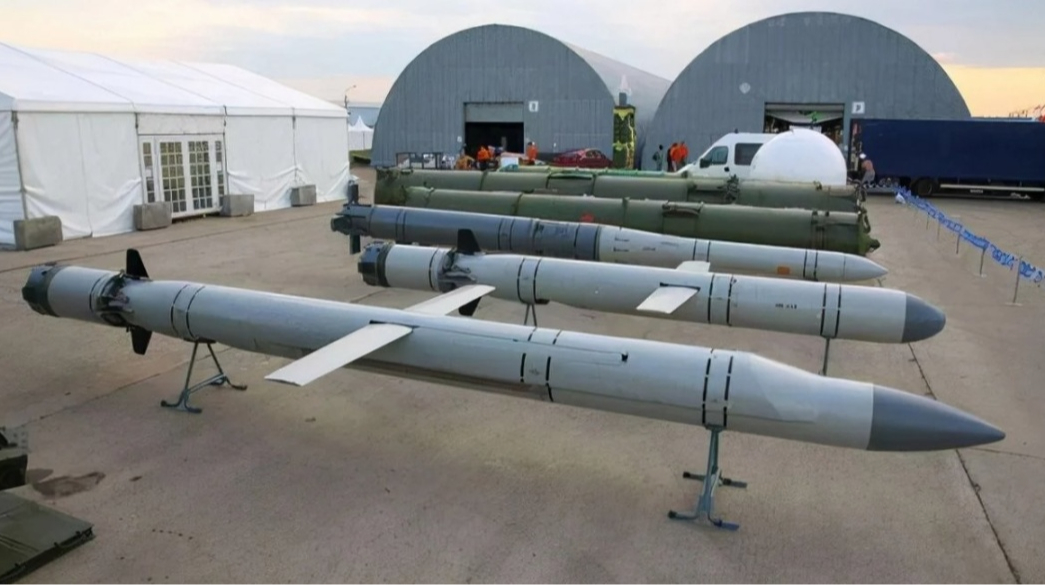
Russia produces around 40-50 Kh-101 cruise missiles and up to 70 Iskander-type missiles per month, according to Ukrainian military reporting. [1] Russia has shifted Kh-101 missile production to an almost round-the-clock mode. [1] The aggressor has moved Kh-101 missile production to a 24-hour cycle, producing 40-50 units per month, and 60-70 Iskander missiles monthly. [1] Russia has been unable to establish large-scale domestic production of complex electronic components and therefore extensively uses electronics manufactured in North Korea and Western countries. [1] The Russians rely on dual-use components. [1] Each Kh-101 missile contains up to 160 foreign components. [1] Shahed/Geran-type drones include at least 50 units of various microelectronics. [1] Ukrainian forces are observing a trend whereby Russia is attempting to reduce the cost of missile production, focusing on quantity rather than precision. [1] The Kh-101 is a strategic air-launched cruise missile deployed by Russia from Tu-95MS and Tu-160 strategic bombers, typically over the Caspian Sea. [1] At the start of the full-scale invasion, the missile had a warhead weighing around 480 kg, a range of up to 2,500 km, and a combined guidance system incorporating inertial navigation, satellite correction and an electro-optical targeting system in the terminal phase of flight. [1] The Kh-101 is equipped with a tandem warhead. [1] In May last year, reports indicated that Russia had planned to produce 633 Kh-101 cruise missiles over the year, with factories operating in three shifts. [1] As of October last year, some manufacturers of the missile had still not been sanctioned by Kyiv's Western partners. [1]
Mounting Russian Battlefield Casualties
Independent media have confirmed the identities of 225,019 Russian military personnel killed in Ukraine. [5] Since the media outlets' last update in late May, the names of 3,813 Russian soldiers have been added to the list of casualties. [5] The confirmed death toll now includes over 82,400 volunteers, 25,400 recruited prisoners, and 19,000 mobilized soldiers. [5] A total of 7,226 officers have also been confirmed to have been killed. [5] The journalists note that the actual figures are likely significantly higher, as their verified information comes from public sources such as obituaries, posts by relatives, regional media reports, and statements from local authorities. [5] A January report said that Russia suffered around 1.2 million battlefield casualties as of December 2025, including up to 325,000 troops killed. [2] Independent Western assessments have consistently concluded that Russian losses significantly exceed Ukrainian casualties. [5] A Washington-based think tank said in a January 2026 report that Russian casualties were roughly double to 2.5 times greater than Ukraine's losses. [5] President Volodymyr Zelensky suggested in an open letter to Russian President Vladimir Putin that the rate compared to Ukrainian losses amounts to one to five or one to six. [5] The head of the United Kingdom's intelligence, cyber and security agency said on May 27 that nearly 500,000 Russian soldiers have been killed since the start of Russia's war in Ukraine. [5] Russian media outlets also released their own estimates in early May suggesting that 352,000 Russian men between the ages of 18 and 59 have been killed since the start of the full-scale invasion in February 2022. [5] At its current rate, President Volodymyr Zelensky said earlier this year that Russian soldiers face upwards of 35,000 losses per month. [5] Commander-in-chief Oleksandr Syrskyi also reported that more than 83,000 Russian were killed in 2026, as of May 20. [5] The General Staff of Ukraine's Armed Forces estimates that as of June 12, Russia has lost around 1,380,120 troops in Ukraine since Feb. 22, 2022. [5] The figures do not specify killed or wounded, though the overall consensus is that it includes dead, wounded, missing, and captured. [5] While President Volodymyr Zelensky said in February that at least 55,000 Ukrainian soldiers have been killed on the battlefield since the start of Russia's full-scale war. [5]
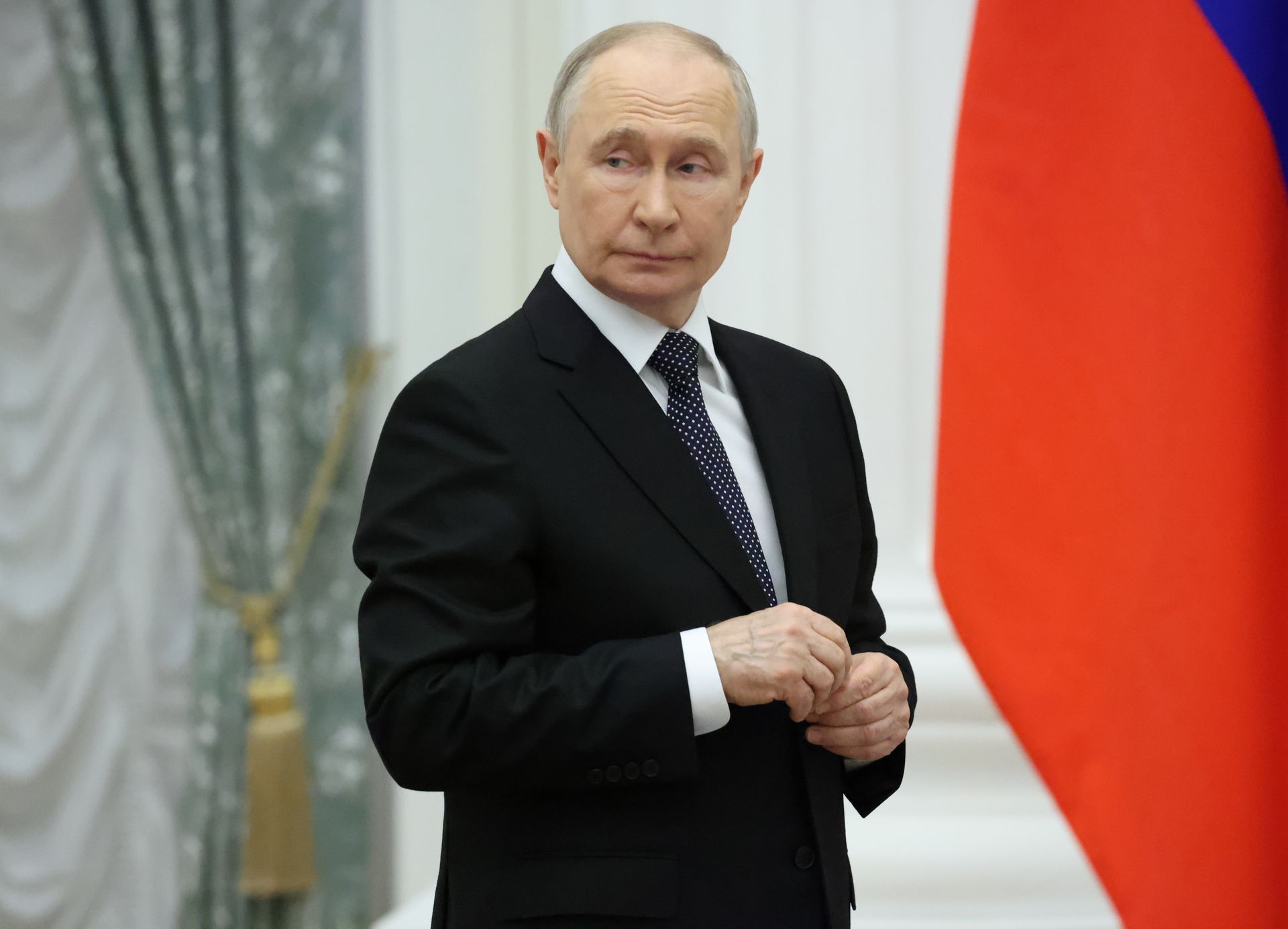
Russian forces face strain in recruitment amid high battlefield losses exceeding 225,000 deaths. — Source: kyivindependent
Struggling Russian Recruitment Efforts
Russian recruitment is faltering, with only about 70,500 new contract soldiers signed in the first three months of 2026, below targets. [2] Ukrainian intelligence claims that about 70,500 new Russian soldiers signed contracts in the first three months of 2026, falling short of the Russian Defense Ministry's goal by about 30,000. [2] Janis Kluge, a Russia expert at the German Institute for International and Security Affairs, provides similar estimates: 71,216 new contracts in the first quarter of this year, the lowest rate in three years. [2] For comparison, about 90,000 contracts were signed during the same period last year, according to the researcher. [2] To offset staggering losses, Moscow needs to recruit more than 30,000 fresh troops every month. [2] Prisons, a common recruitment pool for the most brutal and suicidal assignments, are also emptying up. [2] The number of prisoners dropped from 456,000 in 2021 to 282,000, partly due to the recruitment drive, Russian officials said in May. [2] Behind the scenes, the Kremlin is ramping up coercion to fill its ranks — pressuring students, setting recruitment quotas for businesses, and issuing mobilization orders to reservists summoned for medical or administrative check-ups. [2] From a military perspective, Moscow would need to conduct at least a partial mobilization to overcome its manpower shortage, says Kateryna Stepanenko, a Russia analyst at the Institute for the Study of War. [2] Russian casualties have started to surpass the Russian recruitment rate as of late 2025, meaning that the Kremlin will need to recruit more personnel just to sustain ground assaults at the rate that Russia used to conduct in 2025. [2] Moscow also needs to address rotations and the shortage of air defense personnel to counter Ukrainian drone strikes. [2] Mikhail Komin, an analyst at the Center for European Policy Analysis, further noted that a launch of an electronic conscription registry could be seen as a preparation for a partial, targeted mobilization. [2] Nevertheless, Komin believes that political obstacles will likely prevent Russia from carrying out the draft in the near future. [2] The first wave of partial mobilization in September 2022 sparked protests and prompted hundreds of thousands of Russians to flee abroad. [2] Russian authorities estimated that 261,000 men fled Russia shortly after the 2022 mobilization decree was issued. [2] The share of Russian citizens worried about the war in Ukraine rose from 74% in August to 88% in late September, according to the Levada Center's survey. [2] The number of Russians who said they followed the war developments somewhat closely or very closely also went up in that period — from 51% to 66%. [2] As of mid-2026, the mood among the Russian public has shifted. [2] The population is feeling the sting of wartime inflation, increased taxes, and internet restrictions. [2] War is no longer distant as Ukrainian drones reach deeper and deeper into Russian territory, with growing panic visible on Russian social media. [2] Today, the backlash would be even greater than in 2022, as war fatigue has increased, while the Kremlin has failed to explain to a significant portion of the population why this war is necessary and why it should be considered just. [2] Mobilizing young men to go and fight and die in a lost cause. [2] Even Ukrainian drone strikes on Russian soil have not driven Russians to military recruitment offices. [2] Anton Barbashin, co-founder and editorial director at Riddle Russia, also notes that Kremlin planners are likely worried about the potential impacts of a mobilization on the upcoming State Duma elections in September. [2] But even after the elections, a mobilization would be a risky move. [2] I do not see any indication that it is coming. [2]
Record Civilian Harm in May 2026
May 2026 recorded the highest civilian casualties in Ukraine since the 2022 full-scale invasion, with the UN verifying 274 killed and 1,763 injured. [3] HRMMU has verified that at least 274 people were killed and 1,763 others injured over the month. [3] The main reason for the high number of casualties last month was the use of powerful weapons by Russian forces in urban areas, which killed and injured dozens of people on multiple occasions. [3] For example, 12 civilians were killed and 42 others injured in a Russian attack using aerial bombs on Zaporizhzhia on 5 May. [3] On 14 May, a Russian missile struck an apartment block in Kyiv, killing 24 people. [3] The intensification of hostilities has also contributed to civilian casualties. [3] The UN noted that in previous years the number of casualties has consistently risen in spring and summer. [3] This trend has continued in 2026, but the casualty figures have increased significantly. [3] The civilian harm we documented was not limited to communities near the front line. [3] In cities across Ukraine, repeated attacks with missiles and aerial bombs killed and injured civilians far from areas of active ground combat. [3] In frontline hromadas, the main cause of civilian casualties was the use of short-range drones. [3] In May, at least 64 people were killed and 539 injured in such attacks – the highest figures since February 2022. [3] Most of the casualties were recorded in Ukrainian-controlled territory, but some were also confirmed in Russian-occupied oblasts, including 21 people killed in the city of Starobilsk, Luhansk Oblast. [3] The UN earlier reported that 2025 was the deadliest year for civilians in Ukraine, with the death toll nearly a third higher than the previous year. [3]
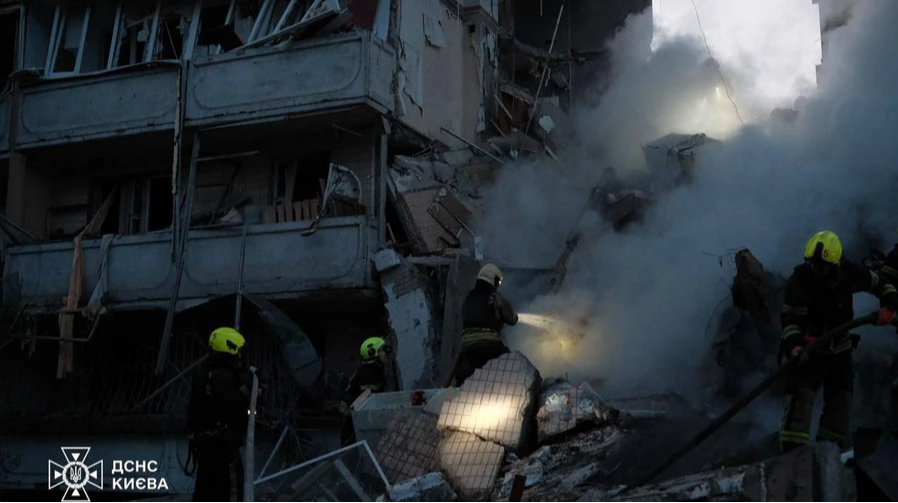
UN reports highest civilian casualties in Ukraine from Russian attacks in May since 2022. — Source: ukrainskapravda
Putin's Assessment of the Military Campaign
Putin stated that over 700,000 Russian troops are deployed in the combat zone. [4] Russian President Vladimir Putin said Moscow would increase its retaliatory attacks in Ukraine, signaling a continued military escalation as the war enters its fifth year. [4] Speaking at the Kremlin on Friday during events marking Russia Day and celebrations honoring participants in what Moscow calls its special military operation, Putin said Russian forces would continue pressing their campaign and strengthen their response to attacks by Ukraine. [4] According to Russia’s state-run TASS news agency, Putin said more than 700,000 Russian troops are currently deployed in the combat zone and that Russian forces are continuing to advance, although not as rapidly as military planners would prefer. [4] The Russian leader praised assault units operating on the front line and said the government was expanding programs related to training, medical care and employment opportunities for military personnel involved in the conflict. [4] Putin also said Russia was developing new FPV drones and artificial intelligence-based unmanned systems, describing the Defence Ministry as an increasingly advanced technological institution. [4] He claimed Moscow was expanding its satellite communications network and developing capabilities comparable to private satellite systems used in modern warfare. [4] The Russian president further said Moscow was working to strengthen its air-defense capabilities and maintain a technological advantage in weapons development. [4] He argued that Russia had withstood pressure from what he called the collective West and NATO, insisting that efforts to inflict a strategic defeat on Russia had failed. [4] Putin also warned NATO against direct military confrontation with Russia, saying such a scenario would carry serious consequences. [4]
Broader Context and Analyst Perspectives
Russia's strategy of throwing infantry at the Ukrainian lines is not as effective anymore as Kyiv is gaining an edge in drone warfare. [2] In May, Moscow didn't gain territory, even as its losses remained relatively stable. [2] Ukraine has gained the advantage on the battlefield, and while the war remains dynamic, it is just very hard to see any path toward Russian victory. [2] If Russia does trigger military mobilization, it is a sign that the regime is under tremendous strain and is politically trapped. [2] A mobilization is a huge gamble for Putin, a bet that could put himself and his regime at risk. [2] The recruitment drive losing steam. [2] Russia's 2022 push to mobilize 300,000 reservists came on the heels of Ukraine's successful counteroffensives in the Kharkiv and Kherson oblasts. [2] The chaotic mobilization, the largest call-up since World War II, forced the Russian public to reckon with the reality that this war would be a long one — and might impact them directly. [2] While the Kremlin declared the unpopular draft over already in November, no decree officially canceled it. [2] Fearing the political fallout of a new mobilization wave — particularly in Russia's economic centers like Moscow or St. Petersburg — the Kremlin instead turned to contract soldiers, offering hefty financial bonuses. [2] Alongside this came the mass recruitment of convicts and what experts called crypto-mobilization: the systematic coercion of migrants, people from Russia's peripheries, and ethnic minorities into signing up for the war. [2] Men from occupied Ukrainian territories have also been forced to go fight against their homeland. [2] However, there are signals that this might not be enough to meet Russia's wartime needs. [2] A January CSIS report said that Russia suffered around 1.2 million battlefield casualties as of December 2025, including up to 325,000 troops killed. [2] This is despite Russia once again increasing sign-up bonuses and other financial incentives, such as exempting recruits from debts of up to 10 million rubles. [2] The public fallout from the 2022 call-up was palpable — but not serious enough to threaten the regime or undermine its ability to continue the war. [2] Yet public support for Russia's war recorded only a modest decrease and remained — alongside public support for Putin — strong throughout the war. [2] Reports suggest this initial panic quickly subsided, with many men returning home soon after struggling to adapt to life in a new country. [2] But reports suggest this initial panic quickly subsided, with many men returning home soon after struggling to adapt to life in a new country. [2]
What to watch next: Analysts note that a mobilization would be a huge gamble for Putin that could put himself and his regime at risk, with political obstacles likely to prevent Russia from carrying out the draft in the near future even after the September elections.