
Rising Tensions: Concerns Over Potential Chinese Military Deployment in Balochistan
In a significant geopolitical development, Baloch leader Mir Yar Baloch has issued warnings regarding a potential Chinese military deployment in Balochistan, a region of Pakistan rich in resources and strategically important for both countries. This warning comes amidst deepening ties between China and Pakistan, raising alarms about regional stability and the impact on local resistance movements.
Mir Yar Baloch, who represents the aspirations of the Baloch people, emphasized the urgency of the situation, urging India to extend its support to Baloch resistance forces in light of the potential Chinese military presence. He highlighted that the increasing military engagement could exacerbate existing tensions in a region already fraught with conflict and unrest.
China's growing influence in Pakistan has been underscored by its investments and infrastructural projects under the China-Pakistan Economic Corridor (CPEC), which aims to enhance connectivity and trade between the two nations. However, the prospect of a military deployment could reshape the dynamics in Balochistan, where local grievances against the Pakistani state have been simmering for years. The Baloch people have historically sought greater autonomy and control over their natural resources, leading to a long-standing insurgency against the Pakistani government.
The concerns raised by Mir Yar Baloch are not isolated. The geopolitical landscape in South Asia is already complex, with the India-Pakistan rivalry over Kashmir and other territorial disputes. The potential for a Chinese military footprint in Balochistan adds another layer of tension, particularly given India's apprehensions about China's expanding influence in the region.
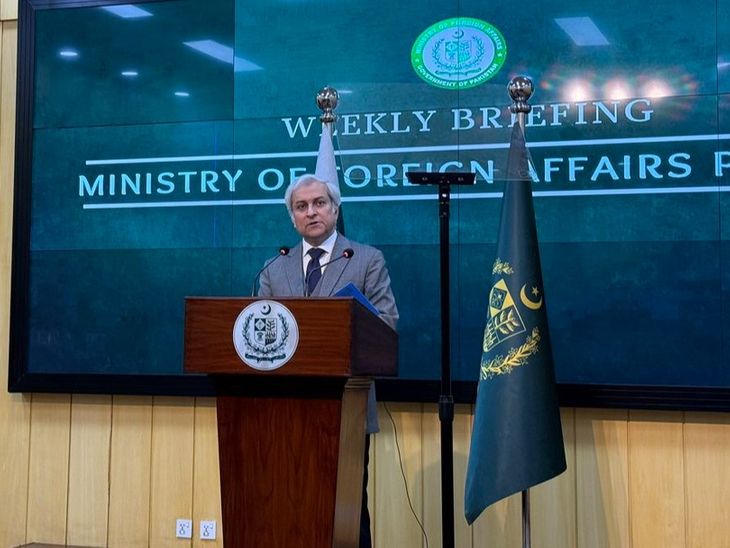
In a related development, Pakistan has recently credited China with playing a crucial role in mediating tensions in the region, particularly in the context of the ongoing conflicts and disputes that have characterized relations between India and Pakistan. This acknowledgment signals Pakistan's reliance on China as a strategic ally amidst rising geopolitical challenges.
As regional dynamics continue to shift, the implications of a possible Chinese deployment in Balochistan could reverberate beyond the borders of Pakistan, influencing relationships within South Asia and potentially drawing in global powers concerned about stability in the region.
The Baloch situation, coupled with China's assertive foreign policy, poses challenges not only for Pakistan but also for neighboring countries that are wary of Chinese military expansionism. The call for Indian support by Baloch leaders may further complicate the already delicate balance of power, underscoring the interconnected nature of regional geopolitics.
In conclusion, the warning from Baloch leadership about a potential Chinese military presence in Balochistan highlights an emerging flashpoint in South Asian geopolitics. As stakeholders navigate these developments, the need for dialogue and a diplomatic approach to address local grievances and regional tensions remains crucial for maintaining stability in the area.






