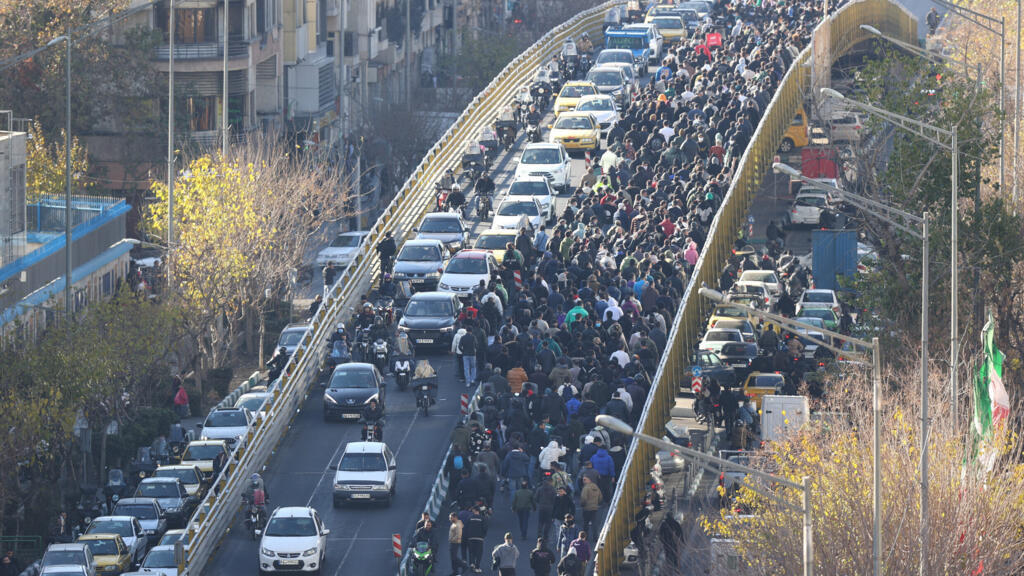
Protests Escalate in Iran Amid Clashes and Political Turmoil

Latest from X
Protests Escalate in Iran Amid Clashes and Political Turmoil
Tehran, Iran - A wave of civil unrest has swept across Iran since January 1, 2026, as protesters in multiple cities, including the capital Tehran, voice their discontent with Supreme Leader Ali Khamenei and the ruling regime. The demonstrations, fueled by economic hardship and political grievances, have turned violent in several regions, with security forces clashing with crowds and reports of at least 12 fatalities, including members of the security forces. As the situation unfolds, an unexpected statement of support from the Iranian Foreign Ministry has added a new layer of complexity to the crisis, raising questions about internal divisions within the government.
The protests began on January 1 in Tehran and have since spread to other parts of the country, notably in western regions where violence has intensified. According to France24, sporadic demonstrations erupted over the weekend, with local media reporting significant unrest in the capital on Saturday. Protesters have been chanting slogans against Khamenei, with some calling for an end to clerical rule and demanding free elections. The clashes in western Iran have been particularly severe, contributing to the growing death toll and highlighting the escalating tensions between demonstrators and security forces.
Economic collapse, soaring inflation, and severe energy shortages have been cited as key drivers of the unrest. Reports indicate that public frustration has been mounting for months, exacerbated by water and electricity cuts, widespread corruption, and unfulfilled promises of reform. President Masoud Pezeshkian, elected in 2024 on a platform of good governance, has faced criticism for failing to deliver on commitments such as lifting internet censorship. While Pezeshkian has publicly recognized the constitutional right to peaceful protest and expressed willingness to meet with protest representatives, analysts note that he lacks control over Iran’s security apparatus, which remains under the influence of the Supreme Leader and the Revolutionary Guard.
Adding to the complexity of the situation, the Iranian Foreign Ministry issued a statement on January 2 expressing support for the ongoing protests. This surprising stance has sparked speculation about potential rifts within the regime, as the Foreign Ministry’s position appears to diverge from the hardline response of security forces. While details of the statement remain limited, it marks a significant political development amid the unrest, suggesting that even within Iran’s leadership, there may be disagreement on how to address the crisis.
Background of Unrest in Iran
Iran has a history of periodic protests driven by economic woes and demands for political reform. The current wave of demonstrations echoes the 2022 protests following the death of Mahsa Amini, which also saw widespread calls for regime change. However, as noted in an analysis by the Jerusalem Post, the current protests appear fragmented, lacking a unified leadership or clear set of demands. This fragmentation, combined with a weakened regime facing both internal and external pressures, places Iran at a critical juncture. The government’s response in the coming days could determine whether the unrest escalates into a broader challenge to the Islamic Republic’s authority.
Posts on X from various users, including activists and commentators, reflect the intensity of the situation on the ground. Visuals circulating on the platform show protesters in Tehran’s Tajrish Square setting fire to posters of Khamenei, while others report the use of live ammunition and tear gas by security forces to disperse crowds. These accounts, while unverified, underscore the growing anger and desperation among demonstrators as the protests enter their sixth day.
International Reactions and Outlook
The international community has also taken notice of the unfolding crisis. U.S. President Donald Trump recently threatened to intervene if Iranian security forces continue to use lethal force against protesters, signaling heightened global concern over the situation. The protests represent one of the most significant internal threats to Iranian authorities in recent years, and the regime’s heavy-handed tactics risk further alienating an already frustrated population.
As the unrest continues, the path forward remains uncertain. The combination of economic despair, political disillusionment, and now apparent divisions within the government creates a volatile mix. Analysts warn that without meaningful dialogue or reforms, the protests could deteriorate into a more serious conflict. For now, the eyes of the world remain on Iran, as both its citizens and leaders grapple with the consequences of this deepening crisis.
Track this story live
Original Sources
- •
- •
Editorial process: This article was synthesized from the original sources cited above using The World Now's AI editorial system, with byline accountability from our editorial team. We grade every story for source grounding, factual coherence, and on-topic match before publication. Read more about our editorial standards and contributors. Spot something inaccurate? Let us know.
Last updated: March 6, 2026






