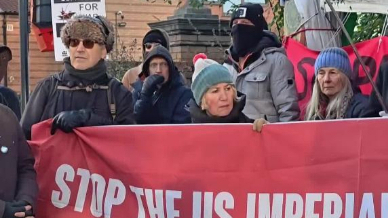

Protests Erupt in London Against U.S. Military Strikes on Venezuela
On January 4, 2026, a medium-scale protest erupted outside the U.S. Embassy in London, with demonstrators expressing their opposition to recent U.S. military strikes on Venezuela. The protest, which drew a significant crowd, reflects growing tensions regarding foreign military interventions and their impacts on civilian populations.
The demonstration commenced shortly after midnight local time, with participants holding banners and chanting slogans against U.S. involvement in Venezuela. Many protesters voiced their discontent over what they perceive as unjust military actions that exacerbate the humanitarian crisis in the South American nation.
"Enough is enough! The U.S. must stop its aggression and allow the Venezuelan people to determine their own future," shouted one protester, emphasizing the need for respect for national sovereignty. The protest was organized by various activist groups advocating for peace and solidarity with the Venezuelan people, who have been facing economic hardships and political turmoil in recent years.
The U.S. strikes, which have drawn international criticism, are part of an ongoing strategy by the Biden administration to counter what it labels as authoritarianism in Venezuela. The situation has been further complicated by Venezuela's political landscape, where President Nicolás Maduro faces opposition from both internal factions and external pressures.
As the protest unfolded, tensions remained relatively calm, with police monitoring the situation to ensure public safety. However, the event highlighted a growing sentiment among segments of the British public who oppose military interventions, particularly when they lead to civilian casualties and increased instability.
Background
The protests come amid a backdrop of long-standing conflict and unrest in Venezuela, where the economic crisis has led to widespread poverty and a mass exodus of citizens seeking better living conditions abroad. The U.S. has historically been involved in Venezuelan affairs, often supporting opposition groups and implementing sanctions aimed at pressuring the Maduro government.
Additionally, protests against foreign military actions have become increasingly common in various countries, as public opinion shifts towards a more pacifist approach in international relations. This recent demonstration in London is part of a larger trend of civil unrest against perceived imperialistic policies.
Conclusion
As the situation in Venezuela continues to evolve, protests like the one seen in London may influence public discourse surrounding foreign military interventions. Activist groups are likely to continue advocating for peaceful resolutions and humanitarian support in lieu of military action, as concerns grow over the implications of such strikes on civilian lives. The U.S. government's response to these protests, alongside its military strategy in Venezuela, will be closely watched by both domestic and international observers in the coming months.






