
Protests Erupt in London Against U.S. Military Strikes on Venezuela
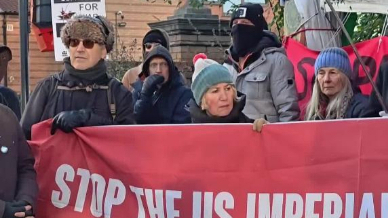
Tensions flared in London on Sunday as demonstrators gathered outside the U.S. embassy to voice their opposition to recent U.S. military strikes on Venezuela. The protests, which began early in the morning, saw hundreds of people expressing their solidarity with the Venezuelan people and condemning what they described as unwarranted interference in the South American country's affairs.
The protests were organized by a coalition of grassroots organizations and political groups, including anti-war activists and leftist organizations, who are critical of U.S. foreign policy in Latin America. Demonstrators held placards and chanted slogans denouncing the strikes, calling for an end to U.S. military involvement in Venezuela.
"We are here to show our support for Venezuela and to stand against imperialism," said one protester, who wished to remain anonymous. "The people of Venezuela have the right to determine their own future without outside interference."
The U.S. military strikes have drawn widespread condemnation from various international human rights organizations, which argue that such actions exacerbate the already dire humanitarian situation in Venezuela. The Venezuelan government, led by President Nicolás Maduro, has characterized the strikes as an act of aggression and has called for international solidarity against what it views as U.S. imperialism.
As the protests unfolded, police maintained a visible presence, ensuring the demonstration remained peaceful. There were no reported incidents of violence, although some clashes occurred as protesters attempted to breach police barriers. Authorities estimated the crowd size at several hundred, indicating significant public interest and concern regarding U.S. actions in Venezuela.
The U.K. government has not officially commented on the strikes, but the protests reflect growing public dissent regarding foreign military interventions. Many citizens are increasingly wary of the implications of U.S. foreign policy and its potential impact on global stability.
This demonstration is part of a broader trend of civil unrest in the United Kingdom, where public sentiments have been increasingly vocal against various government policies and international actions. The ongoing economic challenges, exacerbated by global events, have also fueled dissatisfaction among the populace, leading to increased activism and protests.
Background
Venezuela has been in the throes of a severe political and economic crisis for several years, with hyperinflation, shortages of basic goods, and mass emigration. The situation has drawn international scrutiny, with various countries taking sides in the ongoing conflict between the Maduro government and opposition groups.
The U.S. has been a vocal critic of the Maduro administration, supporting opposition forces and imposing sanctions aimed at curtailing the government's power. The recent military strikes represent a significant escalation in U.S. involvement in Venezuela, prompting backlash from various quarters, including protests in London.
Conclusion
As the protests against U.S. strikes on Venezuela continue to unfold, they serve as a reminder of the complex interplay between international politics and domestic sentiment. The U.K.'s response to these developments will likely shape further public discourse regarding foreign policy and military interventions, as citizens increasingly engage in activism to express their views. With the ongoing crisis in Venezuela and the potential for further U.S. military actions, the situation remains fluid, and the implications for both international relations and domestic politics in the U.K. are yet to be fully realized.






