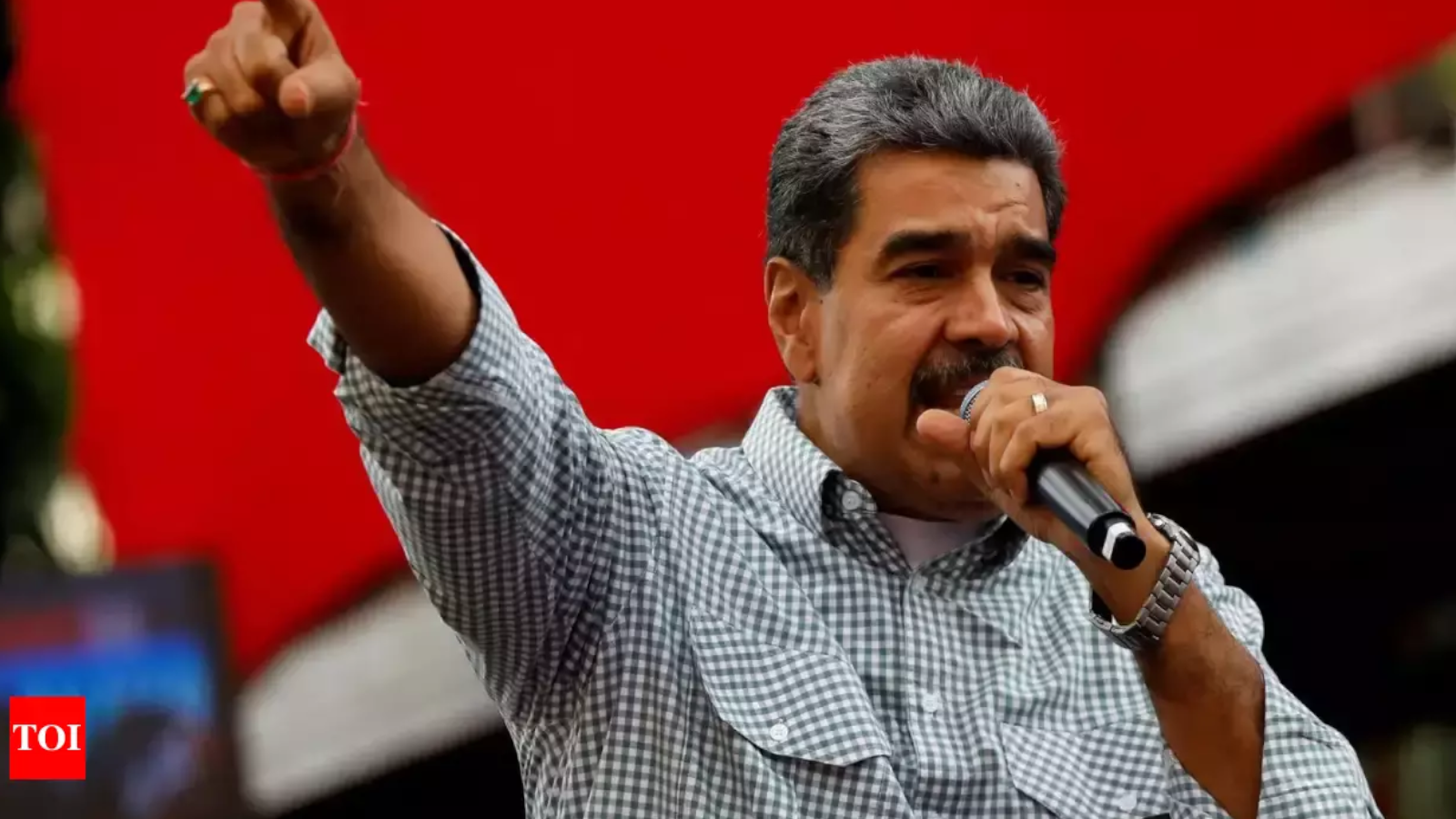
Political Violence Escalates in the US as Protests Erupt Following Maduro’s Capture

Latest from X
Political Violence Escalates in the US as Protests Erupt Following Maduro’s Capture
Washington, D.C. – As 2026 dawns, the United States finds itself grappling with a surge in political violence and civil unrest, fueled by both domestic tensions and international events. A former FBI agent has warned of escalating dangers, citing recent incidents including an alleged assassination attempt and attacks on Immigration and Customs Enforcement (ICE) facilities. Adding to the volatile atmosphere, the capture of former Venezuelan leader Nicolás Maduro by U.S. forces on January 3, 2026, has triggered widespread protests across more than 100 American cities, organized by socialist and Marxist networks condemning what they call "imperial aggression."
The unrest began almost immediately after news of Maduro’s capture broke, with demonstrations erupting within 12 hours in urban centers from New York to Los Angeles. According to reports, these protests were marked by striking uniformity in messaging and slogans, suggesting a high level of coordination and pre-planning among activist groups. Organizers utilized social media platforms to mobilize supporters rapidly, showcasing a sophisticated network capable of swift response to geopolitical developments. Banners and chants at the protests called for the dismantling of the "American empire," reflecting deep-seated opposition to U.S. foreign policy actions.
A former FBI agent, speaking anonymously due to the sensitivity of the situation, expressed concern over the broader trend of political violence in the country. "We’re seeing an escalation that’s deeply troubling," the agent stated. "From alleged assassination attempts on political figures to direct attacks on federal facilities like ICE offices, the temperature is rising. The Maduro situation has only poured fuel on the fire." While specific details about the assassination attempt and ICE attacks remain scarce, the agent emphasized that these incidents are symptomatic of growing polarization and distrust in institutions.
Maduro, who arrived in New York on January 3 to face federal charges related to drug trafficking and alleged ties to terrorist organizations, has long been a polarizing figure. His capture by U.S. forces, as reported by CBS News, has been framed by critics as a provocative act of overreach, further inflaming tensions among activist groups in the United States. Protesters argue that the operation represents an imperialist agenda, with some accusing the U.S. government of using Maduro’s arrest as a pretext to assert control over Venezuela.
Background: A Year of Rising Tensions
The unrest in 2026 follows a tumultuous 2025, during which political violence and civil unrest were identified as growing global risks. Reports from Allianz Commercial earlier last year noted that over 50% of surveyed companies worldwide ranked civil unrest as their top concern, pointing to the increasing frequency and duration of such incidents. In the U.S., polarized political discourse and social divisions have created fertile ground for unrest, as highlighted by historical analyses from Vision of Humanity. The capture of Maduro and the subsequent protests are seen by some analysts as a flashpoint in an already strained domestic landscape.
Representative Jamie Raskin, reflecting on the violence in 2025, recently told NOTUS, “The violence is a product of the profound political division and the determination some people have to win regardless of the means used.” His words resonate as the U.S. enters a new year marked by both domestic and international controversies.
Outlook: A Nation on Edge
As protests continue, authorities are bracing for potential further escalation. The rapid organization of demonstrations following Maduro’s capture underscores the power of digital networks in mobilizing dissent, but it also raises questions about the potential for clashes between protesters and law enforcement. Posts on X from various users have highlighted the charged atmosphere, with some speculating about the risk of broader conflict and others criticizing the U.S. government’s actions in Venezuela. While these online sentiments reflect public concern, they also illustrate the deep divisions over America’s role on the global stage.
The coming days will likely test the resilience of U.S. institutions as they navigate this latest wave of unrest. With political violence already a pressing issue in 2026, the intersection of international events like Maduro’s capture and domestic grievances could further complicate efforts to restore calm. For now, the nation watches as protests unfold, hoping for dialogue over discord in a deeply polarized climate.
Track this story live
Original Sources
- •
Editorial process: This article was synthesized from the original sources cited above using The World Now's AI editorial system, with byline accountability from our editorial team. We grade every story for source grounding, factual coherence, and on-topic match before publication. Read more about our editorial standards and contributors. Spot something inaccurate? Let us know.
Last updated: January 18, 2026






