
Political Tensions Escalate in West Bengal Amid Protests and Alleged Attacks
Kolkata, India – West Bengal's volatile political atmosphere has heated up with back-to-back incidents of unrest, including a major protest led by Chief Minister Mamata Banerjee against the Enforcement Directorate (ED) and an alleged attack on the convoy of the state's Leader of the Opposition, Suvendu Adhikari. These events, unfolding over the past weekend, have heightened accusations of electoral interference and political violence ahead of key elections.
On Friday, January 9, 2026, Chief Minister Mamata Banerjee spearheaded a significant protest against the ED, accusing the central government of misusing central agencies to target her Trinamool Congress (TMC) party. The demonstration, rated as medium severity by event trackers, drew large crowds and underscored Banerjee's claims that the raids and probes were politically motivated to undermine TMC ahead of upcoming polls. This action intensified the state's political landscape, leading to public unrest as supporters rallied in Kolkata and other areas, chanting against what they described as "central vendetta."
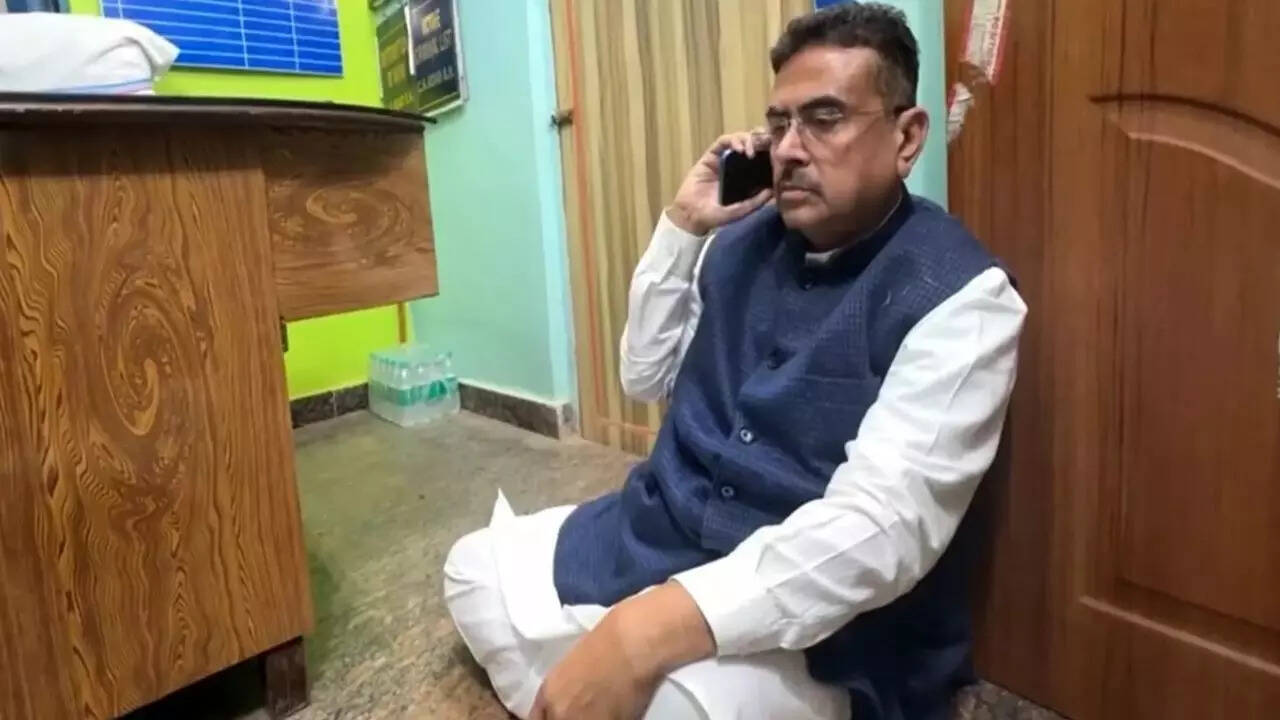
Just two days later, on Saturday night, January 10, the situation took a more confrontational turn in Paschim Medinipur district. Suvendu Adhikari, the Bharatiya Janata Party (BJP) Leader of the Opposition in the West Bengal Assembly, alleged that his convoy was attacked by TMC workers while he was traveling through the area. Adhikari claimed the assailants pelted stones at his vehicle, forcing him to seek refuge at the Chandrakona police station.
In a dramatic escalation, Adhikari staged a sit-in dharna inside the police station late Saturday night, demanding the immediate registration of a First Information Report (FIR) against the perpetrators. "They want to demolish BJP," Adhikari stated, according to reports from The Times of India, framing the incident as part of a broader strategy by the ruling TMC to suppress opposition voices. He remained at the station into Sunday, January 11, refusing to leave until police acted on his complaint. Local police confirmed the protest but had not registered the FIR by the time of publication, citing ongoing investigations.
These incidents occur against a backdrop of deepening rivalry between the TMC and BJP in West Bengal, a state with over 90 million residents and a history of fierce electoral battles. The 2021 assembly elections saw TMC retain power under Banerjee, but BJP made significant inroads, becoming the main opposition with 77 seats. Since then, tensions have simmered over several high-profile issues.
Background: A Pattern of Agency Probes and Political Clashes
The ED's involvement has been a flashpoint. Central agencies have conducted multiple raids on TMC leaders in connection with alleged scams, including the multi-crore cattle smuggling case, school recruitment irregularities, and coal smuggling rackets. Banerjee has repeatedly labeled these as "vendetta politics" by the BJP-led central government under Prime Minister Narendra Modi, especially as West Bengal gears up for potential bypolls and the 2026 assembly elections.
Adhikari, a former TMC MP who defected to BJP before the 2021 polls, has been a vocal critic of Banerjee's administration. He has led several protests himself, including dharnas against post-poll violence in 2021, which Human Rights Watch and other groups documented as claiming dozens of lives, mostly BJP workers. The recent convoy attack allegation fits into this narrative of tit-for-tat violence, with both sides accusing the other of orchestrating assaults to intimidate rivals.
West Bengal has seen periodic civil unrest tied to politics. In 2024, protests erupted over the Waqf Amendment Bill and ED summons to TMC ministers, leading to road blockades and clashes. The state's law and order situation remains a key campaign issue, with BJP alleging TMC's control over police, while TMC counters that opposition protests are engineered disruptions.
Reactions and Implications
TMC leaders dismissed Adhikari's claims, with some party spokespersons suggesting it was a "stunt" to gain sympathy. Banerjee, addressing supporters during her ED protest, reiterated calls for unity against "fascist forces," without directly commenting on the convoy incident.
Police in Paschim Medinipur deployed additional forces around the station on Sunday to manage the standoff, which ended after assurances of action, though details remain unclear. No arrests were reported immediately.
As these events unfold, they risk polarizing voters further in a state where political loyalty often runs deep along party lines. Analysts note that such unrest could influence voter sentiment, with BJP leveraging it to portray TMC as intolerant, while TMC uses it to rally its base against perceived central overreach.
With elections on the horizon, both parties are intensifying campaigns. The coming weeks may see more protests, underscoring West Bengal's role as a battleground for India's national politics. Authorities have urged restraint to prevent escalation into widespread disorder.
(Word count: 712)






