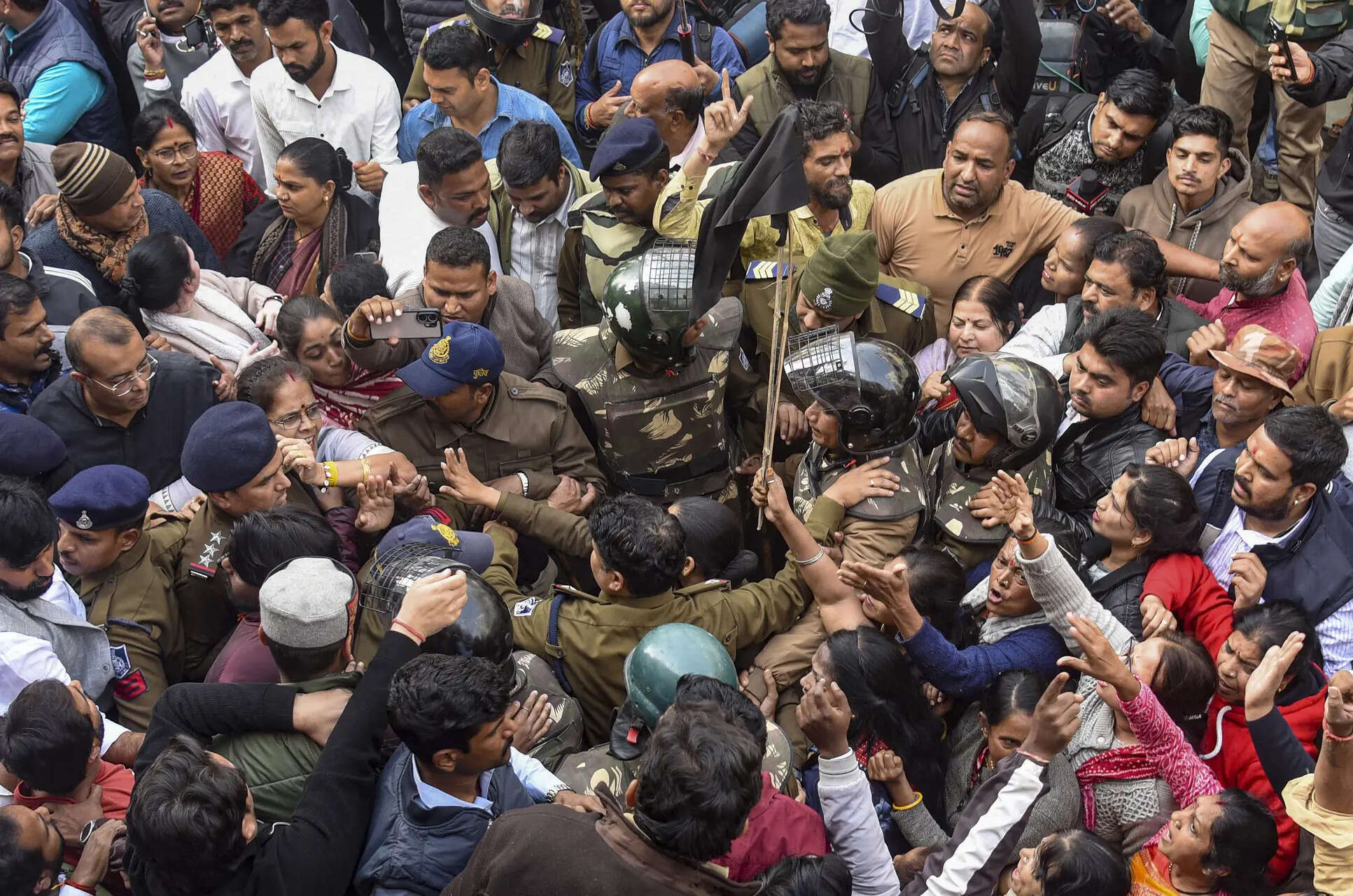

Political Clashes Erupt in Indore Over Water Contamination Deaths
Political tensions in Indore escalated into violent clashes on January 3, 2026, as workers from the Bharatiya Janata Party (BJP) and the Indian National Congress confronted each other over a series of deaths attributed to contaminated water. The unrest, which took place in the Bhagirathpura locality, resulted in police intervention and the detention of several Congress leaders and workers.
The confrontation was triggered by the rising death toll from diarrhoea linked to contaminated water sources in the area. Reports indicate that local residents have been suffering from severe health issues, prompting calls for accountability and action from both political parties. The BJP-led state government has faced criticism for its handling of the water crisis, with opposition leaders accusing it of negligence.
As Congress workers attempted to visit the families of those affected by the contaminated water, they were met with resistance from BJP supporters, leading to heated exchanges and physical altercations. Eyewitness accounts describe chaotic scenes, with police deploying to control the situation and detain several Congress members who had gathered to express solidarity with the victims' families.
In a statement to the media, a Congress spokesperson condemned the police action, labeling it as a "blatant attempt to suppress dissent." The spokesperson emphasized the need for accountability and immediate measures to ensure clean drinking water for the residents of Indore. The BJP, on the other hand, defended its actions, stating that it was necessary to maintain order and prevent further escalation of violence.
The political clash comes at a time when the issue of water quality in India is under increasing scrutiny. Many regions across the country are grappling with similar challenges, where contaminated water supplies have led to health crises, particularly affecting vulnerable populations. The situation in Indore, however, has drawn particular attention due to the visible impact on public health and safety.
Background
Waterborne diseases continue to pose a significant threat to public health in India, with millions affected annually. The lack of adequate infrastructure for water purification and distribution, combined with political inaction, has exacerbated these issues in many urban areas. Reports of diarrhoea and other water-related illnesses have surged, prompting health officials to warn against the consumption of untreated water.
The clashes in Indore highlight the deepening political divides in the country, especially as opposition parties leverage public health crises to challenge the ruling government's effectiveness. With elections approaching, the BJP and Congress are likely to continue using such issues to galvanize their respective bases.
Conclusion
The unrest in Indore serves as a stark reminder of the critical intersection between public health and political accountability in India. As the situation unfolds, calls for improved water management and infrastructure are becoming increasingly urgent. The outcome of this incident may influence the broader political landscape as citizens demand better governance and responsiveness from their leaders in addressing fundamental health and safety concerns.






