
Polish Leaders Unite on Security Amid Reports of Russian Missile Test Near Borders
Warsaw, Poland – In a rare show of bipartisan unity, Poland's President Andrzej Duda and Prime Minister Donald Tusk met on January 9, 2026, pledging close cooperation on national security matters and the ongoing peace process in Ukraine. The high-level talks mark the first direct meeting between the two leaders since September 2025, coming amid heightened tensions over reports of a recent Russian missile strike near Polish territory interpreted by some as a nuclear strike rehearsal against NATO.
The meeting, which began at 17:20 GMT, underscores a critical moment for Poland, a frontline NATO member bordering Ukraine and Belarus. Duda, a conservative from the Law and Justice (PiS) party, and Tusk, a centrist from the Civic Coalition leading the government since late 2023, have historically clashed over policy and institutional control. Their commitment to collaborate on security issues signals a pragmatic response to escalating regional threats, particularly Russia's war in Ukraine, now in its fourth year.
According to official statements, the leaders agreed to prioritize joint efforts in bolstering Poland's defenses, supporting Ukraine's sovereignty, and advancing diplomatic initiatives for peace. "In times of grave external peril, national unity is non-negotiable," a presidential spokesperson quoted Duda as saying post-meeting. Tusk echoed this, emphasizing that "Poland's security is intertwined with Europe's stability, and we will act decisively together."
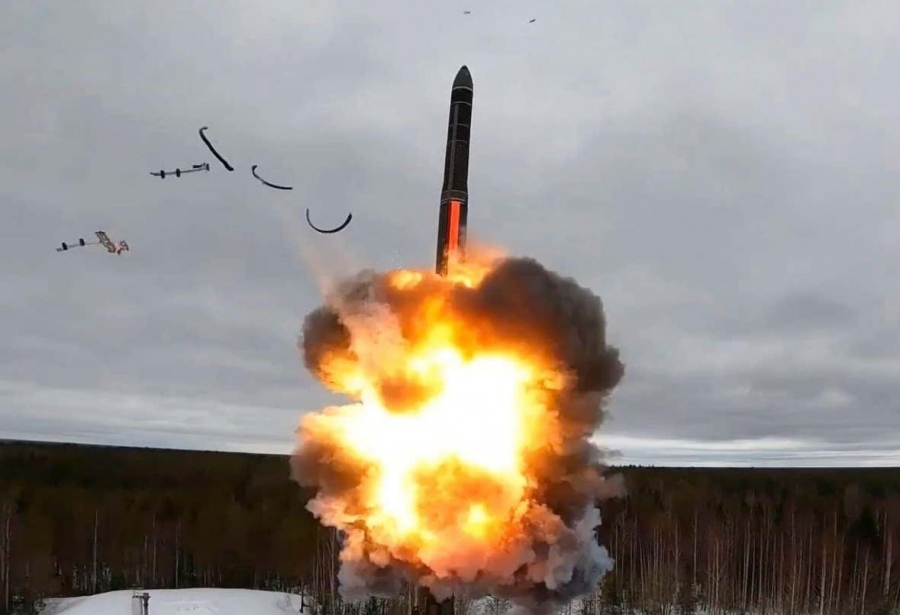
This development coincides with alarming reports published on January 10, 2026, detailing a Russian missile strike using the Oreshnik intermediate-range ballistic missile (IRBM). The strike, described in Greek media outlet Banking News as occurring "near Poland," has been characterized as a "terrifying revelation" – potentially a test run for a nuclear attack on NATO's core. The Oreshnik, unveiled by Russian President Vladimir Putin in November 2024 during a strike on Ukraine's Pivdenmash facility in Dnipro, is a hypersonic MIRV-capable weapon with a range exceeding 3,000 kilometers. Experts note its ability to evade missile defenses, raising fears of its deployment against European targets, including Poland, which hosts significant U.S. and NATO forces.
While the exact location of the reported Oreshnik strike remains unspecified in available accounts, its proximity to Poland – a key NATO eastern flank nation – has amplified concerns. Poland has repeatedly intercepted Russian missiles and drones veering into its airspace during the Ukraine conflict, with incidents in 2022 and 2024 prompting NATO activations. The January 2026 report frames the event as a deliberate signal, testing response times and capabilities for a broader escalation.
Background: Poland's Geopolitical Vulnerabilities
Poland's strategic position has placed it at the epicenter of European security dynamics since Russia's full-scale invasion of Ukraine on February 24, 2022. As the largest economy in Central Europe and a major arms supplier to Kyiv – providing tanks, artillery, and air defenses – Warsaw has invested over 4% of GDP in defense, surpassing NATO targets. Permanent U.S. troops, Patriot systems, and forward-deployed NATO battlegroups bolster its eastern borders.
Domestically, political friction between Duda's PiS and Tusk's coalition has complicated governance. Disputes over judicial reforms, media control, and military appointments persisted through 2025, even as upcoming presidential elections loomed. The September 2025 hiatus in meetings reflected these tensions, but external pressures appear to have bridged the divide.
The Oreshnik missile adds a nuclear dimension. First combat-tested in late 2024, it revives Cold War-era fears of intermediate-range systems banned under the now-defunct INF Treaty. NATO officials have warned that such weapons could target Warsaw or Baltic states within minutes, prompting calls for enhanced deterrence, including U.S. hypersonic developments and European missile shield upgrades.
Regional Implications and Outlook
The leaders' pledge extends beyond rhetoric: Poland has already ramped up conscription, border fortifications, and Ukraine aid convoys. Tusk's government has pursued EU-wide sanctions and hosted peace talks, while Duda maintains strong U.S. ties. Analysts view the unity as a stabilizing factor, potentially influencing NATO's Madrid summit follow-ups and the 2026 Washington Summit.
However, challenges persist. Russia's Oreshnik deployments signal potential for hybrid threats, including cyberattacks and migrant pressures via Belarus. Ukraine's stalled counteroffensives and winter stalemate complicate peace efforts, with Poland advocating for Kyiv's NATO path.
As Europe braces for prolonged tensions, Poland's bipartisan security front offers reassurance. "This is not just about today, but safeguarding our future," Tusk stated. Whether this cooperation endures beyond immediate crises will test Warsaw's resilience against an assertive Moscow.
(Word count: 612)






