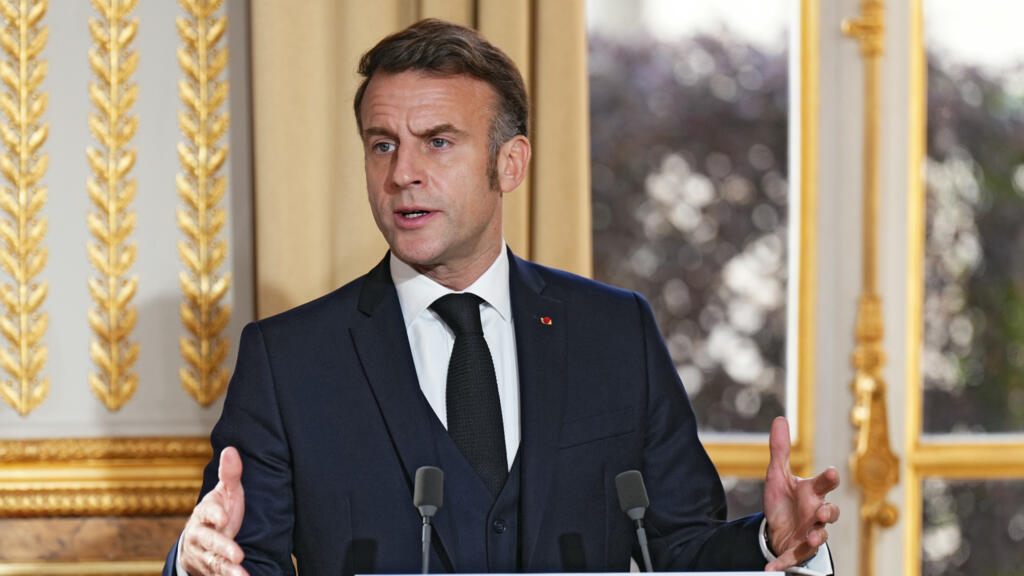

Paris Hosts High-Stakes Talks on Ukraine and Syria as Macron Rebukes US Over Maduro Ouster
Paris, France – France has positioned itself at the center of global diplomacy this week, hosting pivotal meetings on Ukraine and Syria while President Emmanuel Macron publicly critiqued the United States' tactics in the recent overthrow of Venezuelan leader Nicolas Maduro.
On Monday, officials announced that Syrian and Israeli representatives are set to resume U.S.-mediated talks in Paris aimed at forging a security agreement to ease longstanding tensions. A Syrian official, speaking anonymously due to lack of authorization, confirmed the discussions focus on defusing conflicts, potentially including arrangements for a buffer zone. This development comes amid heightened concerns in the region, with reports of sovereignty issues raised by the meetings themselves.
Simultaneously, Paris is preparing to host a gathering of the "Coalition of the Willing," a group of more than 30 nations pledged to support Ukraine against Russia's invasion. Convened by Macron at the Elysee Palace on Tuesday, the meeting will include high-profile U.S. representation from President Donald Trump's special envoy Steve Witkoff and his son-in-law Jared Kushner, according to a White House official. Cyprus Energy Minister Michael Damianos is also slated to attend on behalf of his nation, underscoring broad international backing for Kyiv.
These diplomatic maneuvers coincide with Macron's pointed remarks on U.S. foreign policy. In a statement on Monday, the French president described Maduro as "a dictator" whose departure is "good news for Venezuelans." However, he emphasized that France "does not approve" of the "method" employed by the U.S. to orchestrate the ouster. Macron's comments followed an earlier reaction where he said Venezuelans "can only rejoice" at the event, which sparked backlash and prompted his clarification.
Ukraine Support Meeting Gains Momentum
The "Coalition of the Willing" forum reflects ongoing European and global efforts to bolster Ukraine more than three years into Russia's full-scale invasion, which began in February 2022. The group, comprising at least 24 confirmed participants as of Monday, builds on prior commitments to provide military, financial, and humanitarian aid. Macron's initiative highlights France's proactive role in rallying allies, especially as U.S. leadership under Trump signals potential shifts in transatlantic priorities.
The U.S. delegation's composition—Witkoff as special envoy and Kushner, a key advisor from Trump's first term—suggests a blend of diplomatic continuity and personal networks. Kushner's prior involvement in Middle East peace efforts adds intrigue to his participation in European security talks. Cypriot attendance via Damianos, an energy-focused minister, points to the intersection of security and resource strategies, given Cyprus's proximity to conflict zones and its energy interests in the Eastern Mediterranean.
Syrian-Israeli Talks: A Fragile Thaw?
The resumption of Syrian-Israeli negotiations in Paris marks a rare direct engagement between the adversaries, historically mediated through third parties amid decades of hostility. Israel has long cited security threats from Syria, including Iranian influence and cross-border incidents, while Syria accuses Israel of territorial encroachments. The U.S.-brokered format underscores Washington's enduring role in Middle East peacemaking, even as it navigates multiple global crises.
Details remain sparse, with the Syrian official's anonymity highlighting sensitivities. Officials hope the talks yield a "security agreement," potentially addressing buffer zones along the Golan Heights frontier, a flashpoint since Israel's 1967 occupation. Paris's neutral venue aligns with France's tradition of hosting delicate diplomacy, from the 2015 Paris Climate Accord to Iran nuclear talks.
Macron's Balancing Act on Venezuela
Macron's intervention on Venezuela arrives against the backdrop of Maduro's contentious 25-year rule, marked by economic collapse, sanctions, and disputed elections. The U.S.-led operation to remove him—details of which remain classified—has polarized international opinion. France's stance mirrors a broader European wariness of unilateral actions, prioritizing multilateralism and human rights.
Macron's dual messaging—condemning the dictator while rejecting the means—echoes France's foreign policy under his leadership, which often critiques U.S. exceptionalism while cooperating on shared goals like counterterrorism.
Outlook: Paris as Diplomatic Nexus
As these talks unfold, Paris emerges as a geopolitical fulcrum, bridging Europe, the Middle East, and the Americas. Success in Ukraine or Syria could stabilize fronts, but risks of deadlock loom amid domestic pressures in host France, including economic strains and upcoming elections. Macron's Maduro comments may strain U.S.-France ties but reinforce Europe's independent voice. Observers await outcomes from the Elysee and other venues, with global stability hanging in the balance.
(Word count: 612)






