)
Pakistan's JF-17 Diplomacy Navigates Gulf Rivalries and India Tensions

Latest from X
Pakistan's JF-17 Diplomacy Navigates Gulf Rivalries and India Tensions
Islamabad/Dubai — Pakistan's push to export its JF-17 Thunder fighter jet is thrusting the country into the heart of a Gulf power struggle, as deepening defense ties with Saudi Arabia risk straining longstanding relations with the United Arab Emirates (UAE). The development, which gained traction around January 9, 2026, underscores Islamabad's delicate balancing act amid economic pressures and regional security dynamics, even as it leverages the jet's growing international appeal against the backdrop of persistent tensions with India.
The JF-17, a lightweight, multirole fighter co-developed by Pakistan Aeronautical Complex (PAC) and China's Chengdu Aircraft Corporation, has emerged as a cornerstone of Pakistan's defense diplomacy. Priced at around $25-30 million per unit—far below Western competitors like the F-16 or Rafale—it offers advanced avionics, beyond-visual-range missiles, and proven combat utility. Posts circulating on X highlight recent buzz around the aircraft, including its showcase at the Dubai Airshow where it drew crowds, including Indian visitors, and participation in Saudi wargames alongside high-end jets like the Rafale and Eurofighter Typhoon. Sentiment on the platform portrays the JF-17 as a cost-effective alternative gaining traction due to its "combat experience," a reference to its deployment by the Pakistan Air Force (PAF) in skirmishes with India, notably the 2019 Balakot airstrikes.
Central to the current geopolitical maneuvering are reports of a potential Saudi-Pakistan arrangement involving JF-17 sales in exchange for financial support. Discussions, as noted in recent X posts from observers and news accounts, suggest Saudi Arabia may convert a $2 billion loan—part of broader bailouts to Pakistan's cash-strapped economy—into a fighter jet deal. This comes as Riyadh seeks to diversify its air force beyond U.S. and European suppliers amid delays in F-15 and Typhoon deliveries. Pakistan, facing foreign exchange reserves hovering near critical lows and IMF-mandated reforms, views such deals as vital for revenue and strategic depth.
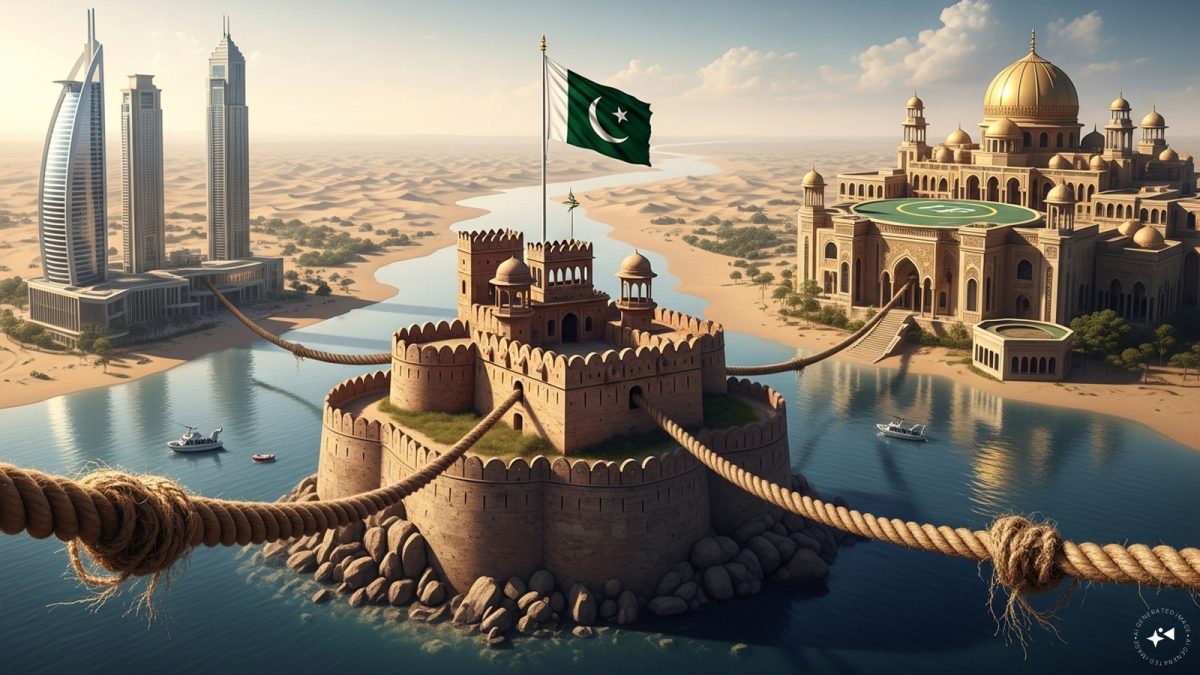
However, this tilt toward Saudi Arabia is testing Pakistan's loyalties in the Gulf. A Firstpost analysis published on January 10, 2026, frames the scenario as a "Gulf power struggle," with Islamabad's overtures to Riyadh potentially alienating the UAE. Historically, both nations have been key financial backers of Pakistan, providing billions in deposits, loans, and investments. The UAE, a major player in Pakistan's real estate and port projects like Gwadar, has also shown interest in defense cooperation but prefers neutrality in regional rivalries. Tensions between Saudi Arabia and the UAE have simmered since the Yemen war, where Abu Dhabi withdrew troops in 2019, and over influence in the Horn of Africa and Sudan. Pakistan's initial neutrality in Yemen—refusing to join the Saudi-led coalition in 2015—evolved into closer Saudi alignment under former Prime Minister Imran Khan, but recent economic dependencies amplify the stakes.
Background on JF-17 and Regional Dynamics
The JF-17 program, launched in the early 2000s, was Pakistan's response to U.S. sanctions and F-16 delivery halts. Over 150 units serve in the PAF, with exports to Nigeria, Myanmar, and Azerbaijan proving its market viability. The Block III variant, featuring an active electronically scanned array (AESA) radar and helmet-mounted displays, has elevated its profile. Saudi interest dates back to 2017 trials, but economic headwinds delayed commitments. Recent exercises, such as the PAF's integration with Saudi jets, signal maturing interoperability.
This diplomacy unfolds against enduring Indo-Pakistani friction. The nuclear-armed rivals have clashed repeatedly over Kashmir, with the 2019 aerial dogfight—where Pakistan claimed a MiG-21 kill using a JF-17—burnishing the jet's credentials. India's Tejas program, meanwhile, faces delays in Mk1A deliveries, fueling comparative narratives on X that contrast the two platforms. Pakistan promotes the JF-17 as battle-tested and economical, positioning it as a hedge against India's Rafale acquisitions and indigenous fighters.
Pakistan's economy adds urgency. With inflation above 20% and debt servicing consuming 60% of revenues, Gulf patrons are indispensable. Saudi Arabia has extended over $5 billion in aid since 2019, including oil on deferred payments, while the UAE pledged $3 billion in deposits. A JF-17 deal could unlock production lines at PAC Kamra, employing thousands and funding upgrades.
Outlook Amid Uncertainty
Analysts caution that while Saudi interest is genuine, finalizing a deal hinges on Riyadh's budget and U.S. approval under arms export rules. X posts describe the talks as "destabilizing" for regional defense planning, reflecting concerns over shifting alliances. Pakistan must tread carefully to avoid alienating the UAE, whose investments in energy and infrastructure dwarf military pacts.
As of January 10, 2026, no official confirmation has emerged from Islamabad or Riyadh. The Foreign Office reiterated "strong brotherly ties" with both Gulf states, emphasizing defense cooperation without specifics. For Pakistan, the JF-17 represents not just export revenue but a symbol of self-reliance in a volatile neighborhood. Yet, navigating Gulf fissures while countering Indian air superiority will define the success of this diplomatic thrust.
(Word count: 712)
Track this story live
Live World Map
Monitor global events in real time with a live activity map and hotspot summaries.
Markets
Connect live events to Catalyst market signals across crypto, commodities, indices, and forex.
Geopolitical Risk
Live geopolitical risk index tracking conflict zones, sanctions, and global threat levels.
Original Sources
- •
Editorial process: This article was synthesized from the original sources cited above using The World Now's AI editorial system, with byline accountability from our editorial team. We grade every story for source grounding, factual coherence, and on-topic match before publication. Read more about our editorial standards and contributors. Spot something inaccurate? Let us know.
Last updated: March 5, 2026






