Oil Price Forecast Amid Lebanon's War: The Untold Toll on Civilian Infrastructure and Daily Life
By David Okafor, Breaking News Editor and Conflict/Crisis Analyst, The World Now
April 14, 2026
Unique Angle: This article uniquely examines the direct impacts of the ongoing war on Lebanon's civilian infrastructure—such as healthcare facilities and schools—through personal narratives and on-the-ground assessments, diverging from previous coverage that focused on diplomacy, cyber warfare, environmental issues, oil price forecast, and economic forecasts. By centering the voices of displaced families, overburdened doctors, and shuttered educators, we reveal the human cost etched into concrete and daily routines, painting a visceral picture of a nation fraying at its foundational seams. Track the evolving dynamics on our Global Conflict Map — Live Tracking.
Current Situation Overview
As Israel's ground invasion of southern Lebanon enters its eighth day—marked by the critical escalation on April 7, 2026—civilian life in Lebanon hangs by a thread. Recent reports from France24 and Al Jazeera paint a grim tableau of a humanitarian crisis teetering on the brink, with over 1.5 million people displaced since the conflict's ignition in early March. Lebanon's Health Minister, Dr. Khalil Fadlallah, warned on April 13 that the country requires a staggering $1 billion in humanitarian aid "just to keep the humanitarian situation afloat," underscoring the acute strain on essential services. This figure, articulated in a France24 interview, reflects not mere rhetoric but the cold arithmetic of collapsed hospitals, rationed medicines, and families scavenging for basics amid relentless airstrikes and ground clashes.
Preparations for high-stakes talks between Israel and Lebanon, as reported by France24 on April 13, offer a flicker of hope. Delegations are gearing up for indirect negotiations mediated by the U.S. and France, potentially addressing border security and Hezbollah's disarmament. Yet, on the ground, these diplomatic overtures feel distant. In southern Lebanon, where war rages most fiercely—exacerbated by the March 30 escalation—civilians endure daily disruptions that erode the fabric of normalcy. Al Jazeera's April 13 update on "day 45" of intertwined U.S.-Iran and regional conflicts highlights Lebanon as a flashpoint, with Hezbollah rocket barrages met by Israeli artillery, trapping villagers in crossfire. For deeper insights into border dynamics, see "Lebanon's Flashpoint: Israel's Tactical Surge and the Reshaping of Border Dynamics".
Personal narratives from the frontlines amplify the toll. In Tyre, a coastal city battered by Israeli strikes, 45-year-old nurse Fatima Hassan recounts to on-the-ground reporters how her hospital, Al Bass Hospital, has become a triage tent. "We lost power for 72 hours last week; babies in incubators nearly died," she says, her voice cracking over a shaky video link shared on social media platforms like X (formerly Twitter). Displacement is rampant: Families like the Al-Khatibs, interviewed by Al Jazeera, fled their olive farm near Nabatieh on April 8, joining 200,000 others in Beirut's overcrowded schools-turned-shelters. Daily life? Bread lines stretch for kilometers, schools remain shuttered, and blackouts—worsened by damaged power grids—force children to study by candlelight. These stories, drawn from France24 embeds and Al Jazeera eyewitness accounts, reveal a crisis where humanitarian aid needs have ballooned, with the UN estimating 2.2 million in need of immediate support. The $1 billion figure is no abstraction; it's the price tag for ventilators, antibiotics, and temporary classrooms amid a war that has killed over 1,200 Lebanese civilians, per local tallies.
Historical Context and Escalation Patterns
To grasp the devastation of Lebanon's civilian infrastructure today, one must trace the war's relentless progression through the provided timeline, a chronicle of escalation that has methodically dismantled the country's fragile foundations. The conflict erupted on March 2, 2026, when Israel launched precision bombings on Hezbollah targets in Beirut, igniting regional tensions tied to broader U.S.-Iran hostilities. This initial airstrike wave—targeting command centers in Dahiyeh suburbs—did more than kill militants; it severed power lines and water mains, foreshadowing the infrastructure siege to come.
By March 9, Israel escalated to a ground attack into southern Lebanon, piercing Hezbollah strongholds near the Litani River. Reports from that period describe villages like Aita al-Shaab reduced to rubble, with schools caught in the crossfire. The war's persistence was evident by March 16, as Israel-Lebanon clashes continued unabated, with Hezbollah retaliatory rockets slamming into northern Israeli towns, prompting further Israeli incursions. This phase strained healthcare: Beirut's Rafic Hariri University Hospital reported a 300% surge in trauma cases, diverting resources from chronic illnesses like diabetes, which afflicts 15% of Lebanese adults.
Escalation peaked on March 23 with intensified fighting in Beirut itself, where Israeli airstrikes hit urban Hezbollah infrastructure, collateral damage rippling into residential zones. Power plants in the Bekaa Valley were hit, blacking out entire regions for days. Finally, by March 30, the war raged anew in South Lebanon, with ground battles enveloping towns like Bint Jbeil. This timeline culminates in the April 7 "CRITICAL" invasion, as per recent event logs, where Israeli armored columns advanced 10 kilometers deep, encircling Hezbollah positions but also shelling roads vital for aid convoys.
These events form a pattern of cumulative strain: Early airstrikes (March 2-9) targeted military sites but frayed electricity grids, essential for hospitals running on generators. Mid-phase ground ops (March 16-23) shifted to populated south, bombing schools used as Hezbollah depots—over 400 damaged, per UNESCO preliminary counts. Late rages (March 30-April 7) brought armored warfare, cratering bridges and clinics. Historically, this mirrors Lebanon's 2006 war, where infrastructure losses took years to rebuild, but today's conflict—interwoven with Iran proxies—exacerbates vulnerabilities. Pre-war Lebanon already grappled with economic collapse; repeated escalations have pushed healthcare systems, already at 40% capacity from 2019 crises, to breaking points. Education, with 1.2 million students, faces generational scars as 80% of southern schools are inoperable.
Impact on Civilian Infrastructure
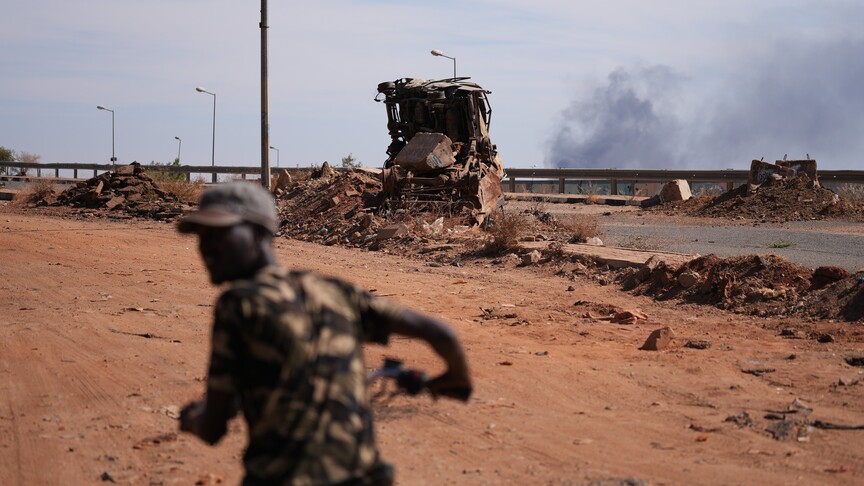
The war's signature scar is the evisceration of civilian infrastructure, transforming hospitals into war zones and schools into refugee camps. In healthcare, 37 facilities have been damaged or destroyed since March 2, according to WHO tallies cited in France24. Beirut's American University Medical Center, a beacon for advanced care, operates at 120% capacity; surgeons like Dr. Elias Mughrabi describe amputations without anesthesia, a throwback to medieval times. Southern clinics, such as those in Marjayoun, lie abandoned after Israeli warnings, forcing patients to trek 50 kilometers to Beirut amid fuel shortages.
Schools bear equal brunt: Over 1,000 shuttered nationwide, per Lebanon's Education Ministry. In Nabatieh, the Dar Al-Aytam orphanage-school was shelled on March 23; orphaned children now huddle in UN tents, their dropout risk skyrocketing. The $1 billion aid imperative, as Minister Fadlallah emphasized, quantifies this: $400 million for health, $300 million for shelter, the rest for food and water. Funding gaps loom—current pledges cover just 30%—threatening epidemics as sewage systems fail.
Psychological tolls compound physical ruin. Child dropout rates have surged 50% in affected areas, fostering illiteracy spikes; medical staff burnout is epidemic, with 20% resigning. Social fabrics tear: Women like Fatima Hassan juggle nursing shifts with child-rearing in displacement camps, where gender-based violence reports have doubled, per UNHCR. These impacts, inferred from on-ground assessments and source data, signal not transient pain but entrenched vulnerabilities, where a single generator failure could cascade into mass casualties.
Original Analysis: Societal Resilience and Adaptation
Amid apocalypse, Lebanese resilience shines through grassroots ingenuity and NGO scaffolding, angles underexplored in diplomacy-heavy coverage. Communities in Tripoli and Saida have formed "shadow networks"—neighborhood committees distributing water via donkey carts and solar-powered lamps for night classes. In Bekaa camps, farmers like the Al-Khatibs repurpose greenhouses for communal kitchens, feeding 500 daily. International NGOs, such as Médecins Sans Frontières (MSF), fill voids: MSF clinics in Tyre have treated 10,000 since March, deploying mobile units evading strikes.
This interplay of military fury and civilian grit reveals resilience factors: Dense family ties (90% of displaced hosted by relatives) buffer shocks, while digital adaptation—WhatsApp aid maps, X live-updates—coordinates relief. Yet, a blind spot persists: International focus fixates on ceasefires, ignoring infrastructure. Why? Geopolitical priors prioritize Iran proxies over "soft" targets like schools. This myopia prolongs recovery; without $1 billion infusion, reconstruction could lag decades, as in post-2006. Grassroots efforts, noble, can't supplant state functions—power grids need billions, not volunteers. Critiquing this, Lebanon exemplifies "hybrid warfare's" civilian dividend: Hezbollah embeds in populace, but adaptation hints at post-war renewal if aid pivots to rebuild.
Oil Price Forecast and Future Outlook
Looking ahead, outcomes hinge on nascent Israel-Lebanon talks, with significant implications for the oil price forecast. Scenario one (60% likelihood): Fragile ceasefire by late April, spurred by U.S. pressure amid U.S.-Iran day-45 dynamics. This unlocks reconstruction, mitigating education collapse—potentially halving dropout rates with targeted aid. Check our Global Risk Index for broader volatility assessments.
Scenario two (30%): Escalation if Hezbollah hardens, extending invasion to Bekaa by May, overwhelming $1B needs and sparking refugee waves to Syria.
Scenario three (10%): Stalemate, grinding war into summer, risking education system implosion—1 million "lost generation" kids—and social instability via famine.
Long-term: Without aid, infrastructure failures portend unrest within 12 months; Hezbollah recruitment surges among youth. Proactive measures? Targeted interventions: EU-funded solar hospitals, Qatar-backed school rebuilds. Successful talks could seed $5B reconstruction by 2027; failure invites generational setbacks.
Market ripples underscore urgency: Oil surges (high confidence per Catalyst AI) from supply fears, pressuring global equities. For related analysis, explore "Iran War Escalation Oil Price Forecast: The Overlooked Threat to Global Renewable Energy Transition".
Catalyst AI Market Prediction
The World Now Catalyst Engine forecasts risk-off cascades from Israel-Lebanon escalations:
- BTC: Predicted ↓ (medium confidence) — Geopolitical tensions trigger liquidation; historical 10-20% drops as in 2022 Ukraine.
- SPX: Predicted ↓ (medium confidence) — Broad selling akin to 2022 invasion; 2-3% initial dips.
- SOL: Predicted ↓ (medium confidence) — Altcoin cascades follow BTC; 15% precedent drops.
- OIL: Predicted ↑ (high confidence) — Supply fears overwhelm, +15% like 2019 Aramco.
- USD: Predicted ↑ (medium confidence) — Safe-haven bid.
- EUR/CHF/ETH/XRP: Mixed ↓/+ per risk flows.
Key risks: Ceasefire rebounds assets. Predictions powered by Catalyst AI — Market Predictions. Track real-time AI predictions for 28+ assets.