
North Korea Launches Ballistic Missile, Levels Drone Incursion Accusations at South Korea Amid Heightened Tensions
Seoul/Pyongyang – North Korea conducted a ballistic missile launch on January 4, 2026, prompting international concern over its expanding nuclear and missile capabilities, just days before Pyongyang accused South Korea of sovereignty-violating drone incursions and issued stern warnings of retaliation.
The missile test, described by North Korean state media as a demonstration of the regime's commitment to modernizing its arsenal, occurred at 00:30 GMT. Leader Kim Jong-un personally oversaw the launch and emphasized the urgent need to "expand and modernize" the country's missile production, according to official announcements. South Korean and Japanese militaries confirmed the launch, tracking the projectile over the Sea of Japan (East Sea) without immediate reports of it landing in prohibited zones. This marks one of the earliest major provocations of 2026, following a pattern of frequent tests that have accelerated under Kim's leadership.
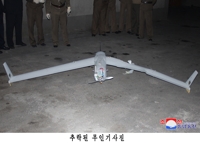
Just six days later, on January 10, North Korea escalated rhetorical hostilities by publicly accusing South Korea of multiple drone incursions into its airspace dating back to September 2025. In a statement carried by state media and reported by Yonhap News Agency, Pyongyang claimed Seoul's unmanned aerial vehicles (UAVs) had "infringed on its sovereignty," prompting vows that South Korea "will pay a dear price." The accusations come amid a history of cross-border drone activities, with North Korea having previously flown its own drones into South Korean airspace in late 2022 and 2023, leading to airspace closures near the demilitarized zone (DMZ) and mutual recriminations.
"This is not an isolated incident but part of a deliberate pattern of aggression," a North Korean foreign ministry spokesperson stated, as quoted in official channels. South Korea's defense ministry dismissed the claims as "groundless propaganda," reiterating its right to conduct surveillance operations in response to North Korea's own provocations, including over 30 missile launches in 2025 alone.
Escalating Missile Activities
North Korea's ballistic missile program has been a cornerstone of its military strategy, with tests serving both as technological demonstrations and political signaling. The January 4 launch aligns with Pyongyang's stated goals under its five-year military buildup plan, initiated in 2021, which prioritizes hypersonic, multiple independently targetable reentry vehicle (MIRV), and submarine-launched capabilities. Kim Jong-un's emphasis on production expansion reflects ongoing efforts to mass-produce weapons amid international sanctions, including the development of solid-fuel missiles that reduce launch preparation time and detection risks.
International monitors, including the U.S. Indo-Pacific Command, condemned the test as "destabilizing," noting it violates multiple United Nations Security Council resolutions capping North Korea's missile activities. Japan, which detected the launch trajectory passing over its exclusive economic zone, activated its missile defense systems and lodged a formal protest. The event underscores Pyongyang's defiance ahead of potential diplomatic shifts, such as the incoming U.S. administration's approach to denuclearization talks, which have stalled since the 2019 Hanoi summit collapse.
Historical Context of Drone and Border Frictions
Tensions over drones trace back to December 2022, when five North Korean UAVs breached South Korean airspace, prompting Seoul to bolster its air defenses and pursue the intruders unsuccessfully. North Korea retaliated with artillery drills near the Northern Limit Line (NLL), the de facto maritime border. Subsequent incidents in 2023 saw Pyongyang destroy an inter-Korean liaison office in Kaesong and amplify anti-South rhetoric, including labeling Seoul a "foreign, enemy" state in 2024 constitutional amendments.
The latest accusations of September 2025 incursions revive these flashpoints, potentially justifying further North Korean military maneuvers. Analysts note that such claims often coincide with internal purges or economic pressures in the North, where food shortages and sanctions have exacerbated hardships despite claims of self-reliance (juche).
South Korea, under President Yoon Suk Yeol, has adopted a "peace through strength" posture, expanding trilateral cooperation with the U.S. and Japan. This includes upgraded THAAD deployments and joint exercises like Freedom Shield, which Pyongyang routinely denounces as rehearsals for invasion.
Broader Geopolitical Implications
The dual developments – missile launch followed by drone accusations – signal a volatile start to 2026 on the Korean Peninsula. With North Korea reportedly nearing operational deployment of advanced ICBMs capable of reaching the U.S. mainland, global powers are recalibrating strategies. China, North Korea's primary ally, has urged restraint without explicitly condemning the tests, while Russia, deepening military ties with Pyongyang post-Ukraine invasion, may provide technological exchanges.
United Nations Secretary-General Antonio Guterres called for dialogue, warning of "risks to regional and global security." South Korea's foreign ministry echoed this, proposing resumed working-level talks, though Pyongyang has shown no interest.
As winter military drills intensify, the potential for miscalculation remains high. Observers will watch for further tests or border incidents, which could draw in allies and test the durability of recent U.S.-South Korea-Japan security frameworks.
In a region shadowed by nuclear threats, these events reaffirm the fragile status quo, where provocations underscore the absence of lasting peace mechanisms.
(Word count: 712)






