Nicolás Maduro Indicted on Drug Trafficking and Corruption Charges Following U.S. Military Operation in Venezuela

Latest from X
Nicolás Maduro Indicted on Drug Trafficking and Corruption Charges Following U.S. Military Operation in Venezuela
In a dramatic turn of events, U.S. authorities have indicted Venezuelan President Nicolás Maduro and his wife, Cilia Flores, on charges of corruption and drug trafficking, accusing them of orchestrating the shipment of thousands of tons of cocaine into the United States. The indictment was unsealed on January 4, 2026, shortly after Maduro and Flores were captured in a U.S.-led military operation in Venezuela. The operation has sparked both condemnation and support internationally, while raising questions about the future of Venezuela’s governance and U.S. involvement in the region.
According to the indictment, Maduro and his associates are alleged to have used their positions of power to facilitate large-scale narcotics trafficking, enriching themselves while exacerbating Venezuela’s ongoing humanitarian crisis. The charges also include accusations of narco-terrorism, with U.S. prosecutors claiming Maduro collaborated with groups designated as terrorist organizations to further his criminal enterprises. Following their capture, Maduro and Flores were transported to New York, where they are now detained and awaiting trial in a federal court.
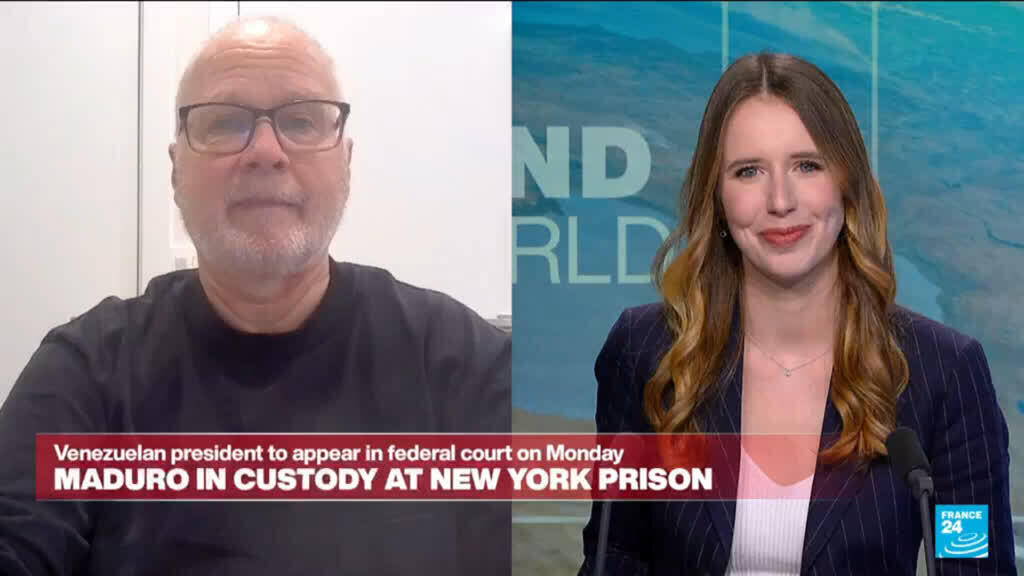
David Smilde, a sociology professor at Tulane University in New Orleans, provided insight into the situation during an interview with France 24. “This is a significant escalation in the U.S.’s approach to the Venezuelan crisis,” Smilde noted. “The military operation to capture Maduro signals a shift from diplomatic pressure to direct intervention, which could have profound implications for Venezuela’s political landscape and U.S.-Latin America relations.”
Details of the Military Operation and Capture
The operation to apprehend Maduro unfolded on January 4, 2026, in a swift and coordinated effort by U.S. forces. While specific details of the mission remain classified, reports indicate it was executed with precision to avoid civilian casualties. CBS News reported that former President Donald Trump commented on the operation, stating that the U.S. would “run” Venezuela for the time being, though it remains unclear what form this involvement will take or how long it will last.
The capture of Maduro has intensified debates over the legality and ethics of such interventions. Critics argue that the operation violates Venezuelan sovereignty, while supporters contend that it was a necessary step to address rampant corruption and drug trafficking that have destabilized the region and contributed to the influx of narcotics into the U.S.
Background on Maduro’s Rule and Allegations
Nicolás Maduro has been a polarizing figure since assuming power in 2013 following the death of Hugo Chávez. Under his leadership, Venezuela has faced severe economic collapse, hyperinflation, and widespread shortages of food and medicine, leading to a mass exodus of millions of citizens. Maduro’s government has long been accused of authoritarian practices, including suppressing dissent and rigging elections, allegations he has consistently denied.
The U.S. has targeted Maduro with sanctions and diplomatic measures for years, refusing to recognize his presidency after the disputed 2018 election. The recent indictment builds on earlier charges from 2020, when the U.S. Department of Justice first accused Maduro of narco-terrorism and offered a $15 million reward for information leading to his arrest. The latest charges, however, are accompanied by direct action, marking a significant escalation in the U.S. stance.
International Reactions and Domestic Implications
The capture and indictment of Maduro have elicited a spectrum of reactions. Some Latin American nations and allies of Maduro’s regime, such as Cuba and Nicaragua, have condemned the U.S. operation as an imperialist overreach. Meanwhile, opposition leaders within Venezuela and several Western governments have expressed cautious support, viewing the move as an opportunity to dismantle a corrupt system and pave the way for democratic reforms.
On social media platforms like X, discussions about the operation are polarized. Some users describe the intervention as a justified “extraction” to hold Maduro accountable for international crimes, while others question the timing and motives behind the operation, pointing to inconsistencies in U.S. policy on drug trafficking cases involving other leaders.
Outlook for Venezuela and U.S. Policy
With Maduro in custody, Venezuela faces an uncertain future. The power vacuum left by his removal could lead to further instability, especially if competing factions within the country vie for control. The U.S. has stated, through Secretary of State Marco Rubio as reported by BBC News, that it is not at war with Venezuela and will retain “multiple levers of leverage” to encourage the country’s leaders to make the right decisions. However, the extent of U.S. involvement in Venezuela’s governance remains a contentious issue.
As the legal proceedings against Maduro and Flores unfold in New York, the international community will be watching closely. The outcome of this case could set a precedent for how global powers address corruption and drug trafficking by state actors, while also shaping the trajectory of Venezuela’s long-standing political and humanitarian crisis. For now, the world awaits further developments in this high-stakes chapter of Venezuelan history.
Track this story live
Original Sources
- •
- •
Editorial process: This article was synthesized from the original sources cited above using The World Now's AI editorial system, with byline accountability from our editorial team. We grade every story for source grounding, factual coherence, and on-topic match before publication. Read more about our editorial standards and contributors. Spot something inaccurate? Let us know.
Last updated: January 17, 2026






