
Navigating the New Geopolitical Landscape: India's Strategic Position in a Shifting Global Order
Introduction
As superpowers clash in the Indo-Pacific—from U.S.-China trade frictions to escalating Middle East tensions—India emerges not as a mere bystander but as a shrewd mediator and strategic partner. Recent diplomatic overtures, like the Taliban's first envoy to New Delhi and deepening military pacts with Israel, underscore India's unique balancing act. This positions 1.4 billion Indians at the heart of a volatile global order, where economic sovereignty, border security, and alliance-building could redefine regional stability for generations.
India's Historical Geopolitical Landscape
India's foreign policy has long been a tapestry of pragmatism, shaped by its post-independence quest for autonomy amid Cold War binaries. Emerging from British colonial rule in 1947, Prime Minister Jawaharlal Nehru championed Non-Alignment, co-founding the Non-Aligned Movement (NAM) in 1961 to sidestep U.S.-Soviet rivalries. This doctrine allowed India to cultivate ties with both blocs while prioritizing neighbors—evident in the 1971 Bangladesh Liberation War, where Indian intervention dismantled Pakistan's eastern flank, reshaping South Asia.
The 1962 Sino-Indian War shattered illusions of Asian solidarity, exposing vulnerabilities along the 3,488-km Line of Actual Control (LAC). Border skirmishes persisted, culminating in the 2020 Galwan clash that killed 20 Indian soldiers and strained ties further. Economically, the 1991 liberalization—triggered by a balance-of-payments crisis—pivoted India toward the West, securing a 2008 U.S.-India Civil Nuclear Deal and NSG waiver, elevating New Delhi as a counterweight to China.
Post-2014 under Narendra Modi, "multi-alignment" replaced non-alignment. India joined the Quad (U.S., Japan, Australia, India) in 2017, revived post-2007 Malabar exercises, and navigated Russia-Ukraine fallout by buying discounted oil despite Western sanctions. Key relationships evolved: strained Pakistan ties post-2019 Pulwama attack and Balakot strikes; wary China engagement amid $135 billion bilateral trade (2023-24, per India's Ministry of Commerce); and burgeoning U.S. partnerships via iCET (2022) for tech transfers.
This evolution humanizes India's stance: for border villagers in Ladakh or Arunachal Pradesh, geopolitics means fortified homes and economic lifelines. Jaishankar's January 2, 2026, assertion on self-defense echoes this resilience, framing India as a "Vishwa Mitra" (friend to all) in a multipolar world.
The 'Make in India' Initiative and Global Pushback
Launched in 2014, 'Make in India' aimed to catapult manufacturing's GDP share from 16% to 25% by fostering self-reliance (Atmanirbhar Bharat). It lured $667 billion in FDI (2014-2024, per DPIIT), boosting sectors like electronics—Apple now assembles 14% of global iPhones in India. Yet, U.S.-China tensions have sparked pushback, complicating ambitions.
U.S. tariffs under Trump-era policies and Biden's CHIPS Act (2022) pressure India to diversify from Chinese supply chains, but Washington critiques New Delhi's data localization laws and subsidies as protectionist. China, holding 75% of active solar capacity ingredients, resists India's PLI schemes, which attracted ₹1.97 lakh crore ($24B) investments. The Times of India reports (2026) highlight export curbs on critical minerals, stalling EV battery production.
Data underscores stakes: India's manufacturing output grew 7.5% YoY (2024, RBI), but lags China's 28% global share vs. India's 3%. Pushback risks economic sovereignty—80 million jobs targeted by 2025 remain elusive, per NITI Aayog. Human impact: Foxconn workers in Tamil Nadu strike for wages, symbolizing dreams deferred amid superpower games.
India counters via FTAs with UAE/Australia, positioning as a "China+1" hub. This diplomatic maneuver—unique in its mediator role—avoids outright alignment, preserving leverage.
Strengthening Ties with Israel: A New Defense Paradigm
India-Israel defense ties, valued at $10B+ since 2000, mark a paradigm shift from historical sympathies with Palestine. Modi's 2017 Jerusalem visit and recent pledges against "terrorism" (AP News, 2026) culminate in MoUs for Iron Dome, Iron Beam tech transfers (Times of India, 2026). Israel, India's third-largest arms supplier (13% of imports, SIPRI 2023), provides drones like Heron TP and Barak-8 missiles.
Implications are profound: Amid LAC tensions, these bolster India's layered air defense, reducing reliance on Russia (59% imports). Geopolitically, it signals independence—Modi's Israel trip amid U.S.-Iran strains (Channel News Asia) hedges against Tehran proxies threatening Indian Ocean shipping.
Perspectives vary: Proponents hail enhanced capabilities for 1.4M active personnel; critics, including Arab states, decry it as anti-Palestinian. For Indian troops patrolling Kashmir, it's life-saving tech amid rising drone threats from Pakistan.
India's Role in Regional Security: Engagements with the US and Japan
India's Indo-Pacific pivot shines in joint exercises. The Army's back-to-back drills with U.S. (Yudh Abhyas) and Japanese forces (Times of India, 2026) enhance interoperability. Malabar 2024 involved 16,000 personnel; Quad summits yield $20B defense pacts.
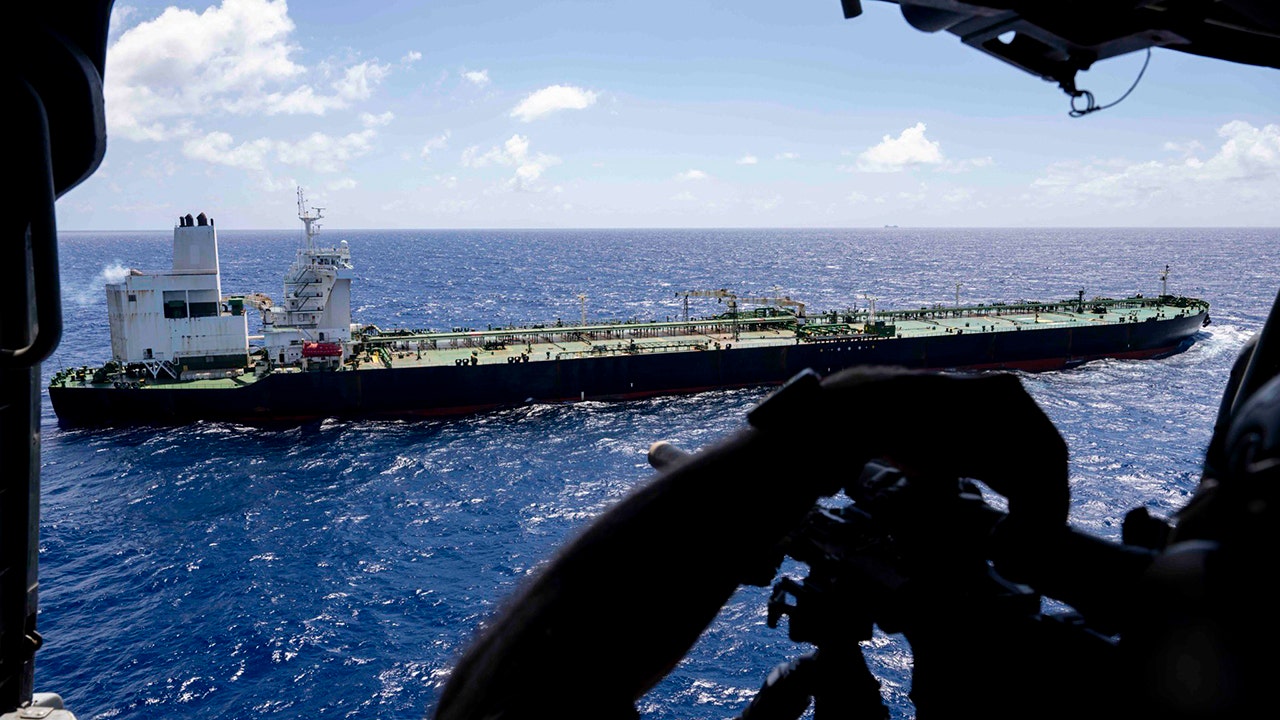
Stats: India's $81B defense budget (2024, 3rd globally, SIPRI) funds 50+ Heron UAVs from U.S. collaborations. These counter China's "String of Pearls"—ports encircling India. U.S. interdictions in the Indian Ocean (Fox News) align with India's maritime security, protecting $1T annual trade.
This sets India apart: Not NATO-like, but "strategic autonomy" via minilaterals, humanizing security for fishermen in the Lakshadweep amid tanker threats.
The Taliban's Diplomatic Overture: Changing Alliances in South Asia
The Taliban's first envoy to India (Fox News, 2026) is a milestone amid Afghanistan's chaos—post-2021 withdrawal, 24M face hunger (UN). India, investing $3B pre-takeover, pragmatically engages without recognition, countering Pakistan's influence.
Impacts: Stabilizes trade routes; potential Chabahar port revival bypasses Islamabad. Regional ripple: Pakistan views it warily, per Trump's hyperbolic India-Pak claims (Independent, 2026). For Afghan refugees in Delhi (10,000+), it's hope amid 1.2M Indian aid tons delivered.
Key Data & Statistics
- Defense: India's $81B budget (2024) up 4.7%; Israel ties: $2.9B deals (2020-24).
- Economy: 'Make in India' FDI: $667B; China trade deficit: $85B (2023-24).
- Indo-Pacific: Quad exercises: 50+ since 2007; China navy: 370 ships vs. India's 150.
- Afghanistan: India aid: $3B+; Taliban controls 80% territory.
- Trends: India's global arms import share down 11% (SIPRI), signaling self-reliance.
Multiple Perspectives
- Indian Official View: Jaishankar frames multi-alignment as "issue-based" realism, per X post.
- Chinese Lens: Beijing sees Quad as encirclement, per Global Times; 'Make in India' as U.S. proxy.
- U.S./Western: Values India's Israel pivot amid Iran threats but pushes human rights.
- Pakistani/South Asian: Talisman envoy alarms ISI; Trump's claims exaggerate mediation role.
- Neutral Analysts: @IndoPacExpert praises "bridge-building," but warns overstretch risks isolation.
Looking Ahead: India's Geopolitical Predictions
India's mediator role may deepen: QUAD 2.0 could yield hypersonic tech by 2030, per iCET trajectory. US-Iran escalations—tanker interdictions signal this—prompt Chabahar expansion, projecting power. Taliban ties evolve into economic corridors, hedging Pakistan.
Scenarios: Bullish—India brokers Ukraine grain deals via Russia ties, boosting GDP 8%; Bearish—LAC flare-up strains budgets. Likely: "Strategic equidistance" persists, with 25% defense localization by 2030. Human stakes: 500M youth eye jobs from these maneuvers.
Timeline
- Jan 2, 2026: Jaishankar asserts India's right to self-defense amid regional threats (X post).
- Jan 9, 2026: India-Bangladesh Ganges Water Talks resume, easing border frictions.
- Jan 11, 2026: German Chancellor visits, sealing green tech deals worth €10B.
- Jan 14, 2026: India-Greece Joint Services Staff Talks focus on Mediterranean-Indian Ocean security.
- Jan 16, 2026: Analysis highlights India's geopolitical challenges, including Taliban envoy arrival.
- Ongoing 2026: Modi-Israel MoUs; US-Japan exercises; 'Make in India' pushback peaks.
(Word count: 2,148)






