
NATO Summit in Ankara Opens With F-35 Debate, New Defense Pledges and Greenland Dispute
World leaders opened the NATO Summit in Ankara with new defense pledges, billions in weapons deals, a debate over Turkey's potential purchase of F-35 jets, renewed U.S. pressure on allies to increase military spending, and fresh disputes including Trump's call for U.S. control of Greenland.
Summit Opens With Defense Pledges and F-35 Debate
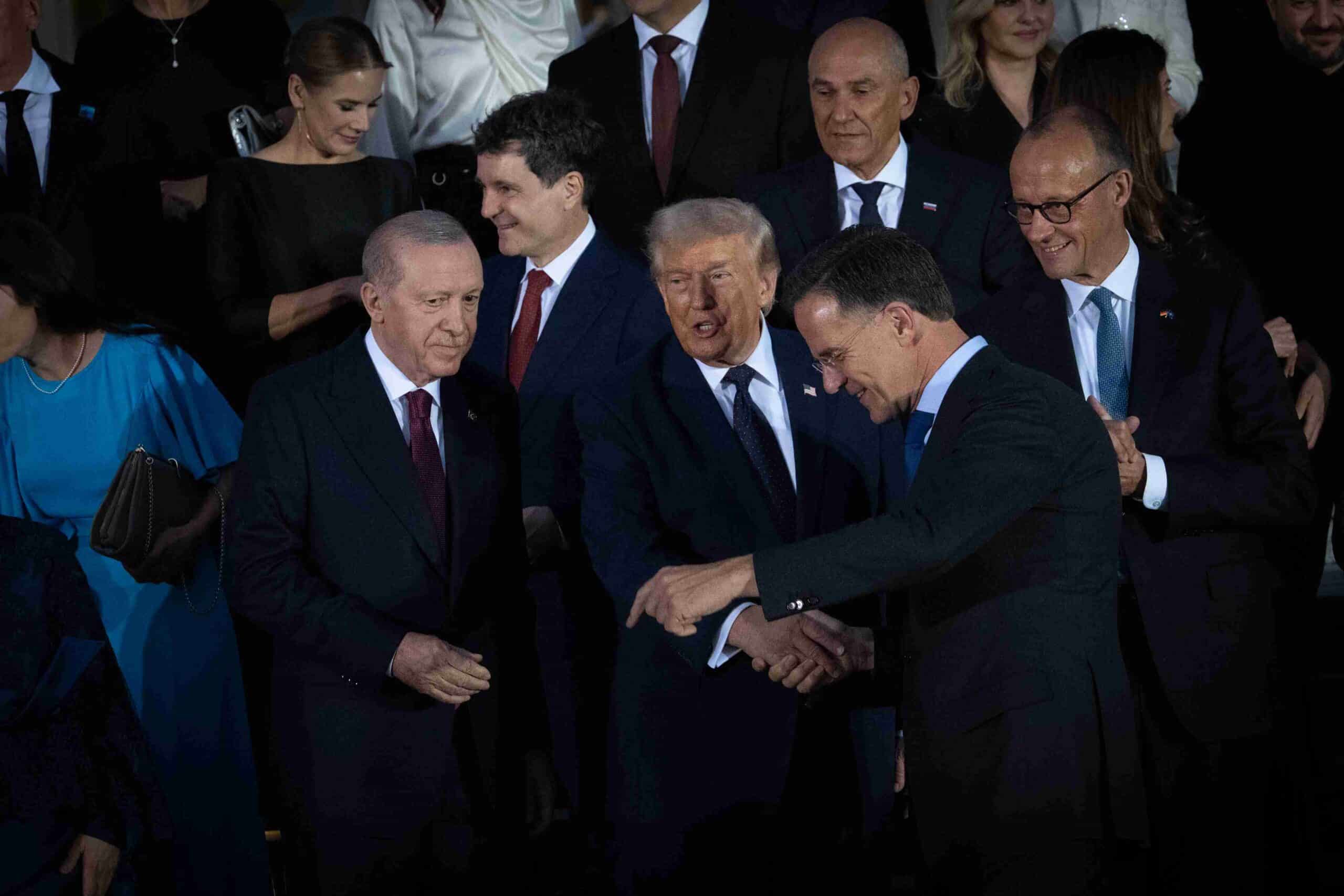
World leaders opened the NATO Summit in Ankara this week, and the first day alone produced new defense pledges, billions of dollars in weapons deals, and a handful of unresolved disputes. The summit has brought together the alliance’s 32 members, along with partners such as Ukraine, South Korea, and Qatar, at a time of rising pressure from Washington to boost military spending. One of the biggest storylines to emerge was Turkey’s push to buy F-35 fighter jets. US President Donald Trump told reporters in Ankara that a decision on the sale is coming soon. He also promised to lift sanctions imposed on Turkey under the Countering America’s Adversaries Through Sanctions Act. Washington placed those sanctions on Ankara in 2020, after Turkey bought a Russian air defense system and lost its spot in the F-35 program. [1] Not everyone welcomed the idea. Israeli Prime Minister Benjamin Netanyahu said selling F-35s to Turkey would upset the balance of power in the Middle East. He argued that Turkey’s military ambitions make the move risky for the region. [1]
Trump Presses Allies on Spending as NATO Figures Released
Defense spending also dominated the agenda. New NATO figures released ahead of the summit show five member countries are on track to spend 3.5% of their GDP on core defense this year. Some allies, though, remain far behind, spending closer to 2%. Trump renewed his pressure campaign on allies, calling NATO a “paper tiger” and arguing the alliance would struggle to survive without the United States. [1] Germany’s Chancellor Merz said the summit will bring a 'new spirit' to NATO with European allies ramping up spending. [2]
Ukraine Aid and Russian Threat Take Center Stage
Ukraine’s needs also took center stage. Norway pledged $306 million to help Kyiv strengthen its air defenses against ballistic missiles. Denmark, Germany, and Canada joined Norway in ordering new Patriot missile systems directly from a factory in the United States. NATO Secretary General Mark Rutte warned that Russia is now funneling nearly half its national budget into its war effort, and he urged allies to move faster and work together. [1] Bulgarian Prime Minister Rumen Radev has said upon arriving at the NATO summit in Ankara that Sofia no longer has the capacity to transfer weapons and ammunition from its stocks to Ukraine, but is willing to assist with the repair of military equipment. [5]
U.S. Arms Shortages Raise European Concerns
In Europe growing concerns that the American defense industry is no longer able to deliver weapons promised to NATO allies, because American stocks have been depleted due to the conflicts in Ukraine and Iran. As a result, allies are considering new ways to arm themselves and secure their own defense. The United States has this year delayed or canceled deliveries of a number of key weapons systems to countries in Europe, including Tomahawk cruise missiles, mobile rocket systems HIMARS and much-needed Patriot Advanced Capability-3 (PAC-3) missiles, whose stocks the United States, according to estimates, spent about 50 percent by April this year during the war with Iran. These systems are crucial for countering missile attack threats in Ukraine, and would also be needed to defend Europe in the event of an armed conflict with Russia. [4]
Greenland Dispute Reignites Between Trump and Denmark
Not all the tension stayed on the battlefield. Danish Prime Minister Mette Frederiksen pushed back after Trump again floated the idea of the United States taking control of Greenland. She said allies must respect Denmark’s sovereignty, and made clear the Arctic territory is not for sale. [1] Danish Prime Minister Mette Frederiksen reaffirmed on Wednesday that Greenland is “not for sale” and that her country is ready to defend “every inch” of its territory, after US President Donald Trump insisted that the Arctic territory should be under the control of the United States rather than Denmark. Frederiksen spoke to reporters at the NATO summit being held in Ankara. “Our position is clear as it has been all through. Greenland is, of course, not for sale,” she said, adding that all allies should respect Danish sovereignty and the Greenlandic people's right to self-determination. Asked whether Denmark was prepared to defend the territory militarily in the event of an attack, she replied that her country was ready to defend “every inch” of NATO, including its own territory. [3] Greenland's Foreign Minister, Mute Egede, rejected any external control and said the territory's future must be decided by its people. [3]
Bilateral Deals and Unresolved Issues
The gathering also produced smaller wins. Britain and the Netherlands signed a $3.2 billion maritime partnership to build new amphibious ships. The United States, Japan, and South Korea agreed to a new energy cooperation framework. South Korea’s president proposed deeper defense industry ties with the alliance. Canada kept pitching its plan for a global defense bank, though it has not yet lined up enough backers. With the second day of the NATO summit still ahead in Ankara, questions about Turkey’s jets, allied spending, and Ukraine’s future remain unresolved. [1]
What to watch next: With the second day of the NATO summit still ahead in Ankara, questions about Turkey’s jets, allied spending, and Ukraine’s future remain unresolved.