
US Revokes Iran Oil Waiver after Three Tankers Attacked in Strait of Hormuz
The United States revoked a temporary sanctions waiver allowing Iran to sell oil after three tankers were attacked in the Strait of Hormuz amid escalating Iran tensions, an escalation that has raised oil prices and strained a fragile US-Iran memorandum of understanding aimed at ending the Middle East war. [1]
US Revokes Iran Oil Waiver
The US Treasury cancelled the license announced in June that permitted Iran to produce, sell and deliver crude oil and related products through Aug 21. [1] A US official said Iran’s actions were "wholly unacceptable" and warned they would face consequences. [1] The official, speaking on condition of anonymity, said the US-Iran memorandum of understanding was "entirely performance-based," warning that Tehran would see benefits only if it showed "good behaviour." [1] But US negotiators were continuing to work "in good faith towards a final deal," the official said. [1] The Trump administration made the decision after Qatar and Saudi Arabia said their vessels came under attack from Iran. [2] The US official told AFP that Iran's actions in the strait were wholly unacceptable to the United States and will be met with consequences. [2] The waiver originally allowed the Islamic Republic to produce, sell and deliver crude oil and related products through 21 August. [2] The US tied sanctions relief to progress in talks over a permanent end to the war. [2] The United States is revoking a general license that authorised the sale of Iranian oil, a US official said on Tuesday, warning that Iran's actions in the Strait of Hormuz were "wholly unacceptable" and would be met with consequences after attacks on tankers in the strategic waterway. [5] Another US official, speaking on condition of anonymity, said initial indications were that Iran had fired at three commercial vessels. [5] The US official said negotiators continued to work in good faith toward a final agreement with Iran despite the latest escalation. [5]
Sequence of Tanker Attacks
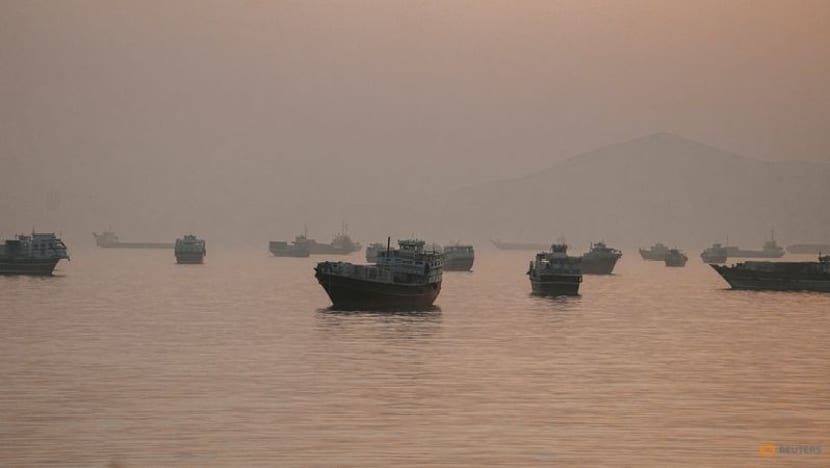
British maritime security agency UKMTO said an "unknown projectile" hit a tanker overnight, causing a fire, before two more vessels were struck, at least one by a drone. [1] All three vessels were struck close to Oman, which had proposed a temporary transit corridor hugging its coastline - an initiative opposed by Iran as it seeks to impose fees on ships using the narrow waterway. [1] Three tankers reported being struck by unknown projectiles around the Strait of Hormuz this week in attacks widely blamed on Iran. [5] The US move came after three tankers reported being struck by unknown projectiles in and near the Strait of Hormuz in recent days, the British navy-affiliated agency UKMTO said in a report. [5] On Tuesday, three tankers in the Strait of Hormuz were attacked within a few hours, including a Qatari LNG vessel, according to maritime monitors and Qatar. [2] The vessel was transiting off the coast of Oman when it was attacked by the Islamic Republic, Doha said. [2] A Saudi-flagged crude oil tanker was also hit in the same area, according to the kingdom. [2]
Qatar and Saudi Responses
Qatar said one of the vessels was its LNG tanker Al-Rekayyat and blamed Iran, denouncing an "unacceptable" attack on international maritime navigation. [1] Doha later summoned Iran's deputy ambassador to lodge a complaint, demanding an explanation and urging Tehran to "immediately cease any practices undermining regional security." [1] "We hold Iran fully legally responsible for this attack and for any resulting damages or repercussions," Qatar's foreign ministry spokesman Majed Al Ansari wrote on X. [1] Qatar denounced an attack on one of its LNG tankers and summoned Iran's deputy ambassador to lodge a complaint. [2] The Qatari foreign ministry said in a statement that it demanded an explanation for the incident and called on Iran to "immediately cease any practices undermining regional security and to refrain from endangering the safety of international shipping and global energy supplies". [2] A Saudi-flagged crude oil tanker was also hit in the same area, according to the kingdom. [2] The Saudi foreign ministry blamed Iran in a statement. [2]
Iran's Position and the Hormuz Dispute
Iran voiced "dismay" over Qatar's accusations in a statement carried by state news agency IRNA, calling the claims "unacceptable." [1] Iran has not claimed responsibility for the attacks but is locked in a standoff over efforts to impose a toll in the waterway. [2] Tehran has chafed at vessels bypassing its territorial waters in favour of a southern route through Oman’s waters in recent days. [2] Iran has insisted there will be no return to pre-war arrangements, under which vessels could pass freely through the strait. [1]
Impact on Oil Markets and Ceasefire
Oil prices rose by more than two per cent as the renewed attacks reignited worries over global energy supplies and cast doubt on the durability of the US-Iran agreement. [1] Brent, the international benchmark, jumped nearly five percent amid the rising tensions. [2] Oil prices rose more than 3% following the announcement. [5] "We are now in a sensitive period where potential alternatives to an Iranian toll or fee system are being explored," Andreas Krieg, a security expert at King's College London, told AFP. [1] "Iran is sending a clear signal that no alternative will be accepted." [1] Krieg said tankers trying to diverge through the Omani maritime corridor without registering with Iran would be punished, and called the attacks a "clear violation" of the ceasefire agreement and international law. [1] The attacks and the US response threaten to put a fragile diplomatic understanding between Washington and Tehran on shaky ground, raising the risk that further retaliation could derail negotiations over a broader agreement. [5] The potential escalation comes as both sides had been working toward a deal that included limits on Iran's nuclear program and relief from some sanctions, including restrictions on oil exports. [5]
Background on the US-Iran Memorandum
The attacks, which ended more than a week of relative calm, revived concerns over freedom of navigation after Iran lifted its blockade of the vital waterway following a fragile ceasefire with the United States. [1] Under the 14-point US-Iran memorandum, Iran and Oman, which border Hormuz, must hold talks "to define the future administration and maritime services" in the waterway with other Gulf states. [1] Qatar had previously refused to mediate under Iranian fire as Tehran launched an unprecedented aerial bombardment against Gulf states in retaliation for the US-Israeli strikes. [1] But Doha has since taken a more active role, hosting indirect talks between Iran and the United States last week. [1] The US’s decision to waive sanctions on Iran was a major sticking point in negotiations between the two sides. [2] The Strait of Hormuz, a narrow waterway between Iran and Oman, is one of the world's most important energy chokepoints, with roughly a fifth of global oil consumption and large volumes of liquefied natural gas shipments passing through each day. [5] Oil exports remain a critical source of revenue for Iran, providing billions of dollars in hard currency that help fund government spending and support an economy weakened by years of US sanctions. [5]
What to watch next: Further talks between Iran and Oman on waterway administration remain central to the 14-point memorandum, with any renewed attacks likely to test the performance-based nature of sanctions relief.