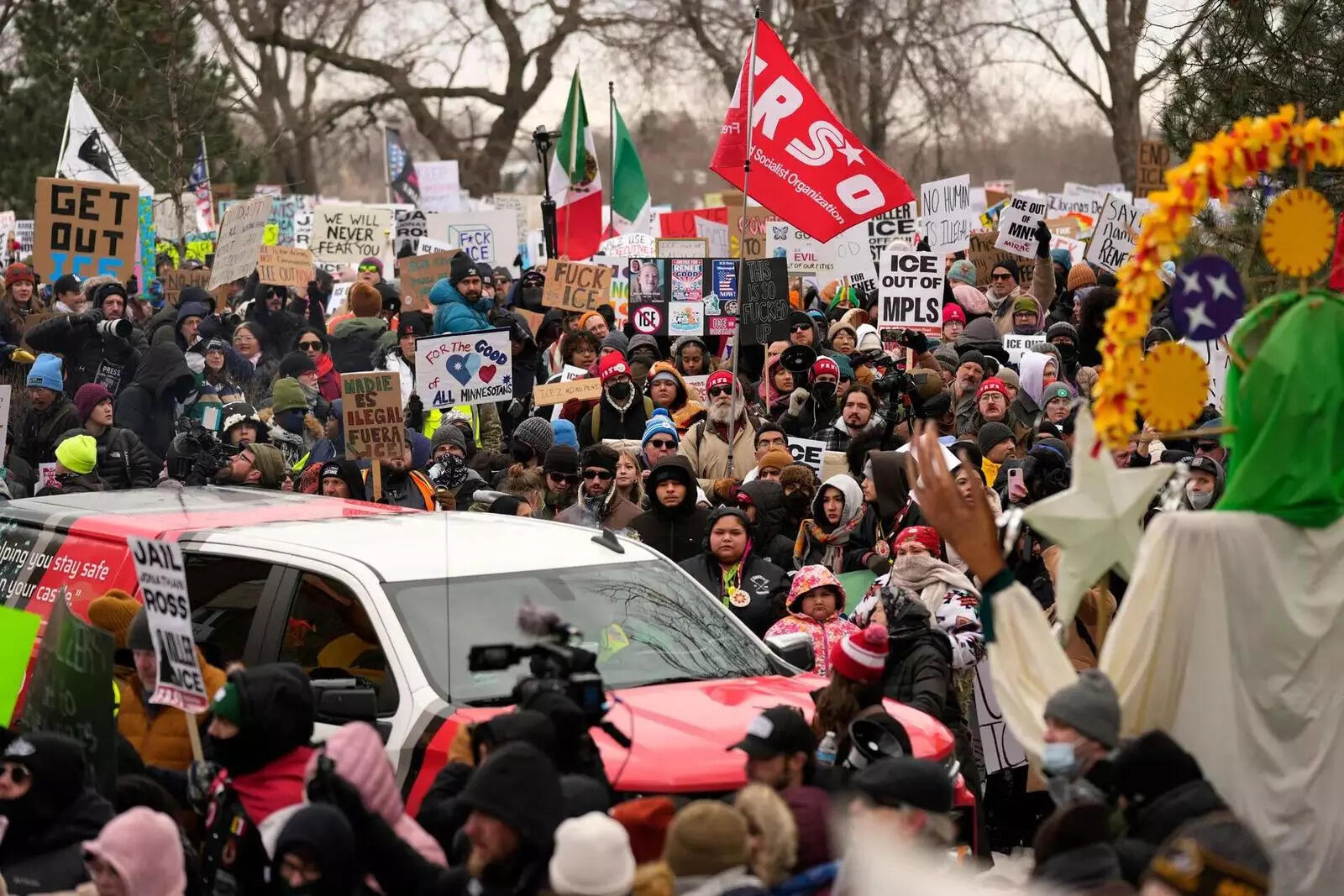

Nationwide Protests Ignite Over Fatal ICE Shooting in Minneapolis as NAACP Likens Agency to KKK
Protests have swept across the United States, from major cities to small towns, following the fatal shooting of Renee Nicole Good by an Immigration and Customs Enforcement (ICE) agent in Minneapolis. Organized under the slogan "ICE out for good," the demonstrations gained momentum amid viral videos of the incident and conflicting narratives from state and federal officials. Compounding the unrest, a social media post by the National Association for the Advancement of Colored People (NAACP) comparing ICE agents to Ku Klux Klan (KKK) members has drawn widespread attention and criticism.
The shooting occurred on January 9, 2026, sparking immediate outrage that escalated into coordinated protests by January 11. Demonstrators have called for the abolition or severe reform of ICE, citing the agency's enforcement tactics as emblematic of broader systemic issues in immigration policing. Videos circulating online appear to show the moments leading up to the fatal encounter, though official accounts differ on the sequence of events. Local Minnesota state officials have described the incident as involving a confrontation during an ICE operation, while federal representatives maintain that the agent acted in self-defense.
The NAACP's post, which emerged amid the burgeoning protests, stated that ICE agents resembled KKK members, invoking historical parallels to the white supremacist group notorious for lynchings and racial terror in the post-Civil War South. The comparison quickly went viral, amplifying calls for accountability and fueling protest chants. While the NAACP has long advocated for civil rights and immigrant protections, the rhetoric has polarized responses, with supporters viewing it as a stark critique of perceived overreach and detractors labeling it inflammatory.
Escalating Demonstrations and Key Demands
Reports indicate protests erupted in dozens of locations nationwide shortly after the incident. In Minneapolis, the epicenter, crowds gathered near the shooting site, blocking intersections and marching toward federal buildings. Similar actions unfolded in cities like New York, Los Angeles, Chicago, and Atlanta, where organizers linked the event to ongoing debates over immigration enforcement under the current administration. Even smaller communities in states such as Texas and Ohio hosted rallies, underscoring the issue's national resonance.
The "ICE out for good" banner unites diverse groups, including immigrant rights advocates, Black Lives Matter activists, and labor unions. Chants and signage demand an end to ICE deportations, independent investigations into officer-involved shootings, and defunding of the agency. Social media has played a pivotal role, with hashtags like #ICEOutForGood and #JusticeForRenee trending globally. Live streams of marches have drawn millions of views, sustaining momentum despite cold winter weather in many regions.
Law enforcement responses have varied. In some areas, police used non-lethal crowd control measures, leading to a handful of arrests for disorderly conduct. No widespread violence has been reported, maintaining the unrest at a medium severity level as of January 11. Federal officials have urged calm, promising a thorough investigation by the Department of Homeland Security's Office of Inspector General.
Background on ICE Operations and Civil Rights Tensions
ICE, established in 2003 under the Department of Homeland Security following the 9/11 attacks, enforces federal immigration laws through apprehensions, detentions, and deportations. The agency has faced persistent scrutiny for its workplace raids, family separations, and use-of-force incidents, particularly in immigrant-heavy communities. High-profile cases, such as the 2019 protests against family detention centers and clashes during Trump-era policies, provide historical context for the current flare-up.
The NAACP's invocation of the KKK taps into a deep well of American civil rights history. Founded in 1909, the NAACP has combated racial injustice, including KKK violence that peaked in the 1920s with thousands of lynchings. Drawing such parallels underscores longstanding accusations that immigration enforcement disproportionately impacts communities of color, echoing critiques from groups like the ACLU.
Differing accounts of the Minneapolis shooting highlight familiar fault lines. State investigators, per preliminary reports, noted Good's resistance during an arrest related to immigration status violations. ICE countered that the agent fired after Good allegedly reached for a weapon, a claim supported by body-camera footage yet to be publicly released in full. This discrepancy mirrors past incidents, such as the 2020 killing of Walter Wallace Jr. by Philadelphia police, which also spurred nationwide protests.
Broader Implications and Ongoing Developments
As investigations proceed, the protests signal deepening public distrust in federal law enforcement amid polarized immigration debates. Advocacy groups predict sustained action, with planned marches through the weekend. Political figures have weighed in cautiously: Minnesota Governor Tim Walz called for transparency, while ICE Acting Director emphasized officer safety.
The unrest arrives against a backdrop of economic recovery post-pandemic and midterm election cycles, where immigration remains a flashpoint. No federal policy changes have been announced, but pressure mounts on Capitol Hill for oversight reforms.
For now, the focus remains on Minneapolis, where Good's family has demanded an independent autopsy and prosecution. As videos and statements continue to circulate, the protests underscore unresolved tensions over policing, race, and borders in America.
(Word count: 728)






