
Myanmar Junta Launches Second Phase of Disputed Elections Amid Clashes and Security Crackdowns
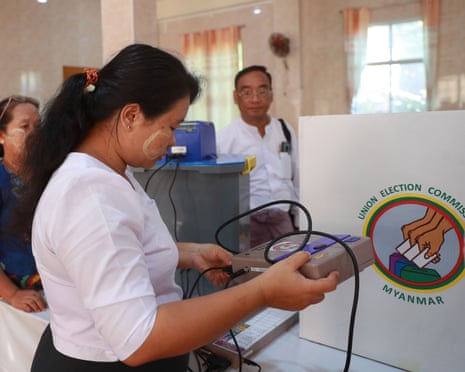
YANGON, Myanmar — Polling stations across Myanmar opened on January 11, 2026, for the second phase of a military-run general election, proceeding under tight security measures as recent clashes between junta forces and resistance groups cast a shadow over the process. The vote, widely condemned internationally as a "sham exercise," highlights the deepening political unrest in the Southeast Asian nation nearly five years after a coup d'état toppled the elected government.
The elections, organized by the State Administration Council (SAC) led by Senior General Min Aung Hlaing, mark the second installment of a multi-phase poll intended to legitimize military rule. Phase one occurred in select regions in late 2025, but turnout was reportedly low amid boycotts by key opposition parties and ongoing conflict. Sunday's phase two covered additional constituencies in areas including parts of central Myanmar and ethnic minority border regions, where polling began at 6 a.m. local time (GMT+6:30). Heightened security was evident, with military checkpoints, troop deployments, and restrictions on movement reported in voting areas, according to local media and eyewitness accounts.
The Guardian reported that the junta pressed ahead despite criticisms from Western governments, human rights groups, and exiled opposition leaders, who argue the elections exclude meaningful participation and occur in a context of widespread violence. "This is not an election; it's a facade to entrench dictatorship," the article quoted a spokesperson for the National Unity Government (NUG), Myanmar's shadow administration formed in opposition to the coup.
Recent clashes have exacerbated tensions. In the weeks leading up to the vote, fighting intensified between junta troops and allied People's Defense Forces (PDFs) as well as ethnic armed organizations (EAOs) such as the Karen National Union (KNU) and Arakan Army (AA). These skirmishes, concentrated in Sagaing, Magway, and Kayah states, have displaced thousands and disrupted supply lines. The event description notes "recent clashes in various areas," underscoring the medium-severity civil unrest that prompted elevated security protocols at polling sites.
Background: A Nation Fractured by Coup and Conflict
Myanmar's electoral process must be understood against the backdrop of its turbulent recent history. On February 1, 2021, the Tatmadaw military seized power, alleging fraud in the 2020 general election won overwhelmingly by Aung San Suu Chi's National League for Democracy (NLD). The coup triggered massive pro-democracy protests, met with a brutal crackdown that has killed over 5,000 civilians and detained tens of thousands, per United Nations estimates.
Since then, the junta has faced a multifaceted insurgency. PDFs, loosely coordinated under the NUG, have grown into a formidable force, controlling significant rural territories. EAOs, long marginalized in Myanmar's multi-ethnic society, have escalated offensives, capturing key towns like Lashio in northern Shan State in 2024. The junta's control is now limited to urban centers and major highways, with the military suffering heavy losses—estimated at 20,000 troops killed or wounded.
The SAC announced elections in early 2025 as a path to "discipline-flourishing democracy," but preparations were marred by issues. The Union Election Commission (UEC), appointed by the junta, barred the NLD and over 40 other parties, approving only pro-military proxies like the National Unity Party. Voter lists were criticized as outdated and incomplete, with millions displaced by conflict unable to register. International observers, including the Association of Southeast Asian Nations (ASEAN), have been denied access, further eroding credibility.
Phase one in November 2025 saw participation rates below 20% in some areas, per independent monitors, with reports of intimidation and ballot stuffing. The second phase faces similar headwinds, compounded by natural disasters like the devastating 2025 typhoon that ravaged the Irrawaddy Delta.
International Response and Domestic Boycotts
Global reaction has been swift and unified in skepticism. The United States, European Union, and United Kingdom have labeled the polls illegitimate, imposing fresh sanctions on junta officials. China and Russia, key backers providing arms and diplomatic cover, have urged stability without endorsing the process. ASEAN remains divided, with Thailand and Indonesia calling for dialogue.
Domestically, major stakeholders are staying away. The NUG and Committee Representing Pyidaungsu Hluttaw (CRPH) have urged a boycott, framing participation as complicity in authoritarianism. EAOs in Rakhine, Kachin, and Shan states have vowed to disrupt voting where possible.
Despite the chaos, the junta claims the elections will proceed nationwide by mid-2026, aiming to convene a new parliament and extend Min Aung Hlaing's power. Official turnout figures for phase two were not immediately available as of Sunday evening.
Outlook: Fragile Legitimacy in a War-Torn Landscape
As phase two unfolds, the elections risk deepening divisions rather than resolving them. With resistance forces gaining ground—controlling over 60% of territory per some estimates—the junta's grip appears tenuous. Analysts suggest the polls may yield a rubber-stamp legislature, prolonging military dominance without addressing core grievances like federalism and democratic reforms.
For Myanmar's 57 million people, enduring economic collapse, internet blackouts, and humanitarian crises, the vote offers little hope. Aid agencies warn of worsening conditions, with 3.5 million internally displaced. Whether this "sham exercise" stabilizes the junta or galvanizes further unrest remains a critical question in a conflict showing no signs of abating.
(Word count: 712)






