
Myanmar Elections Condemned as Sham Amid Civil Unrest
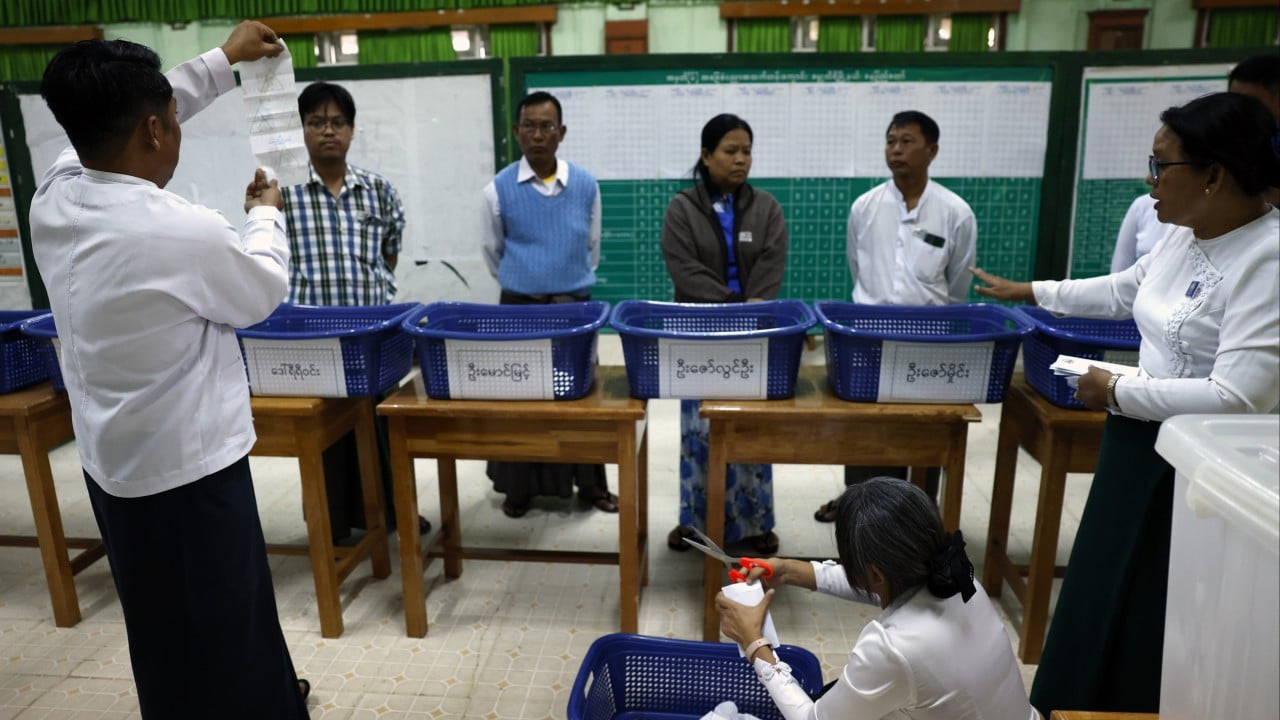
The first phase of Myanmar's general elections, which took place on January 2, 2026, has been met with widespread condemnation as a sham orchestrated by the military junta. This contentious vote marks the first electoral process since the 2021 coup that ousted the democratically elected government and led to a nationwide uprising against military rule.
Initial results from state media indicate that the military-backed Union Solidarity and Development Party (USDP) is leading the elections by a significant margin. The junta, which has faced international criticism for its violent repression of pro-democracy protests, claims that the three-phase election is intended to restore political stability to the struggling Southeast Asian nation. However, many local and international observers have dismissed this narrative, viewing the elections as a facade designed to legitimize the military's grip on power.
The elections come against a backdrop of ongoing civil unrest and conflict in Myanmar. Since the coup, the country has been engulfed in violence as various resistance groups have emerged to challenge the junta's authority. The military's response has been marked by severe crackdowns, including airstrikes and ground assaults, particularly in ethnic minority regions where armed resistance is strong.
"The election process is fundamentally flawed and lacks credibility," said a spokesperson for the National Unity Government (NUG), which was formed by ousted lawmakers and has sought international recognition as the legitimate government of Myanmar. The NUG and other opposition groups have called for a boycott of the elections, arguing that participating would lend legitimacy to the military regime.
International reactions to the elections have been largely negative. Human rights organizations and foreign governments have condemned the military's actions and the electoral process, labeling it a sham. The United Nations has expressed concerns about the ongoing human rights violations in Myanmar, emphasizing that genuine democratic elections cannot occur under the current military rule.
Despite the junta's assertion that the elections will pave the way for stability, the situation on the ground suggests otherwise. Protests have erupted in various cities, with citizens demanding the restoration of democracy and the release of political prisoners. The military's heavy-handed approach to quelling dissent has further fueled discontent among the populace.
The USDP's lead in the elections, while significant, does not reflect the will of the majority of Myanmar's citizens, many of whom are actively resisting the military's rule. The junta's efforts to project an image of legitimacy through these elections appear to be met with skepticism both domestically and internationally.
As Myanmar navigates this tumultuous period, the future remains uncertain. The completion of the electoral process in the following phases will likely continue to be marred by controversy and unrest. Observers are closely monitoring the situation, as the junta's actions in the coming weeks will have profound implications for the country’s political landscape and the ongoing struggle for democracy.
In conclusion, while the military-backed party leads after the first phase of the elections, the legitimacy of this process remains in question. As civil unrest continues to escalate, Myanmar finds itself at a critical juncture, with the potential for further violence and instability looming on the horizon.






