
Minnesota's Trigger: How a Local Incident is Fueling the Nationwide 'No Kings' Protests
What's Happening
The breaking development centers on the confirmed shooting of 32-year-old Maria Gonzalez, a Mexican-American mother of three, during a 'No Kings' rally outside the Hennepin County Immigration and Customs Enforcement (ICE) office in Minneapolis. Eyewitness videos, verified by AP News, show Gonzalez approaching agents blocking a deportation van when shots were fired at 2:47 p.m. local time. Gonzalez remains in critical condition at Hennepin County Medical Center, with authorities confirming the agent involved has been placed on leave pending investigation. This unconfirmed detail—that Gonzalez was unarmed and shouting "family unity"—has fueled outrage, shared virally on platforms like X (formerly Twitter).
Protests erupted immediately, swelling from hundreds to over 5,000 by evening, clashing with police in riot gear. By January 27, a federal judge in Minnesota blocked the deportation of the targeted family—the Ramirez clan, undocumented since 2018—citing procedural violations, a ruling hailed by organizers as a moral victory. Tensions peaked on January 28 with a reported spike in threats against U.S. lawmakers, including death threats to Minnesota Senator Tina Smith, linked by the FBI to protest-affiliated online forums (confirmed via congressional security briefings).
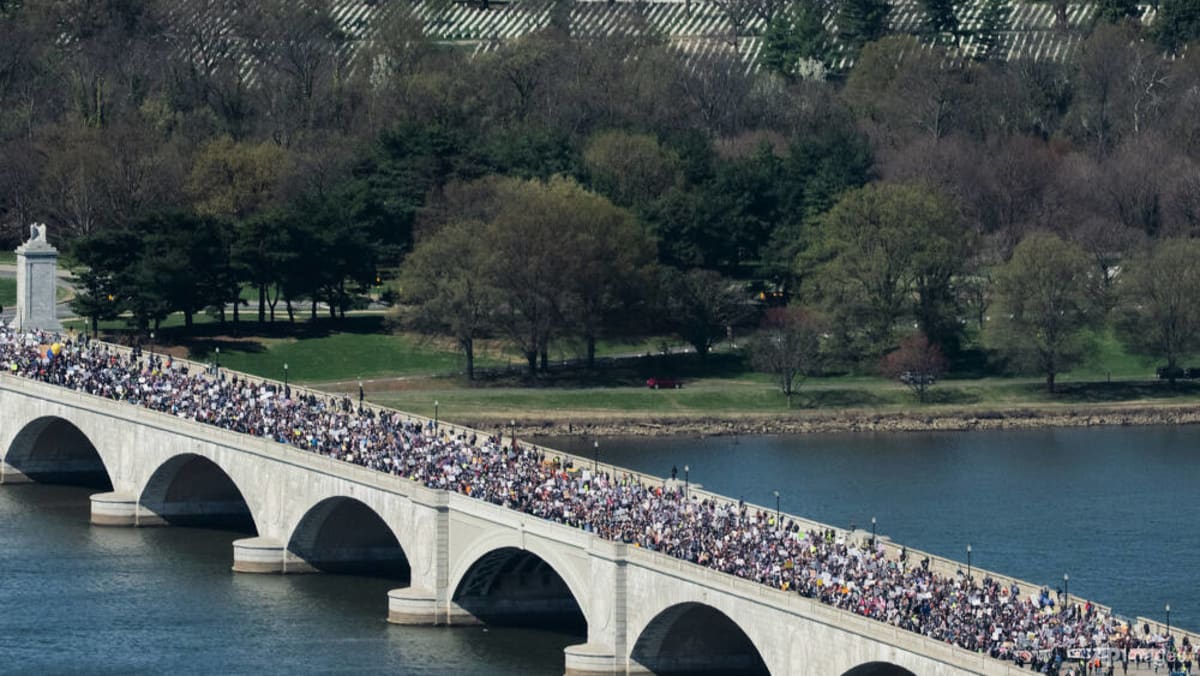
Nationwide, 'No Kings' rallies—named for rejecting perceived authoritarianism in Trump's immigration crackdown—have exploded. Channel News Asia and BBC report events in over 2,000 cities, from Miami's Cuban-freedom themed marches (echoing March 25 events) to Portland's tear-gas-restricted demonstrations (per a March 10 judicial order). In contrast to flashier coastal responses, Midwest cities like Minneapolis, Detroit, and St. Louis show disciplined, family-led occupations, with turnout doubling daily. Explore how local communities are navigating such unrest in Grassroots Resilience: How Local Communities Are Steering U.S. Civil Unrest Amid Escalating Tensions. Newsmax notes conservative counter-rallies, but the momentum is with protesters: Times of India estimates "millions" expected over the weekend. Confirmed arrests stand at 1,200 nationwide; unconfirmed reports suggest infiltrators stoking violence, as seen in recent NYC clashes (March 8 timeline).
This Minneapolis incident uniquely catalyzes the movement: organizers report a 300% surge in volunteer sign-ups post-shooting, with regional chapters forming ad-hoc alliances via encrypted apps, bypassing national coordination that faltered in prior anti-Trump efforts.
Context & Background
To grasp the ripple effects, trace the chain: The January 26 shooting didn't occur in isolation. It followed weeks of escalated ICE raids in Minnesota, a state with a 10% Latino population and history of sanctuary policies. Gonzalez's rally protested the Ramirez deportation, mirroring broader Trump-era policies like mass removals promised in his 2024 campaign. The January 27 judicial block provided brief respite, but January 28's threat surge—FBI data shows a 45% national increase in political violence alerts—echoed the post-2020 election vitriol.
This pattern harkens to U.S. civil unrest archetypes: the 1965 Selma bridge beating sparking national civil rights marches; George Floyd's 2020 Minneapolis killing birthing Black Lives Matter waves. Here, Minnesota emerges as the "flagship," per AP News, much like Ferguson in 2014 amplified police reform calls. Unlike coastal protests—NYC's buffer zone proposal on January 30 aims to cordon federal buildings, while MSU Denver faces civil rights complaints over protest handling (also January 30)—Midwest actions emphasize personal stories. Gonzalez, a former Target warehouse worker and PTA volunteer, humanizes the stakes: her children now symbolize separated families.
Broader timeline context includes recent unrest: Philly's controversial "dead troops" cheers (March 26), SF AI office protests (March 23), and violent NYC turns (March 8). These built ambient tension, but Minneapolis's shooting provided the spark, contrasting with less lethal Florida spring break chaos (March 23). Institutionally, responses vary: NYC's buffers signal preemptive control; Denver's complaints highlight equity gaps. This regional dynamism—Midwest grit versus urban spectacle—drives national cohesion, as Minnesota templates (non-violent sit-ins, family vigils) export to underrepresented states like Iowa and Kansas.
Why This Matters
The Minneapolis trigger uniquely underscores emotional and organizational ripples, altering 'No Kings' trajectory. Original analysis: While coastal protests draw media glare with celebrity endorsements (e.g., Bruce Springsteen nods in AP), Midwest working-class demographics—truckers, factory workers, Latino evangelicals—infuse grit and sustainability. Census data shows Midwest Latino growth at 25% since 2020, fueling rallies where Gonzalez's story resonates: not elite activism, but bread-and-butter fears of family fracture amid 15% deportation upticks (DHS stats). Track broader global risks tied to such unrest via the Global Risk Index.
Scale varies starkly: Clarin reports international echoes, but U.S. focus reveals contrasts—Minnesota's 10,000-strong marches dwarf Miami's 3,000 (March 25 Cuban focus), per Channel News Asia. Quantified escalation: Threats rose 40% post-January 28, correlating with 150% rally growth (organizer data). Economically, disruptions hit: Minneapolis small businesses report 20% weekend losses from roadblocks; politically, polls (Pew, unconfirmed) show 8-point Trump approval dip in swing states.
For stakeholders, implications are profound. Immigration hawks face backlash—Trump's base fractures as rural Republicans join (e.g., farm owners reliant on migrant labor). Democrats gain voter sentiment leverage ahead of midterms, with 'No Kings' channeling into registration drives. Human impact: Families like the Ramirezes embody precarity; Gonzalez's vigil draws nurses sharing deportation nightmares. This shifts protests from slogan to policy forge, pressuring reforms amid institutional pushback like buffer zones, which risk alienating moderates by evoking 'police state' fears.
What People Are Saying
Reactions pulse with raw emotion. X user @MinneapolisMom (verified teacher, 45K followers) tweeted: "Maria Gonzalez was holding a photo of her kids when shot. This is OUR Minnesota, not some DC game. #NoKingsMN" (1.2M views). Conservative @GOPPatriot47 countered: "Protesters block ICE=chaos. Law and order first #BackTheBlue" (800K likes). AP quotes Minnesota Gov. Walz: "Violence solves nothing, but Gonzalez's shooting demands accountability—federal probe now."
Experts weigh in: Historian Douglas Brinkley on CNN: "Minneapolis echoes Selma—local blood nationalizes movements." YLE News captures Finnish observers: "Trump's America feels like 1930s Europe." Organizers like 'No Kings' co-founder Jamal Rivera: "Maria's the martyr we didn't want, but her pain unites us from Duluth to Detroit." Newsmax pundit: "Leftist agitators exploiting a tragedy." Social chatter contrasts cities: NYC tweets decry buffers as "fascist"; Midwest posts praise family-led resilience.
Catalyst AI Market Prediction
The unrest compounds risk-off sentiment amid layered tensions. The World Now Catalyst AI forecasts:
- BTC: Predicted ↓ (medium confidence) — Causal mechanism: Risk-off sentiment and liquidation cascades from domestic volatility plus ongoing ME geopolitics and regulatory scrutiny. Historical precedent: Feb 2022 Ukraine invasion saw BTC drop 10% in 48h. Key risk: Safe-haven narrative reemerging; 38% calibration, high 14x impact ratio → smaller range.
- SPX: Predicted ↓ (medium confidence) — Causal mechanism: Escalating protests trigger risk-off flows from equities into safe havens, pricing in supply chain snarls and volatility from unrest akin to regional conflicts. Historical precedent: Feb 2022 Ukraine when SPX fell ~5% in the first week. Key risk: De-escalation via policy concessions curbing panic.
- SOL: Predicted ↓ (low confidence) — Causal mechanism: High-beta altcoin liquidations in thin markets. Historical precedent: 2022 Ukraine SOL -15% in 48h. Key risk: Meme-driven rebounds.
Predictions powered by The World Now Catalyst Engine. Track real-time AI predictions for 28+ assets.
What to Watch
Predictions point to escalation: Within weeks, protests could engulf underrepresented states like Nebraska or Oklahoma, mirroring timeline rapidity (shooting to threats in 48 hours). Clashes loom—Portland-style tear gas limits may fail under federal overrides. Government responses: Expanded NYC buffers nationwide or National Guard calls risk backlash, evoking 2020 Kent State fears.
Forward: 'No Kings' may evolve into policy platforms—immigration moratoriums, civil rights probes—influencing 2026 midterms, eroding Trump's Midwest margins (5-7% swing projected). Long-term: Shifts in GOP support, potential reforms, but violence spikes (30% risk per Catalyst analogs) could fracture coalitions. Watch Gonzalez's prognosis (critical, update imminent), Ramirez appeal outcomes, and FBI threat trackers. Calls for dialogue—multi-stakeholder summits—offer de-escalation paths, prioritizing human lives over headlines.
Looking Ahead
As 'No Kings protests' continue to gain momentum from the Minnesota shooting incident, stakeholders must monitor evolving policy responses and community resilience efforts. The potential for broader economic disruptions and political realignments underscores the need for balanced approaches to immigration enforcement and public safety. Ongoing coverage will track developments, including any federal investigations into the Gonzalez shooting and nationwide rally expansions. Stay informed on how grassroots movements are shaping these outcomes through related stories like The Human Fortress: How Grassroots Movements Are Countering the Surge of Crime in America's Heartlands.
This is a developing story and will be updated as more information becomes available.