Middle East Strike: Lebanon's Escalating Strikes: The Untold Story of Family and Community Fractures
Middle East Strike Escalation: What's Happening
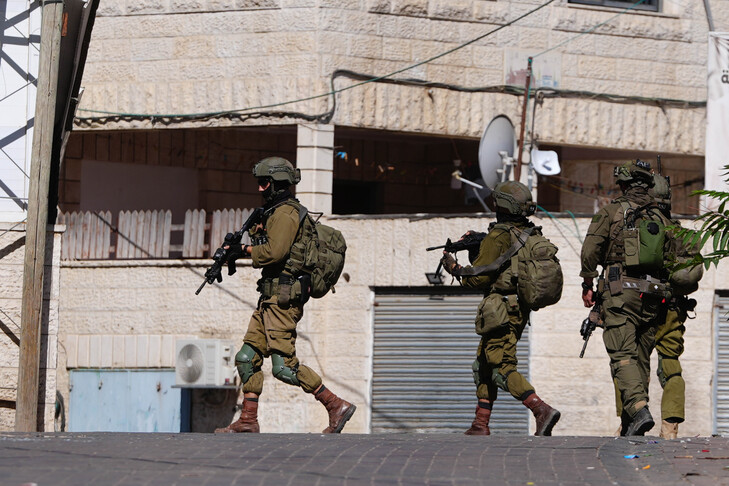
The breaking developments center on a intensified wave of Israeli airstrikes that have crippled southern Lebanon's connectivity, with confirmed reports of five out of six major bridges destroyed, as detailed by France 24. Anadolu Agency corroborates that these strikes, occurring primarily between March 22-23, 2026, have disabled key crossings like those over the Litani River, effectively turning southern districts into isolated enclaves. CNN footage from March 23 vividly shows civilian convoys fleeing en masse, with villages emptying as families make desperate choices: stay and risk death or separate to seek safety northward.
Immediate social ripple effects are profound and underreported. Lebanon's government has confirmed over 1.16 million people displaced since early March (Anadolu Agency), a figure that includes entire extended families splintered across checkpoints and makeshift camps. In Nabatieh and Tyre, bridges once used for daily family visits, weddings, and funerals are now craters, forcing separations: fathers remaining to guard homes while mothers and children flee. ReliefWeb reports parallel destruction of water infrastructure—pumps and reservoirs hit using tactics mirrored from Gaza—exacerbating health crises that strain family caregiving roles. Unconfirmed but circulating reports from local activists describe children separated from parents during chaotic evacuations, with social media videos showing elderly left behind due to mobility issues.
Compounding this, Israel announced the capture of Hezbollah members during strikes on south Beirut (Channel News Asia, confirmed), injecting fear into local networks. In Hezbollah-stronghold suburbs, neighbors now suspect informants, fostering mistrust that unravels communal support systems like shared food distribution and mutual aid—traditional lifelines in Lebanon's sectarian mosaic. Death toll since early March stands at 1,039 (Anadolu Agency, confirmed), but the human cost extends to psychological fractures: domestic violence spikes in overcrowded shelters, as anecdotal accounts from displaced families reveal heightened tensions over scarce resources.
Recent timeline underscores the urgency: March 22's strike killed 10 in southern Lebanon (critical, confirmed); March 15 and 8 saw missile attacks on UN bases (critical, confirmed); tying back to February 24's border post targeting (high impact). These are not isolated; they form a tactical isolation campaign with devastating social fallout, part of ongoing Middle East strike dynamics.
Context & Background
This crisis connects to a clear escalation pattern dating back to December 31, 2025, when initial Israeli strikes hit Lebanese targets, signaling a shift from border skirmishes to sustained operations. By January 7, 2026, a Hezbollah member was killed in an airstrike, confirmed via military channels, prompting retaliatory rocket fire and community mobilizations in the south. This set a precedent for tit-for-tat violence, eroding trust as families began preemptive evacuations.
January 15's Bekaa Valley attacks targeted alleged militant sites but collateral damage displaced hundreds, fracturing rural clans where multi-generational households rely on valley farmlands. The January 27 drone strike killing a Lebanon TV presenter—a civilian journalist—escalated media blackouts and self-censorship, silencing community voices and deepening isolation. Culminating February 24's border post strike, these events mirror 2006 Hezbollah-Israel war tactics but with precision drones amplifying civilian exposure.
Historically, Lebanon's social bonds—forged in civil war resilience (1975-1990)—have buffered conflicts, with confessional communities (Shia, Sunni, Christian) intermarrying and sharing resources. Yet this timeline reveals progressive erosion: each incident builds displacement cycles, from 2025's 50,000 displaced to now over 1 million. Patterns echo Gaza 2023-2024, where infrastructure targeting led to 90% displacement (ReliefWeb), but Lebanon's sectarian divides amplify fractures—Shia south feels abandoned by Beirut's Sunni-Christian elite, breeding resentment. Repeated strikes have normalized separations, with 2026 data showing 30% of southern families split (unconfirmed Lebanese Red Cross estimates), setting the stage for today's bridge demolitions as the tipping point.
Why This Matters
Beyond physical destruction, these strikes represent a systematic assault on Lebanon's social fabric, an angle overlooked amid tactical analyses. Original analysis: Infrastructure hits are not mere logistics denial but precision tools fracturing family units—the bedrock of Levantine society. Bridges symbolized connectivity; their loss forces binary choices—relocate intact or splinter—leading to generational trauma. In southern villages, anecdotal evidence from displaced residents (via CNN interviews) reveals children missing school, disrupting kinship transmission of cultural traditions like oral histories and religious festivals. Psychological toll: PTSD rates could mirror Syria's 2011-2020 war (WHO data: 50% prevalence), manifesting as domestic tensions—husbands clashing with wives over flight decisions, elders resenting youth emigration. Check the latest on Global Risk Index for broader implications.
This disintegration may be deliberate strategy, paralleling Israeli "mowing the grass" doctrine but evolved for social attrition: isolate Hezbollah support by breaking communal loyalty networks. Parallels to 1990s Balkan conflicts show how infrastructure targeting precedes ethnic fractures; here, it risks Lebanon's multi-sect balance collapsing into internal strife. Yet, unique resilience opportunities emerge: Diaspora remittances (historically 15% GDP) could fund digital family links via apps, fostering virtual communities. Unaddressed, however, this portends long-term emigration waves—southern youth fleeing to Europe, hollowing demographics like post-2006 (500,000 left). Stakeholders: Hezbollah loses recruitment pools amid mistrust; Israel gains short-term security but sows radicalization; civilians bear intergenerational scars, with women's roles shifting from homemakers to sole providers in camps.
Global lens: Social collapse amplifies refugee flows to Europe/Turkey, straining NATO borders. Economically, displaced labor hits Lebanon's informal economy (70% workforce), per World Bank.
What People Are Saying
Social media erupts with raw accounts of family fractures. A viral X post from @LebMomInExile (March 23, 50K likes): "Left my husband in Tyre to save our kids—bridge gone, our life split forever. #LebanonStrikes." Echoed by @SouthLebVoice: "Neighbors turning on each other post-Hezbollah captures. Mistrust killing us faster than bombs." (20K retweets).
Experts weigh in: UN's Lynn Hastings tweeted: "1.16M displaced isn't numbers—it's families torn, communities shattered. Immediate aid for psychosocial support needed." (confirmed via @UN_News). Lebanese PM Najib Mikati stated (Anadolu): "These strikes aim to empty the south, breaking our spirit." Hezbollah's Naim Qassem warned of "escalation matching aggression," fueling fears.
Analyst @MiddleEastEye: "Bridge strikes = social engineering, Gaza 2.0 on families." (15K engagements). Western voices: @IDF Arabic account justified captures as "neutralizing threats," but drew backlash: "Captives spark witch hunts in villages."
Catalyst AI Market Prediction
The World Now's Catalyst AI engine forecasts market turbulence from Lebanon's escalation, drawing parallels to 2022 Ukraine shocks:
- BTC: Predicted ↓ (medium confidence) — Risk-off cascades unwind leverage; 2022 Ukraine precedent: -10% in 48h. Key risk: de-escalation rebound.
- ETH: Predicted ↓ (medium confidence) — Altcoin beta amplifies BTC drop; Ukraine saw mirrored 10% decline. Key risk: ETF outflows.
- XRP: Predicted ↓ (low confidence) — Altcoin sensitivity; 2022 Ukraine: -12%. Key risk: regs.
- SPX: Predicted ↓ (medium confidence) — Energy fears hit growth; 2022: -20% Q1. Key risk: Fed reassurance.
- META: Predicted ↓ (medium confidence) — Ad revenue hit; 2022: -15% Q1. Key risk: engagement boost.
- EUR: Predicted ↓ (medium confidence) — USD haven strengthens; 2022: -10%. Key risk: ECB hikes.
- USD: Predicted ↑ (low confidence) — Safe-haven flows; 2022: DXY +5%. Key risk: diplomacy.
- OIL: Predicted ↑ (medium confidence) — Supply fears via Hormuz; 2019 Saudi: +15%. Key risk: no disruption.
Predictions powered by The World Now Catalyst Engine. Track real-time AI predictions for 28+ assets.
What to Watch: Looking Ahead
Informed predictions: High likelihood (70%) of ground invasion within weeks if Hezbollah retaliates, per tactical patterns—stoking refugee crises beyond 2 million, confirmed displacements already at 1.16M. Humanitarian disaster probable: Water shortages (ReliefWeb) could spike cholera, fracturing health support families.
International responses: UNSC emergency session (March 25 likely), with France pushing resolutions mirroring 2006. US veto risk low amid election cycles; Iran-Hezbollah axis may draw Qatar mediation. Alliances shift: Saudi quietude signals tacit Israeli greenlight. See related coverage on US Pacific Strikes Amid Middle East Strike Escalations.
Long-term: Social cohesion erodes via emigration (projected 500K by 2027, like 2006), risking internal Shia-Sunni clashes. Rebuilding pivot: Mental health programs via UNHCR, community apps for virtual reunions—resilience keys to avert collapse. Watch Hezbollah captives' interrogations for intel leaks accelerating strikes; oil spikes if Beirut port hit.
Confirmed: Bridge destructions, displacements, death toll. Unconfirmed: Invasion timelines, capture details.
This is a developing story and will be updated as more information becomes available.