
Middle East Strike Ignites Unprecedented Economic Diversification and Emerging Trade Alliances
The Middle East Strike Story
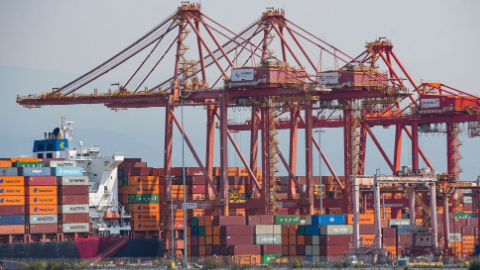
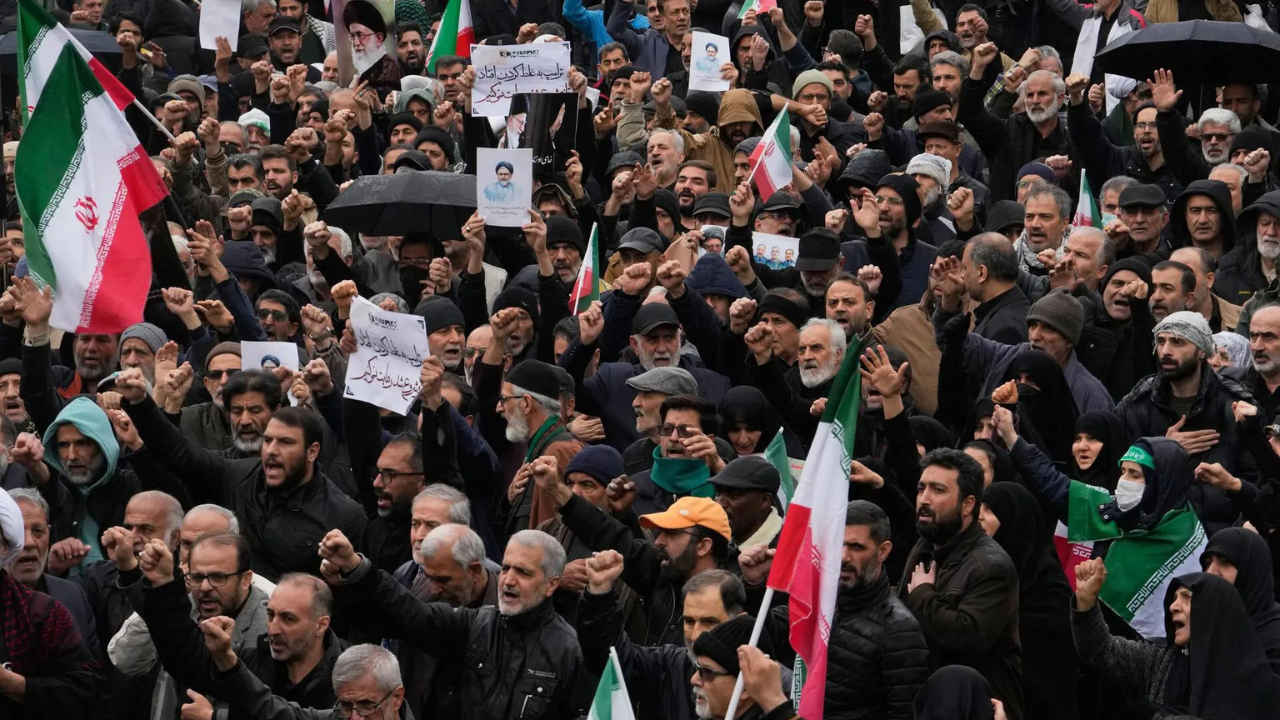
The narrative of the current Middle East strike reads like a high-stakes thriller, but its economic subplot is one of forced innovation and realignment. Confirmed developments include Iran's central bank unveiling its highest-denomination note ever—a 10 million rial bill—on March 20, 2026, as war-fueled inflation erodes purchasing power, with reports from Times of India detailing how this move underscores a deepening crisis. Simultaneously, Cyprus, a Mediterranean hub exposed to regional volatility, saw fuel prices jump sharply, as reported by In-Cyprus, with petrol hitting €1.80 per liter and diesel following suit, triggered by oil supply fears from Iranian actions in the Strait of Hormuz. For deeper insights into these oil dynamics, see Iran War's Under-the-Radar Impact on Oil Price Forecast.
These aren't isolated tremors. Ekathimerini's coverage of "first war signs in the economy" highlights Greece's early warnings of supply chain disruptions rippling into Europe, while Argentina's Profertil achieving urea self-sufficiency—detailed in Clarin—marks a pivot to agricultural resilience amid global fertilizer shortages exacerbated by the Middle East strike. India's strategic rerouting of crude imports from Gulf states to Russia, per Times of India, represents a seismic shift: in Q1 2026 alone, Russian oil imports rose 25%, diluting OPEC's leverage. Explore related market surges in Middle East Strike: How Live 3D Globe Tracking Reveals Hidden Catalysts for Oil and Gold Price Surges.
This upheaval builds on a volatile timeline. Flash back to March 9, 2026: Asian equities plunged amid an oil price surge from initial Middle East strike flares, exposing Gulf Cooperation Council (GCC) economies' vulnerabilities as Middle East tensions revealed overreliance on hydrocarbons. The very next day, March 10, oil slid 6% on de-escalation signals, only for markets to shock anew. Recent escalations amplify this pattern: March 12 brought the largest oil supply disruption from the war (critical severity); March 16 saw another oil surge (high); March 17's economic fallout reports (high); March 19's stock slump and Japan supply hits (medium); and March 20's Saudi warnings of $180 oil (high/medium). Saudi officials, per reports, cautioned of disruptions if Hormuz chokepoints tighten.
Unconfirmed rumors swirl on social media—X posts from analysts like @OilTraderPro claim Iranian proxies targeting Saudi facilities, though no official verification—yet the pattern is clear: Middle East strike conflicts repeatedly jolt economies into adaptation. Past crises, like the 2019 Aramco attacks, previewed this, but today's scale, with Hormuz threats, forces broader reinvention. What sets this apart? Unlike prior coverage fixating on stock dips, debt spikes, inequality, or currency swings, the real story is acceleration toward non-oil futures—agriculture booms in Argentina, India's Russia pivot, and GCC whispers of tech investments.
The Players
At the epicenter: Iran, whose regime, facing sanctions and war costs, prints money to cope, motivating self-preservation through asymmetric warfare that chokes global oil lanes. GCC nations like Saudi Arabia warn of $180/barrel oil not from malice but to rally OPEC+ unity and diversify via Vision 2030—non-oil GDP already at 65% there, per IMF data.
India emerges as a shrewd pivot player: PM Modi's administration, balancing energy security with discounted Russian crude (20% below Brent), reduces Gulf dependency from 60% to under 45% in months, motivated by avoiding import bills that could balloon to $150B annually. Argentina's Profertil, a YPF-Vale joint venture, self-supplies 1.2M tons of urea yearly, shielding farmers from $800/ton global spikes—driven by agribusiness lobbies pushing food sovereignty.
Cyprus and Greece represent vulnerable EU flanks: Cypriot firms hoard fuel amid 15% hikes, while Greek shipowners reroute tankers. Russia lurks opportunistically, flooding markets with Urals crude at $65/barrel versus Gulf's $75, courting BRICS allies. The U.S., via Israeli proxies, pressures Iran but risks blowback on allies' economies. Motivations converge: survival for Iran, resilience for importers, opportunity for exporters like Russia. Track broader tensions via our Global Risk Index.
The Stakes
Politically, Middle East strike escalation risks fracturing alliances—NATO's southern flank (Cyprus/Greece) strains if fuel riots erupt, per Ekathimerini. Economically, oil-dependent GCCs face $500B revenue hits if prices stabilize at $120 (World Bank est.), but diversification stakes are higher: success means 20% non-oil growth by 2030; failure, youth unemployment spikes to 30%.
Humanitarian angles loom: Iran's 10M rial note signals 50%+ inflation, per economists, eroding savings for 85M citizens. Globally, Argentina's urea self-reliance averts food price surges—wheat up 10% already—but uneven diversification risks inequality: urban elites snag tech jobs while rural areas lag. India's shift cuts costs by $5B/year but exposes it to Russian unreliability. Broader: a 10-20% global oil dependency shift by 2027 could democratize energy, but erratic stabilization invites 5-7% inflation worldwide.
Market Impact Data
Markets reel in risk-off mode. Oil futures spiked 8% intraday to $95/barrel on Hormuz fears, echoing March 16 surges. S&P 500 (SPX) dipped 1.5% Friday, Asian indices 2-3%. USD index (DXY) +0.8% as safe-haven; gold +1.2% to $2,450/oz. Crypto: BTC -3% to $58K, ETH -4%, SOL -5% on liquidations. EUR weakened 0.5% vs. USD amid energy exposure.
Catalyst AI Market Prediction
Powered by The World Now's Catalyst Engine, predictions capture Middle East strike-driven dynamics:
- OIL: + (high confidence) — Direct supply disruptions from strikes and Hormuz tensions. Historical: 2019 Aramco +15% intraday. Risk: OPEC+ hike unwinds.
- SPX: - (medium confidence) — Risk-off from inflation fears, algo deleveraging. Historical: 2019 Aramco -2%; 2022 Ukraine -5%. Risk: Ceasefire rebound.
- USD: + (medium confidence) — Safe-haven flows. Historical: 2022 Ukraine DXY +2%. Risk: G7 rhetoric.
- GOLD: + (medium confidence) — Haven demand. Historical: 2022 Ukraine +8% in weeks. Risk: USD dominance.
- BTC: - (low confidence) — Risk asset liquidation. Historical: 2022 Ukraine -10%. Risk: Safe-haven pivot.
- ETH: - (low confidence) — BTC correlation, DeFi delever. Historical: 2022 -12%. Risk: ETF inflows.
- SOL: - (low confidence) — High-beta crypto hit. Historical: 2022 -15%. Risk: Retail dip-buy.
- EUR: - (low confidence) — Energy import vulnerability. Historical: 2011 Syria -2%. Risk: ECB support.
Predictions powered by The World Now Catalyst Engine. Track real-time AI predictions for 28+ assets.
Looking Ahead
Next 6-12 months: Tensions persist, accelerating renewables/tech investments—GCCs eye $100B in solar by 2027, per IRENA. Scenarios: De-escalation via U.S.-Iran talks (30% chance) stabilizes oil at $90, slowing diversification; escalation (50%) spikes alternatives 15-25% growth by mid-2027, with BRICS pacts like India-Russia expanding. Challenges: Alliance strains if Russia overplays; inflation if oil erratic.
Key dates: OPEC+ March 25 meeting; Hormuz tanker traffic reports weekly; India's Q2 import data (May). Broader: 15-25% alternative sector boom, GCC as trade hubs via Africa/Asia links. Cyclical history—2026 March shocks mirror 1973/1979—suggests resilience, positioning diversified economies as winners.
This is a developing story and will be updated as more information becomes available.