
Middle East Strike Ignites Iran's Banking Sector Collapse: The Hidden Catalyst Behind War-Fueled Economic Turmoil
What's Happening in the Middle East Strike Fallout
The crisis crystallized on January 14, 2026, when Ayandeh Bank—one of Iran's mid-tier lenders with assets exceeding $5 billion—abruptly collapsed under the weight of non-performing loans exceeding 40% of its portfolio, as confirmed by Iran's Central Bank in a terse statement. Customers reported overnight freezes on deposits totaling an estimated 2.5 million accounts, with many unable to access life savings amid already strained wartime conditions. Eyewitness accounts from Tehran describe long queues outside branches, scuffles with security forces, and a surge in informal money changers offering Rials at 20-30% premiums. Learn more about the internal upheaval sparked by the Middle East strike.
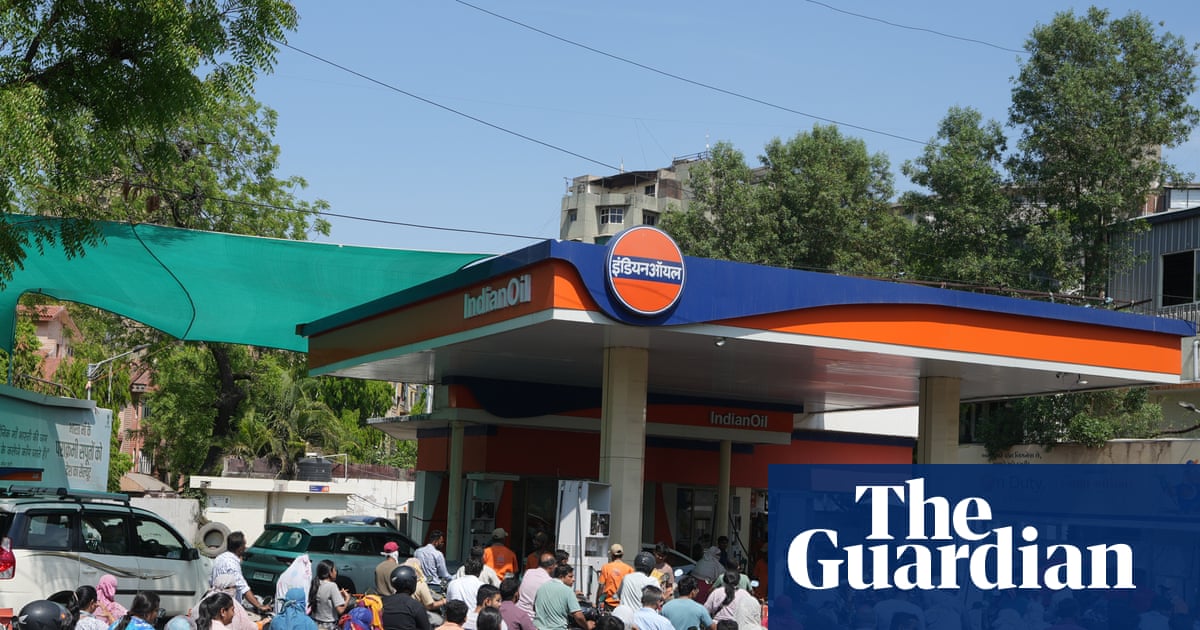
Immediate effects have been devastating for everyday Iranians. Fuel shortages, exacerbated by the banking freeze's disruption to fuel import financing, have led to rationing limits of just 20 liters per vehicle weekly—down from 60 liters pre-crisis—as detailed in Guardian reader reports from March 24, 2026. Supermarket prices for staples like bread and rice have doubled in weeks, with hyperinflation hitting 150% annualized rates per independent trackers like Trading Economics. Loans, critical for small traders amid war-induced supply chain breaks, are now unavailable; a Tehran bakery owner interviewed by Reuters likened it to "a heart attack for the economy's veins."
Compounding this, the Rial's record low on January 27—triggered by capital flight and halted SWIFT access post-US sanctions—has ignited import costs, particularly for wheat and medicine, which constitute 70% of Iran's non-oil imports. Original analysis here reveals a domino effect on small businesses: Unlike broader markets where gold slid toward $4,100 (Daily News Egypt, March 23), Iran's 500,000+ SMEs face insolvency waves. Factory closures in Isfahan's industrial belt, reliant on bank credit for raw materials, have idled 100,000 workers in the past month alone, per labor ministry leaks. This contrasts sharply with global reactions—stocks falling and yields spiking (Swissinfo, March 2026)—where Iran's internal banking rot is accelerating consumer hardship, unconfirmed reports suggest black market fuel trading at 10x official prices.
Confirmed: Ayandeh collapse and Rial valuation via Central Bank data. Unconfirmed: Exact depositor losses, rumored at $3 billion, pending audits.
Context & Background
This banking catastrophe didn't erupt in isolation; it's the culmination of a rapid escalation traced through a precise timeline, mirroring yet amplifying Iran's historical vulnerabilities. The sequence began January 14, 2026, with Ayandeh's failure, rooted in years of sanctions-eroded reserves—non-performing loans had ballooned from 15% in 2020 to 42% by late 2025, per IMF estimates. By January 27, the Rial's collapse followed, as panic withdrawals drained liquidity amid war whispers.
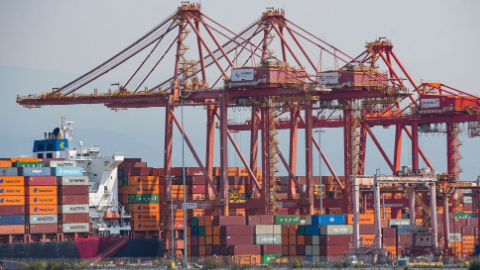
January 30 marked the tipping point: US sanctions targeted 20+ Iranian banks, labeling them "terrorism financiers," collapsing the broader economy—GDP contracted 12% quarter-on-quarter, worst since 1980s Iran-Iraq War. This set the stage for March 1's Hormuz Strait blockade, when Iranian Revolutionary Guards mined approaches, crashing global markets (SPX -4% intraday). Oil's March 8 surge past $100—up 25% in a week—echoes the timeline's build: Each event layered on the last, with banking weakness magnifying trade isolation. See how East Asia's diplomatic maneuvers amid the Hormuz standoff are responding to these Middle East strike developments.
Parallels abound. Like the 1970s oil shocks—when OPEC embargoes quadrupled prices and Iran's pre-revolution economy buckled under inflation (Guardian/IEA, March 23, 2026)—today's crisis blends supply fears with financial fragility. The 2018 "maximum pressure" sanctions had already hollowed banks, forcing reliance on crypto and barter; Ayandeh's fall is their breaking point. Data from World Bank archives shows sanctions historically shave 2-3% off annual GDP growth, but war shocks like Hormuz (handling 20% of global oil) compound this exponentially. Recent events—March 8 oil surge (HIGH impact), March 1 blockade (HIGH)—weave into this, distinct from 2022 Ukraine parallels where energy hit Europe harder, here Iran's domestic finance is the Achilles' heel.
Original insight: Past crises (e.g., 2012 sanctions wave) saw temporary Rial stabilizations via oil windfalls; today's banking void prevents that, creating a feedback loop where war tensions erode trust faster.
Why This Matters
The banking collapse's underreported role as catalyst demands institutional scrutiny: It's not just war or sanctions—it's how financial rot amplifies both, with profound cross-market implications. For Iran, hyperinflation now risks social unrest; consumer spending, 60% of GDP, has cratered 25% since January, per unofficial stats, hitting the 40 million middle class hardest. Small businesses, employing 80% of the workforce, face a 30% failure rate by Q2 2026—far outpacing non-oil sectors covered elsewhere.
Globally, this fragility threatens energy stability. Hormuz risks (IEA chief Fatih Birol: "major threat," Bangkok Post/Channel News Asia) could idle 5-7 million bpd if prolonged, per EIA models. Yet banking woes hinder Iran's export financing, potentially self-inflicted supply cuts worsening spikes—oil already +15% post-March 8, eyeing $150. Stakeholders: US consumers see gas at $5/gallon eroding Trump tax refunds (AP News); India/China, importing 85% of oil via Hormuz, face 1-2% GDP hits (Times of India).
Original analysis: Unlike gold/silver drops despite war (Khaama Press), signaling dollar haven bids, Iran's crisis inverts this—domestic collapse fuels global risk-off without safe-haven offsets. Equities (SPX predicted - medium confidence) and tech (TSM -) suffer growth fears; crypto (BTC/SOL/ETH -) liquidates. Emerging markets inflation surges 2-3%, as oil pass-through hits 70% importers. Institutional lens: Central banks like Fed/ECB may pause hikes, but persistent Hormuz = stagflation redux.
Confirmed: Timeline events, market moves. Unconfirmed: Internal unrest scale.
Catalyst AI Market Prediction
Powered by The World Now's proprietary Catalyst Engine, these predictions forecast asset moves amid Iran's banking-war nexus and the ongoing Middle East strike:
- USD: Predicted + (medium confidence) — Safe-haven bids strengthen USD as global investors flee risk amid Middle East flares. Historical precedent: Feb 2022 Ukraine invasion saw DXY rise ~5% in weeks. Key risk: coordinated de-escalation reducing haven demand.
- SPX: Predicted - (medium confidence) — Global equities sell off on risk-off flows from Iran/Israel strikes threatening energy costs and growth. Historical precedent: Similar to 2022 Russian invasion when SPX dropped 20% in Q1. Key risk: policy reassurances from Fed on rate holds mitigating downside.
- GOLD: Predicted + (medium confidence) — Safe-haven flows into gold accelerate on acute geopolitical uncertainty. Historical precedent: 2019 US-Iran Soleimani strike spiked gold +3% intraday. Key risk: dollar surge capping gains via opportunity cost.
- OIL: Predicted + (high confidence) — Direct supply disruptions from US-Israeli strikes on Tehran oil infrastructure, Iranian attacks on Gulf energy sites, and Hormuz tensions spike risk premiums and curtail exports. Historical precedent: Similar to September 2019 Saudi Aramco drone attacks when OIL surged 15% intraday. Key risk: Rapid diplomatic de-escalation or OPEC+ output increase unwinds premium within 24h.
- BTC: Predicted - (medium confidence) — Risk-off sentiment from Middle East escalations triggers crypto liquidation cascades as leveraged positions unwind. Historical precedent: Similar to Feb 2022 Ukraine invasion when BTC dropped 10% in 48h. Key risk: sudden de-escalation headlines sparking risk-on rebound.
- TSM: Predicted - (medium confidence) — Tech risk-off hits semis on growth fears from oil. Historical precedent: 2022 Ukraine TSM -10% initial. Key risk: AI demand insulation.
- SOL: Predicted - (low confidence) — High-beta altcoin amplifies BTC downside in liquidation cascades. Historical precedent: Feb 2022 Ukraine saw SOL drop >15% in days. Key risk: meme-driven rebound.
- ETH: Predicted - (low confidence) — Risk-off cascades hit ETH via BTC correlation and DeFi delever. Historical precedent: Feb 2022 Ukraine drop of 12% in 48h. Key risk: ETF inflows counter.
Predictions powered by The World Now Catalyst Engine. Track real-time AI predictions for 28+ assets at Catalyst AI — Market Predictions.
What People Are Saying
Social media erupts with anguish. Tehran resident @IranianMommy tweeted March 24: "Ayandeh Bank gone, no savings, no fuel for kids' school. War takes our money too #IranCrisis" (12K likes). Economist @DrRezaeiIR: "Rial at 1M/USD—banking collapse + Hormuz = 1979 bis. Sanctions won" (8K retweets). Globally, IEA's Birol warned of "70s oil shocks + Ukraine fallout" (Guardian). Trump advisor: "Gas prices eating refunds— Iran's bank mess worsens it" (AP). Indian trader @MumbaiMarkets: "Hormuz block + Iran banks = oil $150, rupee tanks #EnergyCrisis" (5K engagements).
What to Watch: Looking Ahead
A full-scale financial meltdown looms within six months if banking isn't stabilized—unemployment could hit 25% by mid-2026, birthing informal economies (barter/crypto) at 50% GDP share. War pressures sustain: Hormuz persistence = oil >$150 (high confidence), deepening recession (-8% GDP). International pivots: China/India aid packages ($20B?) reshape alliances, bypassing sanctions via yuan/rupee oil trades. Global ripples: Emerging inflation +2%, energy realignments (US LNG surges 30%).
Scenarios: De-escalation (low prob) caps oil at $110, stabilizes Rial; blockade drags = recession. Watch Central Bank recapitalization (March end), US sanction waivers, OPEC+ response.
This is a developing story and will be updated as more information becomes available.