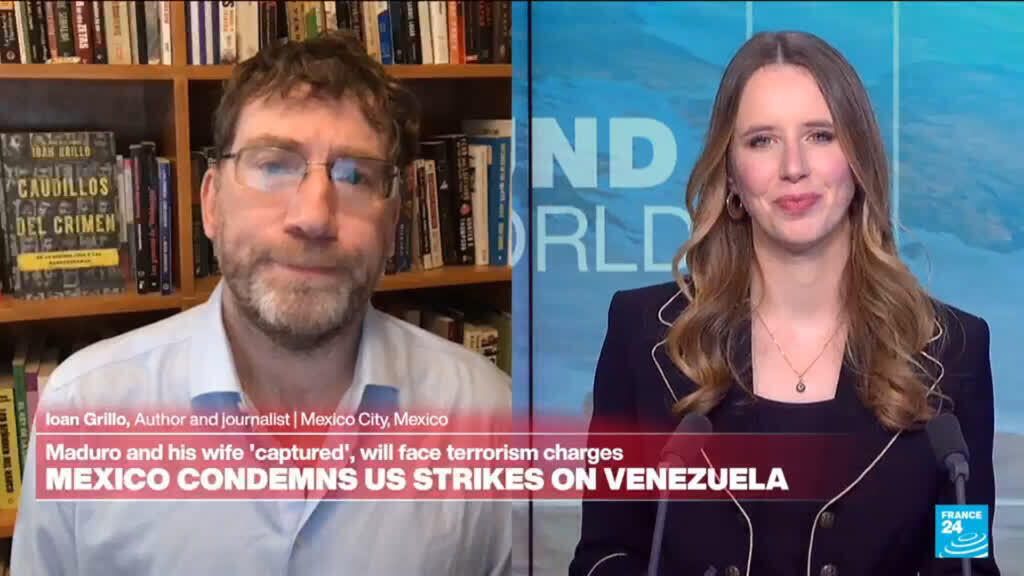

Mexico Condemns U.S. Military Strikes on Venezuela Amid Rising Tensions
In a decisive response to recent U.S. military actions, Mexico's President Claudia Sheinbaum has publicly condemned the strikes on Venezuela, emphasizing her government's commitment to non-aggression as outlined in the United Nations Charter. This statement, made on January 3, 2026, marks a significant moment in Mexico's foreign policy, particularly in relation to its northern neighbor.
President Sheinbaum took to social media to express Mexico's stance against the U.S. strikes, citing Article 2 of the UN Charter, which emphasizes the sovereign equality of all member states and the obligation to settle disputes peacefully. "Mexico rejects any form of aggression that undermines the principles of international law and the sovereignty of nations," she stated in her post. This condemnation aligns with Mexico's longstanding policy of non-intervention and respect for the sovereignty of other nations, a principle that has shaped its diplomatic relations for decades.
The U.S. military strikes, which targeted specific locations in Venezuela, were reportedly aimed at curbing what the U.S. government described as threats to regional stability and security. However, these actions have sparked widespread criticism from various countries in Latin America, with Mexico's government positioning itself as a defender of regional autonomy and a critic of foreign intervention.
Context and Background
The geopolitical landscape in Latin America has been increasingly fraught with tensions, particularly in light of the ongoing crisis in Venezuela. Since the beginning of the 2010s, Venezuela has faced severe political and economic turmoil, leading to mass emigration and humanitarian challenges. The U.S. has taken a hardline approach against the Venezuelan government, led by President Nicolás Maduro, often citing human rights abuses and corruption as justification for its interventions.
Mexico, under President Sheinbaum, has sought to distance itself from the aggressive foreign policy of the previous U.S. administration and has advocated for a multilateral approach to resolving regional conflicts. Sheinbaum's administration has emphasized dialogue and cooperation, often aligning itself with countries that oppose U.S. interventionist policies in Latin America.
The condemnation of U.S. military action comes at a time when the relationship between Mexico and the United States is under scrutiny. While the two countries share deep economic ties, particularly through trade agreements such as the USMCA, differing approaches to foreign policy can strain diplomatic relations. Mexico's stance on the situation in Venezuela highlights its commitment to a more autonomous foreign policy, one that prioritizes regional stability and the principle of non-intervention.
Conclusion
As tensions continue to rise in Latin America, Mexico's strong condemnation of U.S. military strikes on Venezuela underscores its commitment to uphold international law and respect for national sovereignty. This development not only reflects Mexico's foreign policy under President Sheinbaum but also highlights the broader implications for U.S.-Mexico relations in an increasingly complex geopolitical landscape. As the situation evolves, it remains to be seen how this will affect Mexico's diplomatic engagements and its role in regional affairs.






