
Mexican President Sheinbaum Rejects U.S. Military Intervention as Trump Raises Cartel Crackdown Specter
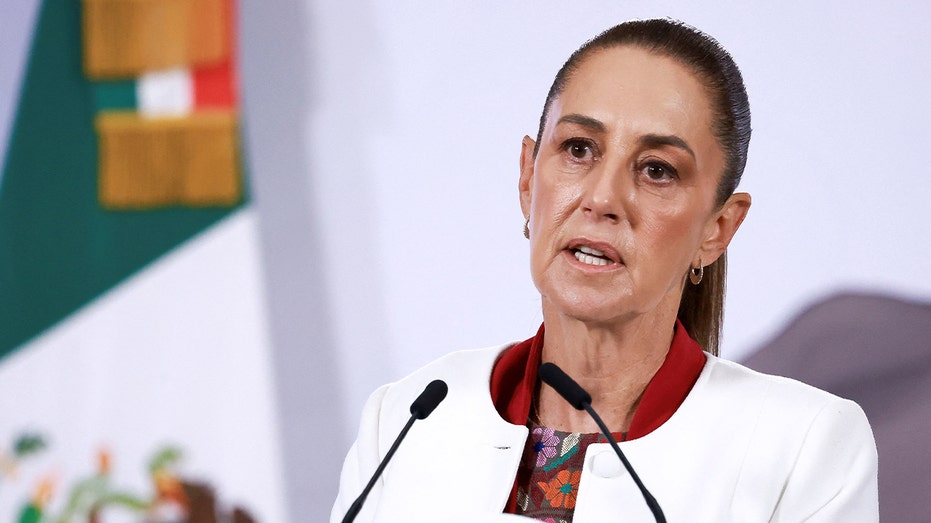
Mexico City, January 5, 2026 – Mexican President Claudia Sheinbaum issued a staunch defense of her nation's sovereignty on Monday, rejecting any notion of U.S. military intervention following reports that President Donald Trump had floated the possibility of American troops entering Mexico to combat drug cartels.
In a pointed statement, Sheinbaum dismissed the idea of a U.S. invasion, declaring, "I don't believe in an invasion." Her remarks came amid escalating tensions between Washington and Mexico City over cross-border issues including fentanyl trafficking, cartel violence, and migration. The exchange underscores deepening geopolitical frictions as the U.S. administration under Trump intensifies pressure on Mexico to address organized crime spilling over into American communities.
Sheinbaum's comments were delivered during a press interaction where she also condemned recent U.S. involvement in Venezuela, framing it as an unwelcome precedent for hemispheric interventionism. "We reject any intervention, whether in Venezuela or here," she stated, linking the Venezuelan situation to broader concerns about foreign military actions in Latin America. The Mexican leader emphasized Mexico's commitment to handling internal security challenges autonomously, while pledging cooperation on mutual issues like drug interdiction.
The controversy erupted after Trump reportedly suggested during discussions that U.S. forces could cross into Mexico to target cartel strongholds, a proposal reminiscent of his 2024 campaign rhetoric. Mexican officials confirmed that the outgoing President-elect—now in his second term—had raised the military option in conversations focused on dismantling powerful syndicates like the Sinaloa and Jalisco New Generation cartels. These groups have been blamed for fueling the U.S. opioid crisis, with synthetic opioids such as fentanyl causing over 70,000 American deaths annually, according to Centers for Disease Control and Prevention data.
Escalating U.S.-Mexico Tensions
Relations between the two neighbors have long been strained by issues of border security, trade, and narcotics. Trump, who assumed office for his second non-consecutive term in January 2025, has prioritized aggressive anti-cartel measures. During his first presidency (2017-2021), he designated Mexican cartels as foreign terrorist organizations and threatened tariffs and military action if Mexico failed to curb migrant flows and drug smuggling. Similar threats resurfaced in 2025, with Trump announcing plans for drone strikes and special operations against cartel leaders, prompting diplomatic pushback from Mexico.
Sheinbaum, who succeeded Andrés Manuel López Obrador in October 2024 after winning a landslide election, has pursued a "hugs, not bullets" security strategy emphasizing social programs over militarization. Her administration has ramped up military deployments against cartels—deploying over 400,000 National Guard troops domestically—but resists external involvement. In December 2025, Mexico extradited 29 high-profile cartel figures to the U.S., a gesture of goodwill amid tariff threats, yet Sheinbaum maintains that sovereignty remains non-negotiable.
The latest flare-up coincides with broader regional dynamics. The U.S. has backed opposition figures in Venezuela and imposed sanctions on President Nicolás Maduro's regime, actions Sheinbaum criticized as hypocritical given America's own security demands on Mexico. "Sovereignty is not negotiable," she reiterated, echoing López Obrador's nationalist stance.
U.S. officials have not publicly confirmed Trump's military remarks but have defended heightened cooperation. Secretary of State Marco Rubio stated last week that "all options are on the table" to combat fentanyl flows, which originate primarily from Chinese precursors routed through Mexican labs. Border Patrol seizures hit record highs in fiscal 2025, with over 27,000 pounds of fentanyl intercepted, per U.S. Customs and Border Protection.
Historical Context and Bilateral Framework
U.S.-Mexico security ties date back to the 2008 Mérida Initiative, a $3.5 billion U.S.-funded program to bolster Mexican law enforcement against cartels. While it yielded arrests and seizures, violence persists: Mexico recorded over 30,000 homicides in 2025, many cartel-related, according to government data. Past U.S. interventions in Latin America, from Panama in 1989 to Grenada in 1983, fuel Mexican wariness of military overreach.
The USMCA trade agreement, renegotiated under Trump's first term, ties economic interdependence to security cooperation, with Mexico as the U.S.'s top trading partner at $800 billion annually. Any military escalation risks disrupting supply chains, particularly autos and agriculture.
Mexican Foreign Minister Juan Ramón de la Fuente urged dialogue, saying in a statement, "We will combat cartels together, but on our soil, by our rules." Opposition voices in Mexico, including former President Vicente Fox, have warned against U.S. "imperialism," while business leaders fear economic fallout.
Outlook for Bilateral Relations
As talks continue, analysts anticipate no immediate U.S. troop deployment, given logistical and diplomatic hurdles under international law, including the UN Charter's prohibitions on uninvited force. However, Trump's administration has signaled potential sanctions or tariffs if Mexico's anti-cartel efforts falter.
Sheinbaum's firm rebuttal positions her as a defender of Latin American autonomy, potentially galvanizing regional allies like Brazil under President Lula da Silva. For the U.S., the impasse highlights the limits of unilateral pressure in addressing transnational crime.
With midterm elections looming in both nations, the rhetoric may intensify, but sustained cooperation—through intelligence sharing and joint operations—remains the most viable path forward. As Sheinbaum affirmed, "Mexico will defend its sovereignty with dignity."
(Word count: 712)






