Mali Conflict: Junta Leader Says Situation Is Under Control After Attacks
In the ongoing conflict Mali has endured, junta leader Assimi Goita delivered his first public address since a wave of weekend attacks, assuring the nation that the situation remains under control and urging citizens not to panic amid persistent security threats.[1][2]
Junta Leader's Statement
Mali's military leader Assimi Goita broke his public silence with a direct address to the nation, emphasizing stability in the face of recent turmoil. In this carefully worded speech on Tuesday, Goita explicitly stated that "the situation is under control," a message aimed at restoring public confidence following events that have shaken the foundations of his junta's rule.[2] This marked his initial public commentary since the attacks, underscoring the gravity of the moment as he sought to project authority and composure.[1][2]
Goita's call for calm was unequivocal, as he urged citizens not to panic despite the ongoing security challenges that continue to test the country's resilience. His remarks were not merely rhetorical; they represented a deliberate effort by the junta chief to frame the narrative around containment and normalcy, even as the backdrop of violence loomed large.[1] By insisting on control, Goita aimed to counter any perceptions of vulnerability within his leadership, positioning the military government as steadfast in its response.[2] This first address served as a pivotal communication from the top, blending reassurance with a subtle reminder of the junta's grip on power amid destabilizing forces.[1][2]
The tone of the statement reflected a leader attuned to the psychological impact of insecurity on the populace. Goita's words were crafted to mitigate fear, encouraging a collective restraint that could prevent further unrest. In doing so, he highlighted the junta's commitment to managing the crisis without admitting any lapses, a strategy that aligns with the military's broader approach to governance in Mali.[1][2]
Context of Recent Attacks
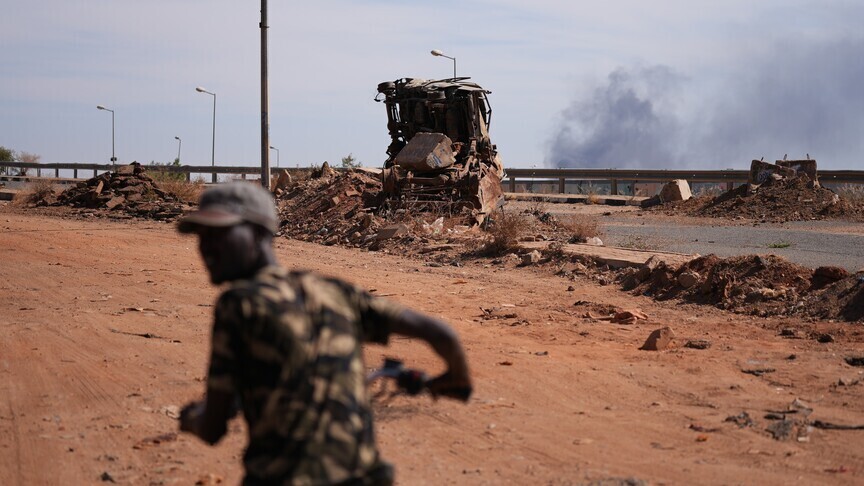
The weekend attacks that prompted Goita's address were described as unprecedented large-scale operations, marking a significant escalation in the violence plaguing the country. These assaults destabilized the ruling junta, exposing vulnerabilities in Mali's security apparatus and prompting the leader's rare public intervention.[1] Coming in a wave, the incidents represented a coordinated surge that caught attention both domestically and internationally, amplifying concerns over the junta's ability to maintain order.[2]
This spate of violence unfolded over the weekend, creating an immediate backdrop of uncertainty that necessitated Goita's first statement to the nation.[2] The attacks' scale was notable, characterized as a "wave of unprecedented violence," which intensified the pressure on the military leadership already grappling with insurgent threats.[1] Their impact extended beyond immediate casualties or destruction; they rattled the junta's position, raising questions about the effectiveness of current defensive strategies and the overall stability of the regime.[1][2]
In the broader conflict Mali context, these events fit into a pattern of insurgent activities that have repeatedly challenged state control, particularly in vulnerable regions. The timing of the attacks, just prior to Goita's address, amplified their political weight, forcing the junta to respond publicly for the first time since the incidents.[2] This context underscores how such violence not only inflicts direct harm but also undermines the perceived legitimacy and operational strength of the ruling military council.[1]
Mali's Security Challenges
Mali's efforts to regain peace and security are hindered by an over-dependence on military solutions, according to expert analysis, a factor that perpetuates the cycle of insurgent violence in the Sahel region.[3] This reliance on militarized approaches has left the country struggling, as purely force-based strategies fail to address the root causes of the conflict.[3]
The analysis points to a strategic shortfall under Colonel Assimi Goïta's leadership, where the emphasis on military governance overshadows more comprehensive peace-building measures.[3] Insurgent groups exploit this imbalance, sustaining their operations despite repeated confrontations. The persistence of violence highlights how Mali's security apparatus, while robust in deployment, lacks the holistic framework needed for lasting stability.[3]
In this environment, external partnerships play a role, yet they often reinforce the militarized trajectory rather than diversifying responses. The Sahel's volatile dynamics, intertwined with Mali's internal struggles, demand a reevaluation of these dependencies, as over-reliance on arms and troops alone proves insufficient against adaptive insurgent threats.[3] This over-dependence manifests in ongoing challenges, where military victories yield temporary gains but fail to consolidate peace, leaving the nation in a protracted state of insecurity.[3]
Current Status and Implications
Assimi Goita's assurance that the situation is under control forms the cornerstone of the junta's current messaging, even as the country navigates the aftermath of the weekend attacks.[1][2] This stance, coupled with the call for citizens not to panic, signals an intent to project continuity and competence amid destabilization.[1] The implications are profound: by framing the crisis as managed, the leadership seeks to preserve public order and deter further escalation from insurgents.[2]
Drawing from expert insights, Mali's broader security landscape reveals the limitations of this military-centric posture, suggesting that assurances alone may not suffice without addressing underlying governance issues.[3] The junta's position, while outwardly firm, faces tests from persistent violence, with the recent wave underscoring the need for stability beyond rhetoric.[1][2][3]
The overall trajectory implies a delicate balance for the regime, where maintaining control requires not just statements but sustained operational success. Goita's address reinforces this narrative, but the interplay of militarized governance and insurgent resilience points to potential long-term vulnerabilities.[3] For now, the emphasis remains on containment, with implications for national cohesion hinging on whether these assurances translate into tangible security gains.[1][2]
Expert Perspectives
Dr. Folahanmi Aina, a Political Scientist and Lecturer in the Political Economy of Violence, Conflict and Development at SOAS London, provides critical insights into Mali's crisis, focusing on the interplay between militarised governance, external partnerships, and the persistence of insurgent violence.[3] His research on global security and political dynamics in the Sahel highlights how Mali's current path under Colonel Assimi Goïta reflects a strategic over-dependence on military solutions, which undermines broader efforts for peace.[3]
Aina's analysis delves into the militarized governance model, where the junta's heavy reliance on force-based responses sustains rather than resolves the conflict. External factors, including partnerships with foreign actors, often bolster this approach but fail to mitigate the root drivers of insurgency, allowing violence to endure.[3] This perspective frames Mali's challenges as a complex web, where insurgent adaptability outpaces reactive military measures.[3]
The expert's view emphasizes the need to move beyond over-dependence, advocating for integrated strategies that incorporate political and developmental elements. In the context of recent events, Aina's observations suggest that the junta's assurances must be accompanied by shifts away from pure militarization to foster genuine security.[3] His work underscores the Sahel's interconnected conflicts, positioning Mali's struggles within a regional framework of persistent threats.[3]
What to watch next: Observers will monitor whether Assimi Goita's assurances lead to visible stabilization measures, as Mali continues to grapple with its over-dependence on military solutions amid ongoing insurgent violence in the Sahel.[1][2][3]