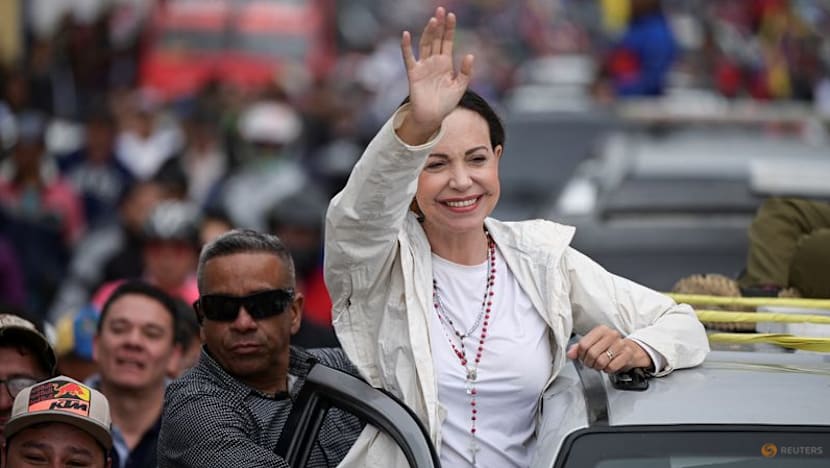

Maduro Signals Openness to US Talks on Drug Trafficking as Trump Plans Meeting with Venezuelan Opposition Leader
Caracas/Washington, January 9, 2026 – Venezuelan President Nicolás Maduro has expressed willingness to engage in discussions with the United States on drug trafficking issues, marking a potential thaw in long-strained bilateral relations, even as he sidestepped questions about a recent attack in Venezuela that sources claim was linked to the US. This comes amid reports that US President Donald Trump intends to meet next week with prominent Venezuelan opposition figure Maria Corina Machado, signaling possible shifts in Washington's approach to the South American nation.
Maduro's comments, made on January 2, highlight a rare overture from Caracas toward dialogue on narcotics, a persistent point of contention. The Venezuelan leader stated his openness to talks while avoiding direct responses to inquiries about the aforementioned attack, which has heightened tensions between the two countries. Drug trafficking has long been a flashpoint, with the US accusing Venezuela of serving as a major transit hub for cocaine bound for North America, leading to sanctions and designations of Venezuelan officials as significant foreign narcotics traffickers.
In a parallel development reported on January 9, President Trump announced plans to meet with Machado, the influential opposition leader who has emerged as a leading voice against Maduro's government. The meeting, slated for next week, underscores Trump's interest in Venezuelan affairs as he shapes his administration's foreign policy ahead of key deadlines. Machado, a former lawmaker and economist, has been a fierce critic of Maduro, particularly following the disputed July 2024 presidential election, where Maduro claimed victory amid widespread allegations of fraud.
Shifting Dynamics in US-Venezuela Relations
The timing of Maduro's remarks and Trump's outreach appears intertwined with broader geopolitical maneuvers. US-Venezuela ties have deteriorated sharply over the past decade, exacerbated by Maduro's consolidation of power after the death of Hugo Chávez in 2013. The US has imposed extensive sanctions on Venezuelan oil exports, government officials, and entities accused of human rights abuses and corruption, aiming to pressure Maduro to hold free elections.
Machado's prominence grew after she won a primary opposition vote in October 2023 but was barred by Venezuela's top court from running in the 2024 election, prompting her protégé Edmundo González to challenge Maduro. International observers, including the Carter Center and the UN's electoral panel, criticized the vote as lacking transparency, with opposition tallies showing González leading by a wide margin. Post-election protests led to hundreds of arrests, further isolating Maduro globally.
Trump's engagement with Machado revives memories of his first term (2017-2021), when he backed Juan Guaidó as interim president in 2019, recognizing him amid a power struggle. That strategy faltered without decisive military or international support to oust Maduro. Now, with Republicans controlling Congress and Trump back in the White House since January 2025, analysts see the meeting as a platform to rally opposition forces and potentially escalate pressure, including through renewed sanctions or diplomatic isolation.
Maduro's drug trafficking overture could be interpreted as a tactical response. Venezuela has faced US Treasury designations since 2011, with Maduro himself labeled a "kingpin" in 2020. Caracas has repeatedly denied facilitating trafficking, blaming US policies for economic woes that purportedly fuel illicit activities. Recent US intelligence assessments, however, continue to highlight Venezuela's role, estimating that up to 20% of cocaine entering the US transits via the country.
Background on Venezuela's Political Crisis
Venezuela's crisis traces back to the 2013 election of Maduro, whose socialist policies amid collapsing oil prices led to hyperinflation exceeding 1 million percent in 2018 and mass emigration—over 7.7 million Venezuelans have fled since 2014, according to UN data. The 2018 presidential election, boycotted by major opposition and deemed illegitimate by the US and EU, prompted the sanctions regime.
International efforts, including the Barbados Agreement in 2023 for electoral guarantees, collapsed after the 2024 vote. Regional players like Brazil and Colombia have pursued dialogue, but Maduro's grip remains firm, bolstered by alliances with Russia, Iran, Cuba, and China, which provide economic lifelines through oil deals and military aid.
The US has oscillated between maximum pressure and pragmatism. Under Biden, partial sanctions relief in 2023 allowed Chevron to resume limited operations in exchange for electoral promises, later reversed after perceived backsliding. Trump's incoming team, including advisors like Marco Rubio, has signaled a hardline stance, viewing Maduro's regime as a security threat due to migration flows, gang activities like Tren de Aragua, and narco-trafficking.
Outlook Amid Uncertainty
As Trump prepares to meet Machado, the opposition hopes for amplified US support, potentially including recognition of parallel governments or targeted actions against Maduro allies. Maduro's drug talks proposal, however, introduces a diplomatic channel that could preempt escalation, especially if tied to sanctions relief.
No official US response to Maduro's overture has emerged, but the White House has prioritized border security and counter-narcotics. With Venezuela's economy contracting amid low oil production (around 800,000 barrels per day, per OPEC) and ongoing blackouts, both sides face incentives for engagement—Washington for stability, Caracas for legitimacy.
The coming weeks will test whether these moves herald de-escalation or renewed confrontation in a nation where over 90% disapprove of Maduro's leadership, per independent polls like Datanalisis.
(Word count: 712)






