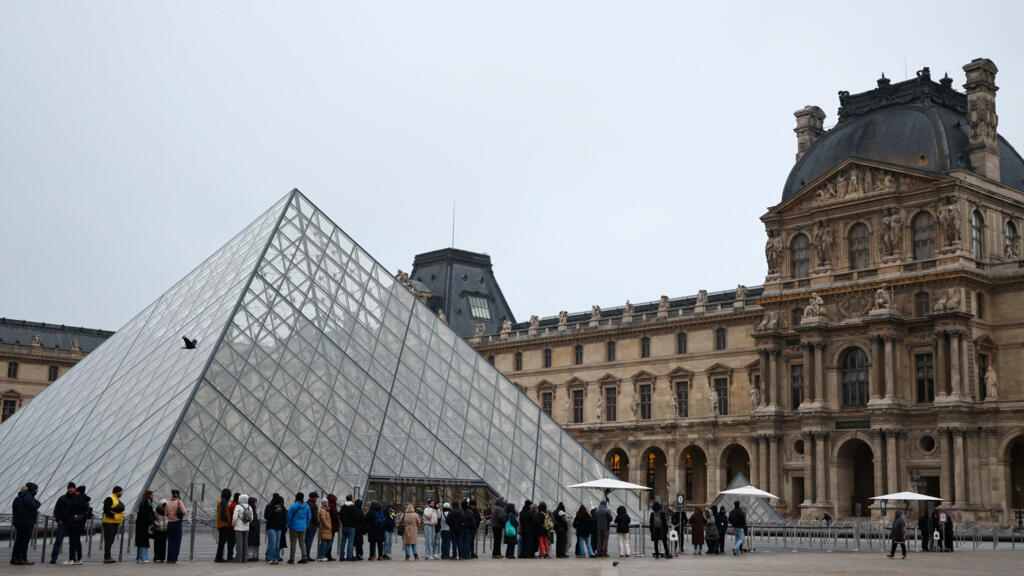

Louvre Staff Extend Strike Action Over Working Conditions, Limiting Museum Access Amid Ongoing Labor Dispute
Paris, France – Staff at the world-renowned Louvre Museum in Paris have voted to prolong a strike that began in December 2025, citing grievances over working conditions and the management of the museum's facilities. The action, which entered its latest phase on January 5, 2026, has resulted in the institution operating only partially, disrupting access for visitors during what remains a key period for cultural tourism despite the winter season.
The decision to continue the strike was confirmed following a staff vote, as reported by RFI. Museum management announced that the Louvre would remain partially open on Monday, January 5, allowing limited entry to exhibitions and services. This development marks a persistence in labor unrest at one of France's most iconic cultural landmarks, where employees have highlighted concerns including workload pressures, maintenance issues in aging infrastructure, and broader management practices.
The strike originated in late December 2025, reflecting deeper tensions within the museum's workforce. Employees, represented by various unions prevalent in France's public sector, have focused their demands on improvements to work environments, such as better ventilation, crowd control measures, and equitable staffing levels. These issues are not isolated; the Louvre, which attracts over 9 million visitors annually according to pre-2026 figures from the museum's official reports, has long grappled with overcrowding and the physical toll on staff handling high volumes of tourists.
Background on Louvre Labor Disputes
The Louvre Museum, officially Musée du Louvre, houses approximately 380,000 objects spanning 10,000 years of human history, including masterpieces like the Mona Lisa and Venus de Milo. Housed in a former royal palace on the Right Bank of the Seine, it is the world's most visited museum, a status reinforced by UNESCO recognition and its central role in Paris's cultural economy. However, this prestige comes with operational challenges.
Labor actions at the Louvre are a recurring feature of French industrial relations, underpinned by the country's strong union tradition and legal protections for striking workers under the 1936 Matignon Accords and subsequent labor codes. France's public sector employees, including those in cultural institutions, benefit from robust collective bargaining rights, with strikes often used as leverage in negotiations with state-affiliated employers.
Historical precedents abound. In 2019, Louvre staff walked out over fears of creeping privatization and insufficient funding. More recently, in the summer of 2023, unions protested extreme heat in exhibition halls lacking adequate air conditioning, leading to temporary closures. A 2022 strike addressed post-COVID recovery workloads, while actions in 2021 focused on health protocols during the pandemic. These episodes underscore a pattern: unions argue that skyrocketing visitor numbers—peaking at 10.8 million in 2023—strain resources without corresponding investments in staff welfare or infrastructure.
The current dispute aligns with this trajectory. Initiated amid year-end holiday pressures, it has carried into 2026, potentially affecting early-year tourism. Paris, still basking in the afterglow of the 2024 Summer Olympics that drew record crowds, relies heavily on cultural sites like the Louvre, which contributes billions to the local economy annually per French tourism board data.
Impact on Visitors and Operations
On January 5, the museum's partial opening meant selective access to wings and galleries, with ticketing and security services scaled back. Official Louvre communications, echoed in management's statements, emphasized efforts to maintain core operations while urging patience from the public. No specific timeline for resolution has been announced, but French labor norms typically involve mediation through bodies like the French Ministry of Culture or direct negotiations.
Visitors, including international tourists, have faced uncertainty. Online booking systems reflected adjusted capacities, and social media reports from the scene described queues and closures in high-traffic areas like the Denon Wing, home to Leonardo da Vinci's Mona Lisa. While January is not peak season—unlike the summer months when daily attendance can exceed 30,000—the strike coincides with post-holiday travel and preparations for upcoming exhibitions.
Broader context in France reveals a landscape of intermittent labor unrest. Public sector strikes, from rail workers at SNCF to educators, are commonplace, often synchronized around budgetary debates. In 2025, nationwide actions protested pension reforms and inflation pressures, though the Louvre case remains museum-specific.
Outlook for Resolution
As the strike continues, both sides appear entrenched. Unions have signaled willingness for dialogue but insist on concrete commitments, while management balances operational continuity with fiscal constraints under France's national budget. The Ministry of Culture, which oversees the Louvre as a public entity, may intervene to facilitate talks, as seen in prior disputes.
For now, the partial closure serves as a reminder of the human element behind global cultural treasures. Travelers planning visits are advised to check the Louvre's official website for real-time updates. With no immediate end in sight, the dispute highlights ongoing challenges in sustaining France's cultural heritage amid modern pressures.
(Word count: 712)






