
London Sees Wave of Embassy Protests Amid Global Tensions: Demonstrations Against U.S. Actions in Venezuela and Iran's Leadership
London, United Kingdom — Recent civil unrest events in the British capital have spotlighted international flashpoints, with protesters targeting diplomatic missions in response to distant conflicts. On January 4, 2026, a medium-severity demonstration erupted outside the U.S. Embassy in London against reported U.S. military strikes on Venezuela. Days later, around January 10, another protest unfolded at the Iranian Embassy, where demonstrators voiced opposition to Supreme Leader Ayatollah Ali Khamenei by prominently displaying a pre-Islamic revolution flag.
These incidents, tracked by global events platforms, underscore London's longstanding role as a hub for international activism. The U.S. Embassy protest began at 00:13 GMT on Sunday, January 4, drawing crowds decrying what organizers described as aggressive U.S. intervention in Venezuelan affairs. Eyewitness accounts and event monitoring data indicate the gathering remained contained but reflected broader anti-imperialist sentiments prevalent among activist groups in the U.K.
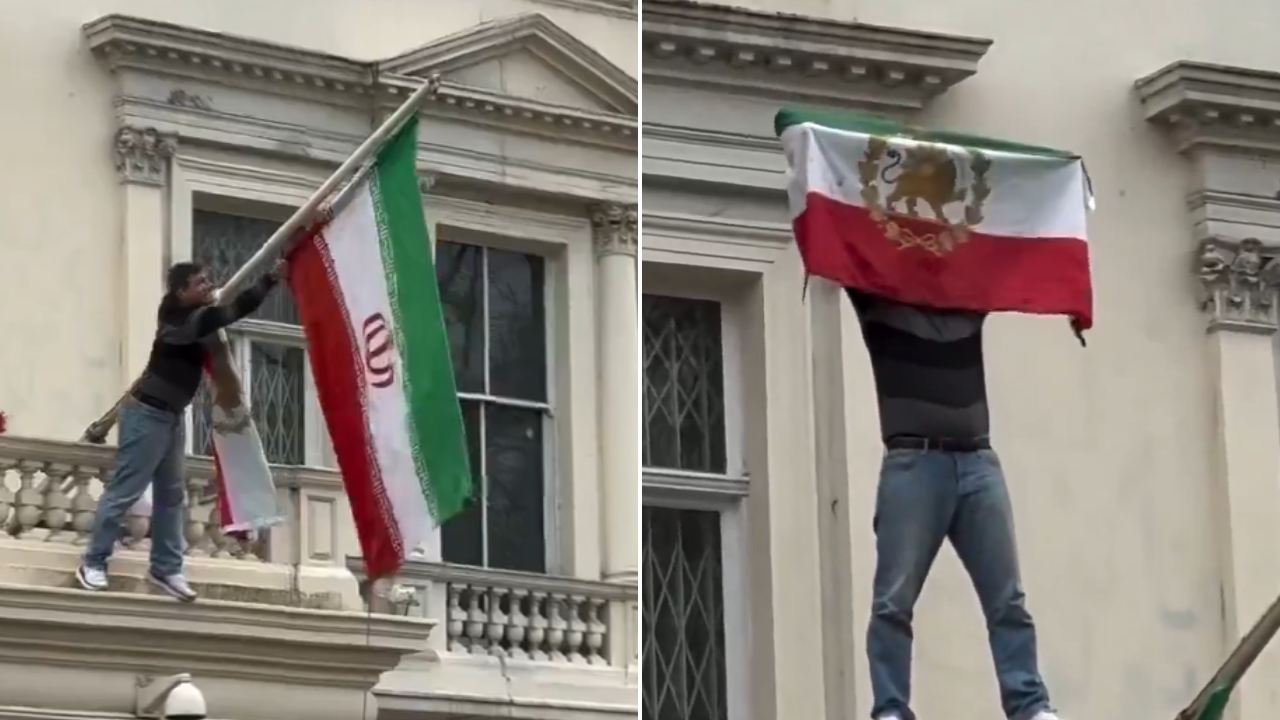
The Iranian Embassy demonstration, reported by Times of India on January 10, 2026, at 18:03 GMT, escalated when a protester scaled the building to affix the Lion and Sun flag—a symbol associated with Iran's pre-1979 monarchy and frequently adopted by regime opponents. This act symbolized deep-seated grievances against Khamenei's leadership, amid ongoing diaspora activism. Video footage captured the bold gesture, which circulated widely online, amplifying calls for change in Tehran.
Details of the Protests
The anti-U.S. protest at the U.S. Embassy in Grosvenor Square, a site synonymous with historic demonstrations since the Vietnam War era, focused squarely on military actions against Venezuela. Event data classifies the unrest as medium severity, suggesting no widespread violence or arrests but notable public mobilization. Protesters reportedly chanted slogans condemning the strikes, linking them to longstanding U.S. foreign policy disputes with Venezuelan President Nicolás Maduro's government. London's Metropolitan Police monitored the event, maintaining order in line with protocols for diplomatic protests.
In parallel, the Iranian Embassy action highlighted fractures within the Iranian expatriate community in the U.K., one of Europe's largest. The Times of India report detailed how the flag placement provoked immediate attention, serving as a visual rebuke to the Islamic Republic's theocratic rule. Such displays echo previous incidents, including flag desecrations and occupations during heightened tensions.
No injuries or major disruptions were reported in either case, though both events prompted temporary security enhancements around the embassies. U.K. authorities have not issued formal statements beyond routine crowd management advisories.
Historical and Geopolitical Context
London's diplomatic quarter has long been a barometer for global dissent. The U.S. Embassy, relocated to its current nine-story fortress in 2009 for enhanced security, has hosted protests ranging from anti-Iraq War marches in 2003—drawing over a million participants—to more recent Black Lives Matter rallies. Its proximity to Hyde Park facilitates organized gatherings under British free speech laws.
U.S.-Venezuela relations provide critical backdrop to the January 4 protest. Since 2017, Washington has imposed sanctions on Caracas over electoral disputes, human rights concerns, and oil sector control, recognizing opposition figure Juan Guaidó as interim president in 2019 before shifting tactics. Hypothetical military strikes in early 2026 would represent an escalation, potentially tied to border skirmishes or humanitarian crises, though specifics remain unconfirmed beyond protest claims.
Similarly, anti-Khamenei sentiment traces to Iran's 1979 Islamic Revolution, which overthrew the Pahlavi dynasty. The Lion and Sun flag evokes that era's nationalism, resurfacing in protests following Mahsa Amini's 2022 death in custody, which ignited the "Woman, Life, Freedom" movement. U.K.-based Iranian dissidents, numbering tens of thousands, have staged regular vigils, with London's embassy a focal point since the 1980 hostage crisis.
These events occur against a backdrop of heightened global polarization. The U.K., post-Brexit, balances its transatlantic alliances with vocal human rights advocacy, often mediating through parliamentary debates and Foreign Office statements.
Broader Implications and Outlook
The clustering of these protests within a week signals how interconnected conflicts resonate in multicultural London, home to over 300,000 Venezuelans and Iranians combined, per migration estimates. Event trackers note a medium risk profile, with potential for recurrence if underlying triggers persist.
As The World Now monitors, authorities anticipate measured responses, emphasizing de-escalation. No links between the two protests have been established, but they collectively illustrate civil society's role in amplifying foreign policy critiques. Future demonstrations could intensify if U.S.-Venezuela or Iran-related developments accelerate, testing London's resilience as a protest venue.
(Word count: 612)






