
Latin America's Geopolitical Awakening: How Middle East Conflicts and Oil Price Forecast Are Reshaping Regional Strategies
By Priya Sharma, Global Markets Editor, The World Now
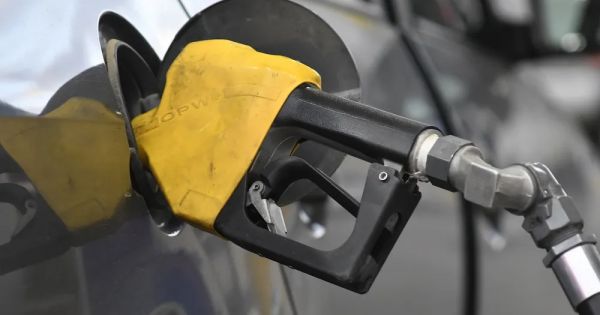
In an era of cascading global disruptions, Latin America is quietly recalibrating its place on the world stage amid volatile oil price forecast trends. On March 27, 2026, Uruguay announced a 7% hike in fuel prices, explicitly citing the escalating Middle East war—particularly disruptions in the Strait of Hormuz—as the culprit, while shifting to monthly price adjustments to hedge against oil price forecast volatility. This move, affecting everything from consumer wallets to industrial output, is no isolated policy tweak. It underscores a broader regional awakening: Latin American nations are adapting economic strategies, courting international aid, and eyeing defense modernizations in response to distant conflicts that threaten energy security and trade flows, all influenced by shifting oil price forecasts. Meanwhile, reports from Argentine outlet Clarin highlight fresh U.S. aid packages arriving "at the last minute" to Latin American allies, positioning Washington as a hemispheric stabilizer amid U.S.-Iran tensions and uncertain oil price forecasts.
These developments diverge sharply from prior coverage fixated on spiking oil prices, cyber skirmishes, or great-power rivalries. Instead, this analysis spotlights Latin America's underreported responses—economic nimbleness, aid dependencies, and alliance-building—that signal a strategic pivot. As Houthi militants warn of "fingers on the trigger" in the U.S.-Israel-Iran conflict (Al Jazeera, March 27, 2026), and President Trump dubs the Strait of Hormuz the "Strait of Trump" demanding Iranian capitulation (Bangkok Post, March 27, 2026), Latin America's ripple effects reveal how global geopolitics now demands regional resilience, with oil price forecasts playing a pivotal role. This report traces the historical echoes, current adaptations, untapped potentials, and future trajectories, weaving in cross-market data to illuminate investor implications tied to oil price forecast dynamics.
Historical Context: Echoes from Recent Global Tensions and Oil Price Forecast Precedents
Latin America's current maneuvers cannot be understood without revisiting the seismic shocks of early 2026, particularly the timeline clustered around March 27. That date marked a confluence of crises: the EU's Energy Crisis Strategy amid the Iran War, an extension of its Gulf airspace advisory, Israel's stark warning that Iranian missiles could reach East Africa, and the Eurasian Economic Union (EAEU) solidifying as an economic bloc amid mounting tensions. These events, fresh in memory, serve as cautionary blueprints for Latin America, illustrating how energy chokepoints and security threats cascade into economic pain, directly impacting oil price forecasts.
The EU Energy Crisis Strategy, unveiled on March 27, 2026, was a direct response to Iranian strikes disrupting 20% of global oil flows through Hormuz. European nations, rationing fuel from Slovenia to the Gulf of Finland's stranded shadow fleet, faced industrial slowdowns and inflation surges—parallels painfully evident in Uruguay's preemptive pricing shift today. Historical precedents abound: during the 2019 U.S.-Iran tensions post-Soleimani strike, global oil jumped 4-5% intraday, pressuring import-dependent economies and reshaping oil price forecasts. The EU's Gulf advisory extension amplified trade route risks, much like Israel's East Africa missile alerts now heighten fears for Atlantic shipping lanes vital to Latin American exports, with implications for long-term oil price forecasts.
Simultaneously, the EAEU's bloc formation mirrored a call for regional solidarity, a model Latin America is emulating. As Finland boosted its Baltic naval presence and Europe's defense rearmament gained steam on the same day, these moves underscored a fragmented world's turn toward intra-bloc resilience, amid fractured alliances influencing oil price forecasts. For Latin America, this echoes past vulnerabilities: the 2022 Ukraine invasion saw regional fuel costs soar 30-50%, hammering Brazil's ethanol pivot and Mexico's Pemex output. Today's pressures—exacerbated by March 27 events like India's West Asia crisis preparations and UAE-Iran flare-ups—inform decisions to avoid repeating Europe's scramble. By drawing these parallels, Latin policymakers are institutionalizing flexibility, blending Mercosur integration with bilateral hedges, to buffer against repeats of 2026's energy shocks and volatile oil price forecasts.
Current Developments: Oil Price Forecast Driving Latin America's Strategic Adaptations
Fast-forward to the present, and Latin America's adaptations are materializing with urgency. Uruguay's 7% fuel price increase (Mercopress, March 27, 2026) is emblematic: affecting gasoline, diesel, and aviation fuel, it adds roughly $0.15-0.20 per liter at pumps, curbing household spending projected to dip 1-2% in Q2 2026 per local estimates. The shift to monthly indexing ties prices to global benchmarks like Brent crude, up 3% intraday on Hormuz fears, mitigating windfall losses for ANCAP while signaling broader instability tied to oil price forecast uncertainties. This ripples regionally: Argentina and Chile, net importers, face parallel pressures, with Buenos Aires' fuel subsidies straining under 15% inflation.
U.S. aid emerges as a counterweight. Clarin's report (March 2026) details "last-minute" deliveries—fuel stockpiles, humanitarian kits, and economic grants—to nations like Colombia and Peru, totaling an estimated $500 million amid fiscal crunches. This positions the U.S. as a hemispheric anchor, especially as Trump touts military successes and eyes Cuba as "next" post-Iran (Newsmax and Anadolu Agency, March 27, 2026). Aid dynamics shift geopolitics: recipients gain leverage in OAS forums, while tying Latin fates closer to Washington's Iran hawkishness and its impact on oil price forecasts.
Defense trends add depth. India's March 27 deals—Rs 445 crore for Russian Tunguska missiles and Rs 413 crore for Boeing P-8I maintenance (Times of India)—inspire Latin modernizations. Brazil eyes similar air-defense upgrades, influenced by Israel's Iran warnings, while Poland's military spending chess (Kyiv Independent) offers a NATO-adjacent model. Cross-market ties: these shifts boost Boeing and Lockheed orders, pressuring regional budgets amid oil spikes and evolving oil price forecasts.
Original Analysis: The Untapped Potential of Latin American Alliances
Latin America's unique angle lies in its potential to emulate Asia's neutral stances—think Indonesia's non-aligned maneuvering—as a counterbalance to U.S.-Iran binaries, as explored in Asia's neutral stance. With no direct ME stakes, the region could leverage autonomy: Brazil's BRICS ties and Mexico's USMCA provide dual tracks for diversification. Houthi warnings (Al Jazeera) and Trump's waterway demands underscore risks—disrupted shipping could slash Panama Canal volumes 10-15%—but opportunities abound in new alliances, like CELAC expansions echoing EAEU solidarity, all while monitoring Hormuz's new guardians.
Investor lenses reveal the TACO trade's double-edged sword (Al Jazeera, March 27, 2026): "Trump's Aggressive Cuba Offensive," blending safe-haven bets on U.S. assets with opportunistic Latin plays. Hedge funds profiting 5-8% via TACO ETFs amid Iran war highlight asymmetries—Latin equities lag (MSCI LatAm down 2.1% YTD), while U.S. defense stocks surge. Critique: this war-profiteering exacerbates inequalities, as Uruguay's hike hits low-income 20% harder, per IMF models. Fresh perspective: Latin America should prioritize "neutral yield" blocs, trading soy and lithium for energy security, potentially yielding 2-3% GDP buffers via diversified imports, informed by robust oil price forecast models.
Risks loom: Trump's Cuba rhetoric risks refugee surges, straining Caribbean economies. Yet, opportunities in mediation—Uruguay's neutral diplomacy could broker Hormuz side-deals—position the region as a global swing player, especially as non-Western powers reshape Iran's landscape.
Catalyst AI Market Prediction
The World Now's Catalyst AI engine forecasts sharp market reactions to Middle East escalations impacting Latin America via energy channels. Key predictions (high confidence unless noted), check the latest at Catalyst AI — Market Predictions:
- OIL: + (high confidence) — Iran Hormuz threats disrupt 20% global supply; precedent: 2019 tanker seizures +5% daily. Risk: OPEC+ output hike.
- USD: + (high confidence) — Safe-haven flows from ME risks; 2019 Soleimani +1.5% DXY in 48h. Risk: ceasefire unwind.
- GOLD: + (high confidence) — Geo-uncertainty drives ETFs; 2019 Iran +3% intraday. Risk: USD cap.
- SPX: - (high confidence) — Risk-off equity rotation; 2019 tensions -2% in 48h. Risk: retail bid.
- EUR: - (medium confidence) — Europe-adjacent risks; 2006 Lebanon -1.2% EURUSD. Risk: ECB hawkish.
- BTC: - (medium confidence) — Liquidation cascades; 2022 Ukraine -10% in 48h. Risk: ETF dip-buying.
- JPY: + (medium confidence) — Secondary haven; 2019 USDJPY -1%. Risk: USD dominance.
These signal volatility for LatAm currencies (BRL, MXN down 1-2% projected), favoring USD hedges. Predictions powered by The World Now Catalyst Engine. Track real-time AI predictions for 28+ assets. For broader context, see the Global Risk Index.
Predictive Elements: Forecasting Latin America's Future Role
If U.S.-Iran tensions escalate—Iran's response to U.S. peace proposals due Friday (Straits Times/Google News)—Latin America faces inflection points. Military spending could rise 15-20%, per SIPRI trends, mirroring Poland's surge: Brazil ($25B baseline) might ink Indian-style deals, boosting regional GDP 0.5% via multipliers but risking debt (avg. 65% GDP).
Economic shifts loom: further fuel hikes (10-15% Uruguay-like) if oil hits $100/bbl, realigning trade—Mercosur pivots to Venezuelan oil, Venezuela regains leverage. US-Iran negotiations falter? Expect new partnerships: CELAC-Russia energy pacts, echoing EAEU.
Long-term: Latin America emerges as mediator, leveraging UN clout for Hormuz talks, or buckles to internal instability—protests over prices, as in 2019 Ecuador. Optimistic scenario: neutral alliances yield 2% growth premium by 2028; pessimistic: 1.5% contraction from volatility, as indicated by current oil price forecast trajectories.
What This Means: Looking Ahead to Resilient Strategies
Looking ahead, the oil price forecast volatility driven by Middle East conflicts presents both challenges and opportunities for Latin America. Policymakers must prioritize diversified energy sources, enhanced regional alliances, and proactive fiscal measures to build resilience. Investors should monitor Global Risk Index updates and Catalyst AI predictions for timely hedges against LatAm currency dips and commodity swings. This strategic pivot could elevate Latin America's global influence, turning geopolitical pressures into levers for sustainable growth.
Conclusion: Pathways to Global Influence
Latin America's geopolitical awakening—fueled by Uruguay's hikes, U.S. aid, and alliance potentials—marks a divergence from reactive pasts. Echoing 2026's EU crises, the region is forging proactive paths, critiquing TACO inequities while eyeing neutral leverage. Proactive policies—diversified energy (LNG imports up 20%), defense pacts, fiscal buffers—are imperative to mitigate distant wars' bites and oil price forecast uncertainties.
In our hyper-connected world, no continent is an island: Middle East flames forge Latin steel. Investors, policymakers—heed the signals, for tomorrow's mediators may hail from Montevideo.## Sources
- Trump Says Cuba Next in Speech Touting Military Successes
- Uruguay raises fuel prices 7% over Middle East war and shifts to monthly price-setting
- 'Strait of Trump': US president says Iran must open key waterway
- The political chess behind Poland’s military spending
- Defence ministry inks Rs 445cr deal for Tunguska missile systems with Russia, signs Rs 413cr P8I jet maintenance contract with Boeing
- Houthis warn ‘fingers on the trigger’ as US-Israel war on Iran continues
- Otra vez, la ayuda de último minuto llegó desde Estados Unidos
- What is the TACO trade and are investors profiting amid war on Iran?
- Trump says Cuba 'next' after Iran war
- Iran’s response to US peace proposal expected Friday, source says