JD Vance Arrives in Switzerland for Talks With Iranian Officials on Ceasefire Deal
US Vice President JD Vance arrived in Switzerland on Sunday to hold talks with Iranian officials aimed at implementing a recent interim deal to extend a US-Iran ceasefire for 60 days and begin negotiations on Tehran’s nuclear programme.
Vance Arrives for Implementation Talks
United States Vice President JD Vance has arrived in Switzerland for talks with Iranian officials to implement a recent deal to end the US war with Iran. Vance arrived at Emmen Air Base at 5:59am (03:59 GMT) on Sunday, according to his spokesperson. [1] An Iranian delegation arrived in Switzerland late Saturday, state media and the Swiss Foreign Ministry said. Iran’s official broadcaster said it included parliamentary speaker Mohammad Bagher Ghalibaf and Foreign Minister Abbas Araghchi. [1] Mediator Pakistan said its Prime Minister Shehbaz Sharif and the army chief, Field Marshal Syed Asim Munir, had arrived in Switzerland to participate in the talks. [1] Vice President JD Vance arrived in Switzerland on Sunday to join envoys Steve Witkoff and Jared Kushner for a critical new round of U.S.-Iran negotiations. [4]
The developments could complicate talks to advance the interim deal brokered by Pakistan and signed on Wednesday by presidents Donald Trump and Masoud Pezeshkian to end the almost four-month war. [1] The arrival of the Pakistani mediators alongside the Iranian delegation underscores the role of third-party facilitation in keeping the process moving forward after the signing of the interim agreement.
Strains From Continued Lebanon Fighting
A halt to fighting in Lebanon was one of the conditions agreed this week in the interim deal to extend the US-Iran ceasefire for 60 days and start talks on Tehran’s nuclear programme and other issues. [1] But the deal is already coming under strain, as Israel continued attacks in Lebanon on Saturday, killing dozens of people, with Iran’s Islamic Revolutionary Guard Corps (IRGC) citing the strikes as it declared the Strait of Hormuz shut. [1] Pointing to what it called Israeli “crimes” in Lebanon that violated US commitments to a ceasefire, the IRGC warned ships would be at risk if they approached the strait, a vital conduit for global oil and gas supplies. [1] Mohammad Mokhber, an adviser to Iran’s supreme leader, Ayatollah Mojtaba Khamenei, accused the US on X of failing to implement the first clause of its 14-point interim deal with Iran, which stipulates a ceasefire “on all fronts”, including Lebanon. [1]
The Lebanon truce appeared fragile as Israeli forces continued their attacks on the country on Saturday, killing dozens of people, according to Lebanese state media. [1] The Iran-aligned Hezbollah group also announced attacks on Israeli forces. Israel claimed it was responding to attacks from Hezbollah, while the Iran-backed fighters said Israel had repeatedly violated the truce since Friday, and it would not allow Israel “freedom of movement” in Lebanon. [1] The Israeli military said one soldier was killed in combat, the fifth such death since the US-Iran deal was reached. [1] Israeli broadcaster Channel 12 reported late on Saturday that the prime minister and defence minister had ordered the military to hold fire in Lebanon, but that the military would not withdraw from captured territory. [1]
Strait of Hormuz Closure and Oil Flow
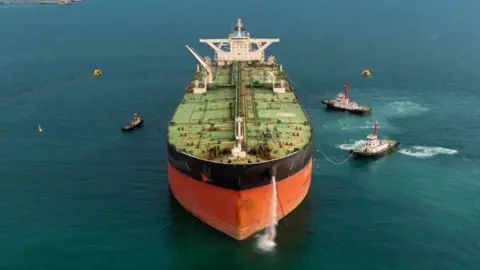
The US military said commercial vessels had continued operating in the waterway. [1] But US Central Command (CENTCOM) said 55 merchant ships transited the strait on Saturday, with more than 17 million barrels of oil bound for global markets. [1] US forces will ensure commercial traffic continues, CENTCOM said. [1] Trump said no toll would be charged for passage through the strait during or after the 60-day ceasefire – unless the US imposes one should peace talks fail. [1] In a social media post, he cited the possibility of a toll levied by the US “for services rendered as the Guardian Angel to the countries of the Middle East” if a deal to end the war is not completed. [1]
Iran’s Priorities for the Negotiations
Al Jazeera’s Resul Serdar Atas, reporting from Tehran, said the Iranian delegation in Switzerland was likely to focus on Articles 1, 4, 5, 10 and 11 of the memorandum of understanding (MoU). [1] “These include the cessation of hostilities in Lebanon, the lifting of the US maritime blockade, the reopening of the Strait of Hormuz, the release of Iranian frozen assets and, of course, the lifting of US sanctions when it comes to Iran’s oil sector and petrochemical products and related sectors,” our correspondent said. [1] “So the Iranians are not looking for these files to be concluded in one meeting here, but at least they want the initiation of the implementation,” he added. [1] “Why does Lebanon matter so much for Iran? Overall, it’s about Iran’s geopolitical standpoint. So if Iran wants to remain as a regional power, Tehran has to keep the axis of resistance alive. Iran has invested in Hezbollah through the decades. So it is about Iran’s regional influence. It is also sending out a message to its allies and proxies in the region that Tehran is not going to leave them alone.” [1]
Regional Talks in Cairo on Iran and Beyond
Turkey’s Foreign Minister Hakan Fidan attended a regional meeting in Cairo over the weekend. [2] He met with Egyptian Foreign Minister Badr Abdelatty, Saudi Foreign Minister Prince Faisal bin Farhan Al Saud, and Massad Boulos, the US senior advisor for Arab and African affairs, Turkey’s foreign ministry noted. [2] This is important. It illustrates how the US is engaging with various Muslim countries in the region. [2] Many of these countries want to discuss other files of interest beyond those related to Iran. For instance, this meeting also involved discussions about Libya. [2] The US appears to be quietly seeking to bring various sides together regarding Libya. This would be good after more than a decade of civil conflict there. [2]
Cairo summit highlights post-Iran deal priorities. The Egyptian official Spokesperson for the Ministry of Foreign Affairs, Ambassador Tamim Khallaf, stated that the meeting witnessed an in-depth exchange of views on regional files, including the Iranian file, following the US-Iran memorandum of understanding. [2] This emphasizes the importance of exchanging more files to reduce tensions and enhance regional stability, Egypt’s Foreign Affairs Ministry noted. [2] “The meeting also addressed developments in Libya, stressing the importance of supporting efforts to preserve Libya's unity, respect its sovereignty, advance the political process, and unify state institutions,” the Egyptians added. [2] In addition the Egyptians “added that the meeting also covered the latest developments regarding the Palestinian cause, particularly in the Gaza Strip, as well as the situation in Africa and ways to enhance joint cooperation to support security on the continent.” [2]
Oil Sector as Test for Future Accord
Iran's oil industry will serve as a major test of any future agreement between Tehran and Washington, Iranian oil minister Mohsen Paknejad has said. [5] According to the ministry's Shana news agency, Paknejad said that the sector would demonstrate whether Western countries remain committed to the spirit of a final peace agreement should one be reached. [5] Paknejad said Iran's oil industry could offer significant investment opportunities to the global economy in a post-agreement environment. [5] He added that the country has hundreds of investment projects as well as technical and operational partnership contracts ready to be signed, suggesting the energy sector could become a central area of cooperation if diplomatic progress continues. [5]
What to watch next: Iranian officials plan to focus on ceasefire implementation in Lebanon, lifting of the US maritime blockade, reopening the Strait of Hormuz, release of frozen assets, and lifting of sanctions on Iran’s oil and petrochemical sectors.