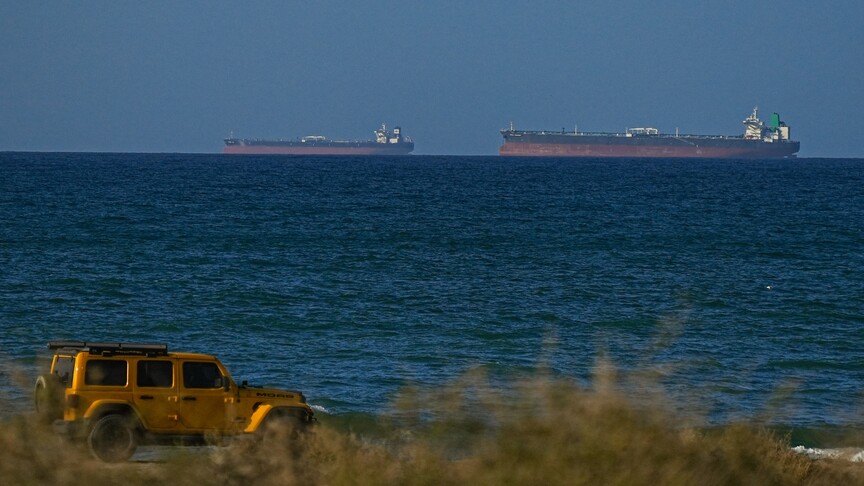

Japan Lodges Protest Against China's East China Sea Gas Drilling Amid Broader Bilateral Tensions
Tokyo, January 9, 2026 – Japan has formally raised concerns over China's ongoing gas drilling operations in the East China Sea, reigniting longstanding disputes over maritime boundaries and resource development cooperation between the two Asian powerhouses.
The protest, initiated on January 8, highlights Tokyo's unease with Beijing's activities in a contested area where exclusive economic zones (EEZs) overlap. Japanese officials have emphasized the need for joint resource management, a point of friction that dates back decades. This development coincides with preparations for high-level discussions between Japanese politician Sanae Takaichi and South Korean presidential office representatives on China's export restrictions targeting Japan, signaling multifaceted strains in Japan-China relations.
Details of the Gas Drilling Dispute
Japan's Foreign Ministry issued a statement expressing "serious concerns" about China's unilateral gas extraction efforts, which Tokyo views as encroaching on its claimed median-line boundary in the East China Sea. The region is rich in natural gas and fisheries resources, making it a flashpoint for economic and strategic competition.
According to diplomatic channels, Japan's protest underscores fears that China's operations could deplete shared reservoirs without mutual agreement. Beijing has historically defended its drilling as occurring within its own EEZ, calculated from the baseline of its coastline and nearby islands. Tokyo counters that developments near the median line risk cross-boundary drainage, violating principles of international maritime law under the United Nations Convention on the Law of the Sea (UNCLOS).
This is not the first such confrontation. Similar tensions flared in the mid-2000s over fields like Chunxiao (known as Shirakaba in Japan), prompting Japan to demand transparency and joint exploration talks. Preliminary agreements for cooperation were reached in 2008, but implementation has stalled amid mutual distrust.
Parallel Concerns Over Export Restrictions
Compounding the resource dispute, Japan faces economic pressure from China's export ban on dual-use goods—items with both civilian and military applications, such as advanced semiconductors, chemicals, and machinery components. A Yonhap report indicates that Sanae Takaichi, a prominent Liberal Democratic Party (LDP) figure and frequent advocate for stronger defense postures, is likely to address this issue in upcoming talks with South Korean National Security Office Director Wi Seong-lac (referred to as "Lee" in some contexts, possibly indicating a transition or alternate naming in official briefings) at the Cheong Wa Dae, South Korea's presidential office.
The ban, imposed by Beijing as a retaliatory measure, disrupts Japan's supply chains for high-tech industries, including automotive and electronics sectors. Dual-use restrictions have become a tool in China's geopolitical arsenal, echoing the 2010 rare earth embargo during a fishing boat incident near the Senkaku/Diaoyu Islands.
These talks reflect warming Japan-South Korea ties, bolstered by summits in 2023 under leaders Fumio Kishida and Yoon Suk-yeol, aimed at countering North Korean threats and regional assertiveness from China. Trilateral cooperation with the United States has also intensified, including joint military exercises and technology-sharing frameworks.
Historical Context and Regional Implications
The East China Sea dispute is intertwined with territorial claims over the Senkaku Islands (Diaoyu to China), administered by Japan but claimed by Beijing, Taipei, and increasingly patrolled by Chinese coast guard vessels. Incursions have surged in recent years, with over 100 Chinese ships reported in contiguous zones annually by Japanese accounts.
Gas drilling exacerbates these frictions. China's state-owned China National Offshore Oil Corporation (CNOOC) has expanded rigs since the 2010s, prompting repeated Japanese demarches. A 2024 incident saw Japan scramble fighter jets amid Chinese surveys, underscoring militarization risks.
Economically, the stakes are high: the East China Sea holds an estimated 40-100 trillion cubic feet of gas and seven billion barrels of oil, per U.S. Energy Information Administration data. Failed joint development pacts, like the 2018 proposal shelved amid U.S.-China trade wars, leave the area underdeveloped.
Broader geopolitics amplify the issue. Japan's 2022 National Security Strategy designates China a "strategic challenge," prompting record defense spending and alliances like the Quad (with U.S., Australia, India). China's "gray zone" tactics—non-kinetic coercion—further strain ties.
Outlook for Diplomacy
While Japan's protest maintains diplomatic pressure, no immediate retaliatory actions have been announced. Beijing has yet to respond publicly to the January 8 statement, but past patterns suggest rebuttals via state media like Global Times, framing Tokyo's claims as interference.
The Takaichi-Wi discussions could yield coordinated responses to export curbs, potentially involving U.S. mediation through frameworks like the Chip 4 alliance (Japan, U.S., South Korea, Taiwan). Analysts note that economic interdependence—bilateral trade exceeded $300 billion in 2024—provides incentives for de-escalation.
As both nations navigate domestic politics—Japan ahead of upper house elections, China post-20th Party Congress—these events test crisis management channels established in the 2014 Xi-Abe summit. Sustained dialogue remains essential to avert escalation in this vital waterway, through which one-fifth of global trade passes.
(Word count: 712)