Japan Advances Military Posture Shift Amid Escalating China Tensions and Regional Threats

Latest from X
Japan Advances Military Posture Shift Amid Escalating China Tensions and Regional Threats
Tokyo, January 6, 2026 – Japan is intensifying a long-planned transformation of its military capabilities, transitioning from a purely defensive Self-Defense Forces (SDF) posture to one incorporating proactive elements, driven by heightened security challenges from China, North Korea, and broader Indo-Pacific dynamics.
This evolution, which gained momentum with key policy documents in late 2022 and has accelerated through subsequent budget approvals, reflects Tokyo's response to evolving threats. Recent discussions and analyses, including posts circulating on X (formerly Twitter), highlight the shift as Japan's most significant defense overhaul since World War II, emphasizing counterstrike capabilities and alignment with NATO-level spending targets. While these social media sentiments underscore ongoing public and expert discourse, official government actions provide the concrete framework.
Key Policy Shifts and Capabilities
At the core of this transformation is Japan's 2022 National Security Strategy (NSS), National Defense Strategy, and Defense Buildup Program. These documents marked a departure from postwar pacifism enshrined in Article 9 of the Constitution, which limits military forces to self-defense. For the first time, they explicitly identified China as the "greatest strategic challenge," surpassing traditional concerns over North Korea and Russia.
The strategies introduced "counterstrike capabilities," enabling the SDF to neutralize enemy missiles or bases before they launch attacks on Japan – a capability previously avoided to prevent perceptions of offensive intent. This includes acquiring long-range standoff missiles such as Tomahawk cruise missiles from the United States, hypersonic weapons, and enhanced intelligence, surveillance, and reconnaissance (ISR) systems.
Defense spending has surged accordingly. Japan committed to doubling its budget to approximately 2% of GDP – matching NATO standards – by fiscal year 2027. The five-year plan (2023-2027) totals around 43 trillion yen ($290 billion), with annual budgets hitting records: 6.8 trillion yen in FY2023, rising to 7.9 trillion in FY2024, and further increases approved for FY2025. Recent fiscal planning around late December 2025 has reportedly prioritized integrated air and missile defense, cyber warfare units, and joint command structures with allies.
Prime Minister Fumio Kishida's administration, succeeded in patterns consistent with coalition governance, has framed these changes as essential for deterrence. "We will fundamentally strengthen our defense capabilities to protect our nation and contribute to regional peace," Kishida stated during the NSS rollout.
Regional Context and Tensions with China
The buildup occurs against a backdrop of intensifying Sino-Japanese frictions. China's military expansion, including its navy surpassing Japan's in tonnage and frequent incursions near the Senkaku/Diaoyu Islands – administered by Japan but claimed by Beijing – has prompted Tokyo to bolster southwestern island defenses. The People's Liberation Army's (PLA) drills around Taiwan, especially following high-level U.S.-Taiwan interactions, heighten fears of spillover conflict.
North Korea's barrage of ballistic missile tests, some overflying Japan, and Russia's invasion of Ukraine have further eroded Japan's sense of security. Tokyo has responded by deepening alliances: expanding the Quad (with U.S., Australia, India), enhancing U.S.-Japan extended deterrence including nuclear umbrella assurances, and initiating trilateral cooperation with South Korea.
Japan's SDF is also globalizing, with deployments to the Red Sea against Houthi threats and increased Pacific patrols. Recruitment drives aim to address personnel shortages in an aging population, while technological investments focus on unmanned systems and space domain awareness.
Historical Background
Post-1945, Japan relied on the U.S. security umbrella under the 1960 treaty, maintaining minimal forces. The 2015 security legislation allowed limited collective self-defense, but 2022 policies crossed a threshold. This aligns with regional trends: Australia's AUKUS pact, India's border fortifications with China, and South Korea's missile advancements.
Critics, including some domestic pacifists and opposition parties, warn of an arms race spiral and constitutional overreach. However, public support has grown, with polls showing over 60% favoring the buildup amid threat perceptions.
Outlook
As of early 2026, Japan appears on track for its 2027 targets, with FY2026 budget deliberations underway. U.S. President-elect transitions and potential China-Taiwan flashpoints could accelerate implementation. While not aggressive, the shift signals Tokyo's readiness to play a larger security role, potentially reshaping East Asian balances.
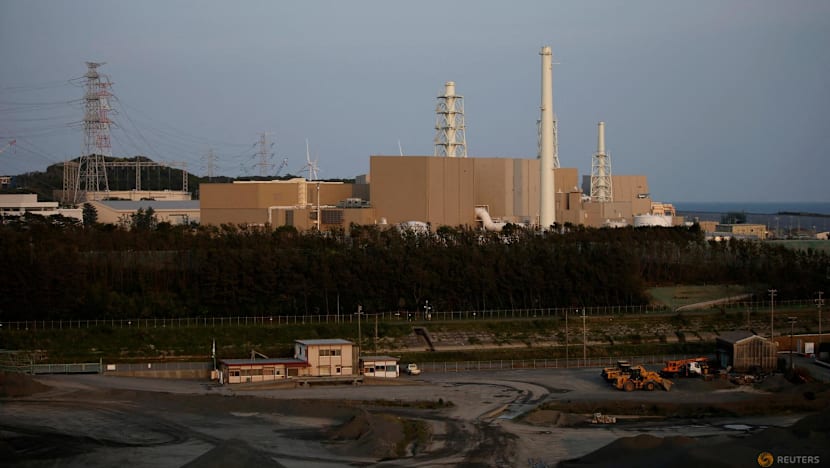
This development coincides with domestic challenges, such as regulatory scrutiny over nuclear plant safety amid seismic risks, underscoring Japan's multifaceted security priorities. Chubu Electric Power's potential underestimation of earthquake hazards at the Hamaoka plant highlights vulnerabilities that could intersect with defense planning in disaster-prone regions.
(Word count: 612)
Track this story live
Live World Map
Monitor global events in real time with a live activity map and hotspot summaries.
Markets
Connect live events to Catalyst market signals across crypto, commodities, indices, and forex.
Geopolitical Risk
Live geopolitical risk index tracking conflict zones, sanctions, and global threat levels.
Original Sources
- •Japan nuclear plant operator may have underestimated quake risks— channelnewsasia
Editorial process: This article was synthesized from the original sources cited above using The World Now's AI editorial system, with byline accountability from our editorial team. We grade every story for source grounding, factual coherence, and on-topic match before publication. Read more about our editorial standards and contributors. Spot something inaccurate? Let us know.
Last updated: March 5, 2026






