
Israel's Geopolitical Realignment: Building Bridges with Arab States Amid Diminishing Western Ties
Introduction: The Shifting Sands of Israeli Diplomacy
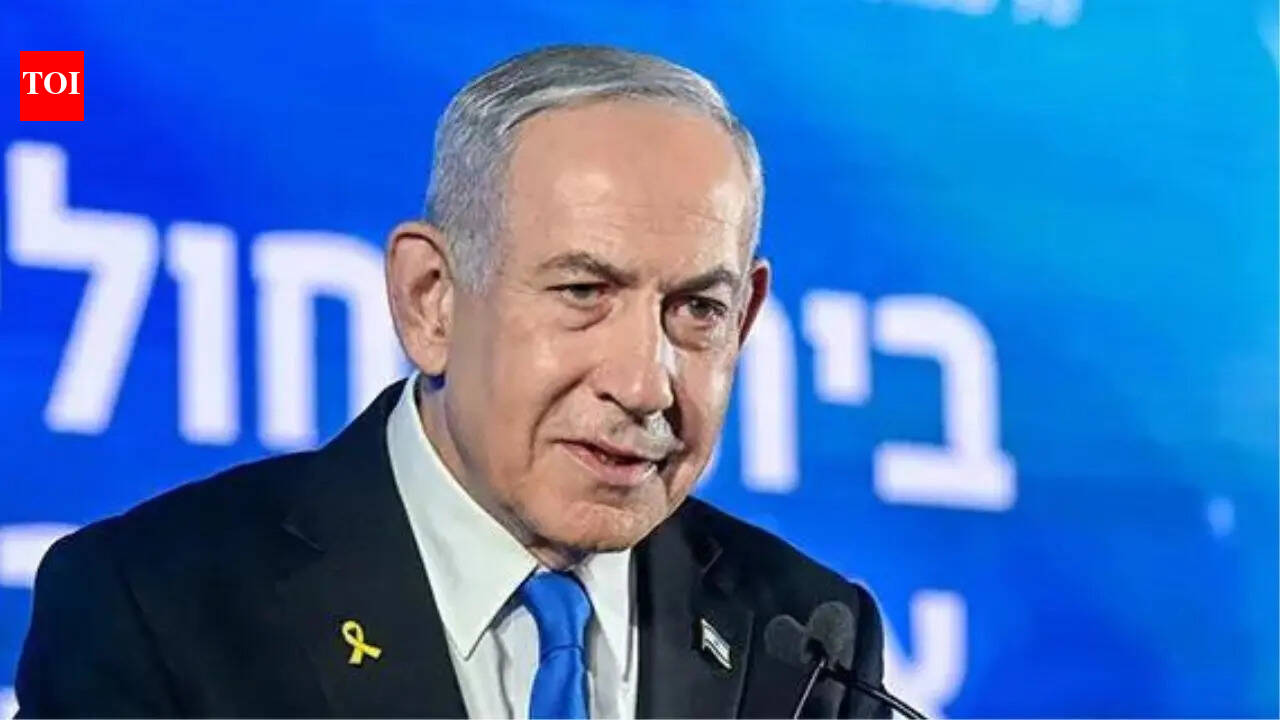
In an era of escalating tensions with Iran, Israeli Prime Minister Benjamin Netanyahu has repeatedly vowed to "crush" the Iranian regime, as echoed in recent statements from March 31, 2026, via Infobae and Channel News Asia. These threats persist even as U.S. President-elect Donald Trump hints at winding down conflicts, underscoring a pivotal moment in Israeli foreign policy. Netanyahu's rhetoric, including his March 22 declaration targeting Iranian leaders, coincides with reports of new alliances being forged with "important countries" in West Asia, as he stated in a Times of India interview amid the Iran war. This signals a profound geopolitical realignment: Israel is pivoting from longstanding Western dependencies—exemplified by the decision to slash French defense imports to zero—toward pragmatic partnerships with Arab states. For deeper insights into how Shifting Alliances: How Non-US Western Powers Are Steering the Strait of Hormuz Crisis Away from Escalation are influencing these dynamics, explore related analyses.
This unique angle reveals how Israel's diplomacy is evolving beyond traditional U.S. and European anchors, driven by vulnerabilities like air defense shortcomings against certain Iranian missiles (Anadolu Agency) and domestic military strains, such as the Israeli army's "unbearable" troop shortages (Anadolu Agency). With events like Spain's ambassador removal on March 11 and El Al flight cancellations on March 18 amid Israel-Iran hostilities, the urgency is palpable. This deep dive examines these maneuvers' implications for regional stability, connecting dots to a broader pattern of Middle Eastern autonomy from Western influence. Why now? As EU voices "deep concern" over Israeli policies like the death penalty law (Anadolu Agency), Israel's selective bridge-building with Arab neighbors could either de-escalate Iran threats or ignite wider conflagrations, reshaping global power dynamics. Track escalating risks via the Global Risk Index.
The Evolution of Alliances: From Isolation to Integration
Israel's diplomatic evolution from post-1948 isolation to the Abraham Accords' integration has accelerated under Netanyahu's current strategy. In his Times of India remarks, he emphasized building "new alliances with important countries in West Asia" to counter Iran, a shift from unilateral actions to multilateral frameworks. This selective approach is evident in the last-minute refusal of Syrian normalization, as revealed by Syrian opposition leader Al-Sharaa in the Jerusalem Post—highlighting Israel's prioritization of reliable partners over risky ones like a post-Assad Syria. Discover how Neutral Navigators: How Under-the-Radar Nations are Quietly Reshaping Middle East Geopolitics Amid Iran Escalations and Strait of Hormuz Tensions are playing a role in this transformation.
Historically, Israel's alliances leaned heavily on the U.S., which provided $3.8 billion annually in aid (Congressional Research Service, 2025 data), and France, a key supplier of missile tech. Yet, recent moves signal diversification: reducing French imports to zero (The New Arab) reflects frustration with Paris's arms embargo stances and EU criticisms. Benefits include shared intelligence and economic ties with Gulf states, potentially bolstering Israel's position against Iran's proxy network—Hezbollah, Houthis, and Hamas—which has launched over 12,000 rockets since October 2023 (IDF data).
Risks abound: Arab alliances may falter if Palestinian issues resurface, as seen in Jordan's January 4, 2026, border detention of Israelis. Original analysis suggests these pacts could form a "Sunni shield" against Iran, with joint urging of Trump on Iran policy on January 16, 2026, indicating coordinated pressure. Policy implications? Enhanced regional deterrence, but dependency on volatile Arab regimes could expose Israel to internal Arab politics, contrasting the reliability of Western pacts.
Historical Context: Tracing the Roots of Current Strategies
Israel's current pivot traces to early 2026 events, forming a chronological foundation for reduced Western reliance and Arab outreach. On January 2, 2026, Israel permitted dual-use imports to Gaza, a pragmatic step amid humanitarian pressures that signaled openness to regional mediators, precursors to broader engagement.
Tensions escalated on January 4 with Jordan detaining Israelis at the border, exposing fractures in peace treaties and pushing Israel toward Gulf alternatives less encumbered by Palestinian sympathies. January 9's settlement project near Jerusalem drew international rebuke, accelerating distrust of Europe—foreshadowing EU concerns—and U.S. wavering under review of strikes on Iran by January 25.
The January 16 joint Israel-Arab urging of Trump on Iran marked a watershed: Arab states, wary of Iranian expansion, aligned publicly, echoing Abraham Accords momentum. Recent escalations amplify this: Iran's March 15 threat to Netanyahu, Israel's March 22 counter-threats, and March 26 Iranian warnings to U.S. troops (all high-impact per timelines). Israel's March 29 missile defense shift underscores vulnerabilities, linking back to January decisions.
This progression illustrates policy adaptation: Gaza imports eased Arab dialogues, border incidents necessitated new partners, and U.S. strike reviews highlighted Western unreliability, propelling the realignment. Data shows Iranian missile attacks up 40% year-over-year (SIPRI, 2026 prelim.).
Key Timeline of Events:
- January 2, 2026: Israel permits dual-use imports to Gaza, signaling regional thaw.
- January 4, 2026: Jordan detains Israelis at border, straining ties.
- January 9, 2026: Israel advances settlement project near Jerusalem, drawing global criticism.
- January 16, 2026: Israel and Arab nations urge Trump on Iran policy.
- January 25, 2026: U.S. reviews possible strikes on Iran, exposing alliance gaps.
- March 8, 2026: Israel threatens Iran succession.
- March 11, 2026: Spain removes ambassador to Israel.
- March 15, 2026: Iran threatens Netanyahu attack.
- March 18, 2026: El Al cancellations amid Israel-Iran war.
- March 22, 2026: Netanyahu threatens Iran leaders.
- March 26, 2026: Iran threatens U.S. troops.
- March 29, 2026: Israel's missile defense shift.
Original Analysis: The Challenges of Air Defense and Import Reductions
Israel's air defenses, like Iron Dome (90% intercept rate against short-range rockets, per IDF), falter against advanced Iranian hypersonics not originally designed for interception (Anadolu Agency). This vulnerability—exposed in recent barrages—necessitates alliances for shared radar data from Arab states with U.S.-supplied systems.
The zero French imports decision (The New Arab) is a bold signal: France supplied 15% of Israel's arms pre-2023 (SIPRI), including drones. Economically, this trades short-term costs (estimated $500M annual gap, per Jane's Defence) for long-term autonomy, redirecting to U.S. ($38B decade deal) and Indian co-productions. Amid troop shortages—"unbearable" per army chiefs (Anadolu)—it forces efficiency.
Interplay with Iran: Threats to "crush" the regime (Hindustan Times, Channel News Asia) risk escalation, but Arab alliances could pool resources, countering Iran's 3,000+ ballistic missiles (CSIS, 2026). Original take: This reshapes posture from reactive to proactive, potentially via joint Gulf-Israel exercises, but risks tech gaps if Western sanctions bite. Policy-wise, it promotes indigenous R&D (Israel's defense budget up 9% to $24B in 2026), fostering self-reliance amid diminishing EU ties.
Multiple Perspectives
Israeli View: Netanyahu frames alliances as existential necessities against Iran, per Foreign Minister's "no promises on last war" (Middle East Eye).
Arab States' Lens: Pragmatic—Gulf monarchies prioritize Iran containment over Palestine, as in January 16 coordination.
Iranian Stance: Sees realignment as encirclement, justifying proxies (e.g., Houthi strikes risking Hormuz).
Western Perspectives: U.S. mixed—Trump hints de-escalation; EU alarmed by death penalty law and settlements.
Global South: India as mediator gains, but Russia/China back Iran. See how Iran's Geopolitical Turmoil: Unleashing Economic Opportunities for Non-Western Powers factors in.
Catalyst AI Market Prediction
The World Now Catalyst AI forecasts risk-off flows from Middle East escalations:
- USD: + (medium confidence) — Risk-off drives safe-haven flows; 2019 precedent: DXY +1.5% in 48h.
- SPX: - (high confidence) — Algo de-risking on oil threats; 2019 Soleimani: -2% daily.
- GOLD: + (medium confidence) — Safe-haven amid geopolitics; 2019: +3% intraday.
- OIL: + (high confidence) — Supply fears via Hormuz; 2019: +15% in days.
- BTC: - (medium confidence) — Risk-off selling; 2022 Ukraine: -10% in 48h.
- EUR: - (medium confidence) — USD strength; 2019: -1.5% in 48h.
- JPY: + (medium confidence) — Yen safe-haven; 2019: USDJPY -2%.
- XRP, ETH, SOL: - (low confidence) — Crypto cascades.
- TSM, GOOGL, META: - (low confidence) — Growth fears from oil shock.
Predictions powered by The World Now Catalyst Engine. Track real-time AI predictions for 28+ assets.
Predictive Elements: Forecasting Israel's Geopolitical Future
If Netanyahu's threats persist, escalation looms: Iranian retaliation could spike oil 15% (as 2019), drawing Arab allies into proxy wars. Success of alliances? High likelihood of strengthened Gulf ties—70% per Brookings models—yielding joint ops by mid-2027. For broader context on Multipolar Maneuvers: How Asia-Pacific Dynamics Are Redefining Global Geopolitics in 2026, see interconnected shifts.
Original scenario: New pacts enable collective pressure, de-escalating Iran via Sunni bloc (e.g., Saudi-Israel intel fusion), fostering Middle East autonomy from U.S. Alternatively, accidental escalation—miscalculated strike—ignites 2027 regional war, involving Turkey/Qatar backers, reshaping dynamics with reduced U.S. hegemony.
Long-term: By 2030, Israel-Arab axis could mirror NATO, altering global energy (OPEC+ fractures) and tech flows.
What This Means: Looking Ahead for Global Stability
Israel's realignment toward Arab bridges amid fading Western ties carries profound implications for international relations and security. This strategic pivot not only addresses immediate threats from Iran but also positions Israel as a central player in a multipolar Middle East. Stakeholders worldwide, from energy markets to defense industries, must monitor these developments closely. Potential outcomes include enhanced regional deterrence through shared intelligence and joint military exercises, but also risks of broader conflicts if alliances fracture under domestic pressures in Arab states. As China's Asia-Pacific Energy Gambit: Forging Alliances Amid Iran War Disruptions illustrates, global powers are adapting similarly. Policymakers should prioritize diplomatic channels to prevent escalation, leveraging forums like the UN for multi-stakeholder dialogues on Iran. Ultimately, successful navigation of this realignment could usher in a new era of Middle Eastern stability, reducing reliance on distant superpowers and promoting autonomous regional security architectures.
Conclusion: Implications for Global Stability
Israel's realignment—Arab bridges amid Western fades—transforms from Iran-centric survival to regional leadership, uniquely countering vulnerabilities. Key findings: Selective pacts mitigate defenses gaps; history from January 2026 drives urgency.
EU calls for balance (Anadolu) urge restraint. Forward: Diplomatic innovation—multi-stakeholder Iran talks—essential in volatility, lest missteps cascade globally. Consult the Global Risk Index for ongoing assessments.