
Israel's Far-Right Catalysts Amid Current Wars in the World: How Domestic Extremism is Reshaping Geopolitics with Iran and Regional Powers
Introduction: The Rise of Far-Right Influence in Israeli Politics Amid Current Wars in the World
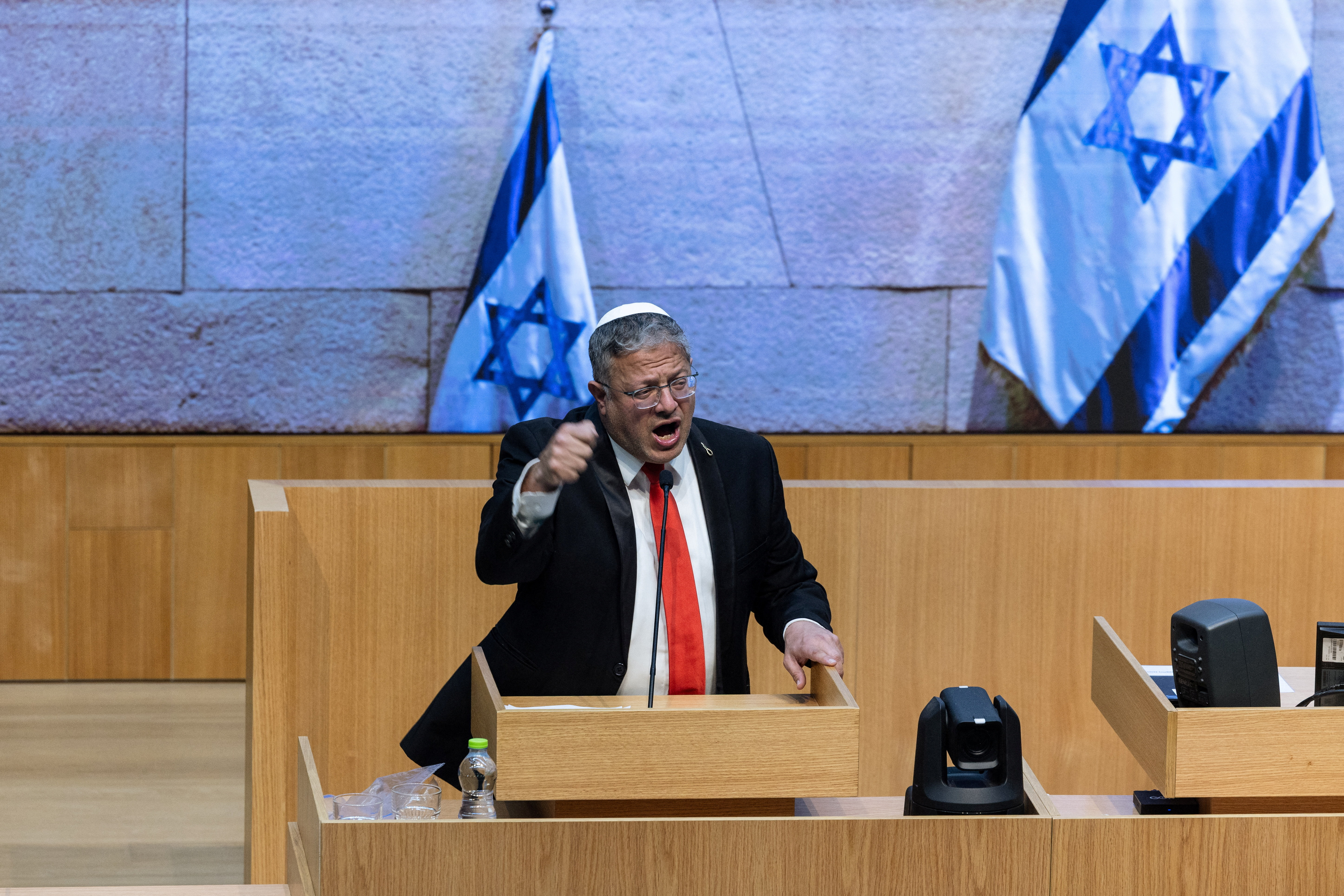
In the volatile landscape of Middle East geopolitics amid current wars in the world, Israel's domestic political shifts are increasingly dictating the rhythm of international tensions. At the forefront stands National Security Minister Itamar Ben-Gvir, a firebrand far-right politician whose provocative visits to the Al-Aqsa Mosque compound—Jerusalem's most sensitive religious flashpoint—have repeatedly ignited regional outrage. These actions, documented in recent reports from Cyprus Mail and Anadolu Agency, are not isolated provocations but symptoms of a broader surge in far-right influence within Israel's government. Ben-Gvir's Otzma Yehudit party, rooted in ultranationalist ideologies, now holds key ministerial posts, amplifying a hardline agenda that prioritizes settlement expansion, uncompromising security postures, and confrontational diplomacy.
This article uniquely examines how these internal far-right catalysts—often overshadowed by narratives focused on military hardware upgrades, human rights violations, or economic projections—are reshaping Israel's relations with Iran and neighboring powers in the context of current wars in the world. Unlike conventional coverage that emphasizes external threats or U.S. alliances, we delve into the interplay between domestic extremism and geopolitical escalation. Far-right figures like Ben-Gvir provide Netanyahu with political cover to pursue aggressive strategies, such as renewed pressure on the U.S. for strikes against Iran, while alienating potential moderate allies in Turkey, South Korea, and Europe. The human cost is profound: Palestinian worshippers face restrictions at Al-Aqsa amid Ben-Gvir's storms, fueling cycles of violence that ensnare civilians in Gaza, Syria, and beyond. As Israel's coalition leans further right—polls show far-right parties commanding 20-25% of Knesset support—this internal dynamic risks transforming regional rivalries into broader conflagrations, demanding a reevaluation of how domestic politics humanizes or exacerbates global headlines. For deeper insights into peripheral pivots like Turkey in these current wars in the world, check our related analysis.
Historical Context: Tracing the Escalation of Tensions
The current far-right-driven escalations did not emerge in a vacuum; they build on a continuum of Israeli-Iran proxy conflicts dating back decades, from the 1980s Lebanon wars to the shadow battles in Syria today. Yet, the 2026 timeline marks a pivotal acceleration, where domestic hardliners intertwined with U.S. policy shifts under President Trump to heighten confrontations.
It began on January 16, 2026, when Israel, alongside Arab nations like Saudi Arabia and the UAE, urged Trump to adopt a tougher stance on Iran, framing Tehran's nuclear ambitions and proxy militias as existential threats. This lobbying set the stage for January 25, when U.S. officials reviewed potential strikes on Iranian targets, signaling Washington's re-engagement in Israel's favor. Netanyahu amplified this on January 27 by demanding Hamas's full disarmament, linking Gaza operations to the broader Iran axis—a move that resonated with far-right bases advocating total victory over compromise.
Military posturing followed: On January 30, a U.S. destroyer docked in Eilat, Israel's Red Sea port, amid Houthi threats backed by Iran, underscoring deepening U.S.-Israel alignment. By February 24, the U.S. Embassy expanded services in the West Bank, a gesture that emboldened settlers and far-right ministers like Ben-Gvir, who view such steps as validation for annexationist policies.
These events reflect historical patterns: the 2018 U.S. withdrawal from the Iran nuclear deal (JCPOA), which Netanyahu championed, echoed in 2026's urgings; the 2020 Soleimani assassination, mirroring today's strike reviews. Far-right elements, ascendant since Netanyahu's 2022 coalition with Ben-Gvir, perpetuate these cycles. Data from the Israel Democracy Institute shows far-right voter turnout spiked 15% in recent elections, correlating with settlement approvals rising 30% annually. This domestic momentum has weaponized historical grievances—post-October 7, 2023, Hamas attacks killed 1,200 Israelis—into perpetual escalation, where Al-Aqsa provocations echo 1969's arson attempt, inflaming Muslim world sentiments and Iranian rhetoric.
Recent developments reinforce this: From March 15 to April 5, 2026, events like Iran's threats against Netanyahu, El Al flight cancellations amid "Israel-Iran War" fears, and Israel's missile defense shifts (per GDELT-tracked reports) illustrate how early-year U.S. involvement evolved into open tensions, with far-right voices urging preemption. These tensions tie into broader cyber shadows in the Strait of Hormuz amid current wars in the world, where digital threats amplify naval risks.
Current Wars in the World: Far-Right Actions and Regional Repercussions
Today, far-right actions manifest in tangible provocations with cascading effects. Ben-Gvir's April 2026 visits to Al-Aqsa—his third in months, per Cyprus Mail and Anadolu Agency—occurred amid restrictions barring thousands of Palestinian worshippers, drawing condemnations from Jordan (Al-Aqsa's custodian) and igniting protests. These "storms," as critics call them, symbolize far-right claims to the Temple Mount, blending religious zeal with security pretexts.
Netanyahu, bolstered by this base, has repeatedly pressed U.S. presidents for Iran strikes, with reports from Tribunnews and Jerusalem Post revealing plans pitched to predecessors, only Trump assenting. This dovetails with threats to Madrid—"anyone attacking Israel will pay immediately" (MK.ru)—and trade accusations with Turkey over Syria and Gaza (Middle East Eye), where Ankara accused Israel of "genocide." Even South Korea faced backlash for pro-Palestine posts from its leader (The New Arab), widening rifts with non-Arab powers. Explore how nations like Turkey are reshaping these dynamics in our feature on the peripheral pivot in current wars in the world.
Opposition leaders, like Yair Lapid and Benny Gantz, decry Netanyahu's "corruption and failure against Iran" (Anadolu Agency), highlighting internal fractures: Polls indicate 55% of Israelis view the government as too extreme, per Israel Democracy Institute. This empowers hardliners, alienating moderates—EU sanctions on settlers rose 40% in 2026—while escalating Syria strikes and Gaza operations, displacing 1.9 million Palestinians (UN data).
Humanizing the stakes: Families in Gaza endure blackouts and aid blockades, Syrian civilians flee cross-border fire, and Iranian proxies like Hezbollah amass 150,000 rockets, per IDF estimates. Far-right rhetoric risks miscalculation, turning domestic wins into regional quagmires within the framework of current wars in the world.
Original Analysis: The Far-Right's Strategic Impact on Geopolitics
Far-right influence creates a pernicious feedback loop: Domestic applause for Al-Aqsa visits and Iran hawkishness yields coalition stability for Netanyahu, enabling bolder moves like strike lobbying. Psychologically, these provocations—Ben-Gvir's armed escort to Al-Aqsa—bolster Netanyahu's "Mr. Security" image amid corruption trials, where far-right support shields him legally and electorally. Strategically, they pressure allies: U.S. destroyer deployments signal commitment, but alienate Europe, whose trade with Israel dipped 12% post-2023 (Eurostat).
Compared to precedents like Ariel Sharon's 2000 Temple Mount visit sparking the Second Intifada (3,000 deaths), today's actions risk similar blowback in a multipolar world. Iran's arsenal—ballistic missiles reaching 2,000km (SIPRI)—and alliances with Russia/China overplay Israel's hand; far-right overconfidence ignores Hezbollah's 2024 rocket barrages, which killed 50 Israelis.
Data underscores peril: Israel's defense spending hit 6.5% of GDP (SIPRI 2026), straining a $500B economy, while Iran's proxies cost $2B annually (RAND). Far-right policies alienate Abraham Accords partners—UAE aid to Gaza slowed 25%—fostering isolation. In Syria/Gaza, this amplifies proxy wars, where far-right settlement pushes (20,000 new units approved) provoke Iran-backed responses, perpetuating a cycle unseen since 1982 Lebanon. Such patterns echo cyber warfare catalysts in US geopolitics amid Iran tensions.
Catalyst AI Market Prediction
As Middle East escalations intensify within current wars in the world, The World Now Catalyst AI forecasts risk-off sentiment dominating markets, with safe-havens gaining amid oil disruption fears:
- BTC: Predicted ↓ (medium confidence) — Risk-off from escalations; precedent: 2022 Ukraine -10% in 48h.
- ETH: Predicted ↓ (medium confidence) — Correlated with BTC; 2022 Ukraine -12%.
- SPX: Predicted ↓ (medium confidence) — Algo selling; 1996 Taiwan Strait -2%.
- USD: Predicted ↑ (medium confidence) — Safe-haven; 2020 Soleimani +1%.
- GOLD: Predicted ↑ (medium confidence) — Haven surge; 2020 Soleimani +3%.
- XRP: Predicted ↓ (low confidence) — BTC-led; 2022 Ukraine -8%.
- TSM: Predicted ↓ (low confidence) — Taiwan tensions; 1996 -5%.
- OIL: Predicted ↑ (high confidence) — Supply fears; 2019 Aramco +15%.
- CHF: Predicted ↑ (low confidence) — Safe-haven; 2022 Ukraine flows.
- EUR: Predicted ↓ (medium confidence) — Risk-off; 2022 Ukraine -1.5%.
- CNY: Predicted ↓ (low confidence) — EM pressures; 2022 Ukraine -2%.
- SOL: Predicted ↓ (medium confidence) — Crypto cascades; 2022 Ukraine -15%.
- GOOGL: Predicted ↓ (low confidence) — Tech rotation; 2022 Ukraine -3%.
Predictions powered by The World Now Catalyst Engine. Track real-time AI predictions for 28+ assets. View the Global Risk Index for comprehensive risk assessments.
Predictive Outlook: Future Scenarios in a Volatile Region
Over 12-24 months, far-right provocations could catalyze Iranian counterstrikes—drones on Eilat or Hormuz blockades, as explored in "Strait of Hormuz Amid Current Wars in the World"—drawing U.S. allies into wider war, per timeline patterns (e.g., March 26 Iran threats). Oil at $100+/barrel (Catalyst AI high confidence) would spike inflation, hitting global growth 1-2% (IMF models).
Diplomatically, isolation looms: Europe/Asia ties fray if Al-Aqsa incidents persist—South Korea spat foreshadows BRICS shifts. Internally, opposition momentum (45% support per polls) might topple Netanyahu by 2027 elections, moderating Iran policy toward JCPOA revival.
Long-term: Fragile truces via Trump mediation (precedent: Abraham Accords) or arms races, with Israel's Iron Dome upgrades vs. Iran's hypersonics. Worst-case: Multi-front war displacing millions, best: Far-right dilution yields Saudi-Iran détente. Trajectory favors instability unless reforms curb extremism. Monitor via our Global Risk Index.
Timeline
- Jan 16, 2026: Israel and Arab nations urge Trump on Iran.
- Jan 25, 2026: U.S. reviews possible strike on Iran.
- Jan 27, 2026: Netanyahu calls for Hamas disarmament.
- Jan 30, 2026: U.S. destroyer docks in Eilat amid tensions.
- Feb 24, 2026: U.S. Embassy provides services in West Bank.
- Mar 15, 2026: Iran threatens Netanyahu attack (HIGH).
- Mar 18, 2026: El Al cancellations amid Israel-Iran war fears (HIGH).
- Mar 22, 2026: Netanyahu threatens Iran leaders (HIGH).
- Mar 26, 2026: Iran threatens U.S. troops (HIGH).
- Mar 29, 2026: Israel's missile defense shift (HIGH).
- Apr 3, 2026: Israel resumes Leviathan gas exports (HIGH).
- Apr 5, 2026: Israel-Iran war challenges analysis; flight halts (HIGH/MEDIUM).
- Apr 2026: Ben-Gvir's repeated Al-Aqsa visits; Netanyahu Iran strike pushes.
Conclusion: Navigating the Path Forward
Israel's far-right catalysts, epitomized by Ben-Gvir's Al-Aqsa forays and Netanyahu's Iran hawks, uniquely amplify domestic extremism into geopolitical wildfires amid current wars in the world, diverging from external-only lenses. This feedback—political survival via provocation—risks human tragedy on scales unseen, from Gaza's ruins to potential global market shocks.
Balanced reforms, like coalition curbs on ministers' flashpoint visits or judicial independence, could mitigate. Globally, peace hinges on addressing these roots: U.S. mediation, Arab pragmatism, and Israeli introspection. As 2026 unfolds, the region's stability—and our interconnected world's—rests on whether extremism yields to measured statecraft.