
US and Iran Trade Heavy Strikes as Attacks Hit Gulf States and Jordan
Escalation of US-Iranian Attacks
The Middle East has been rocked by US and Iranian attacks of a scale unseen since an April ceasefire, as fighting over the strategic Strait of Hormuz threatened to derail efforts to permanently end the war. [2] As the US attacks on Iran continued yesterday, Tehran said it would stop complying with a framework agreement to halt the fighting if Washington failed to meet its commitments. [2] The US Central Command said its forces had completed their latest barrage, which began overnight, on dozens of Iranian targets. [2] US aircraft, naval vessels and drones hit dozens of targets at multiple locations with precision munitions to degrade Iran’s ability to continue attacking international shipping flowing through the Strait of Hormuz. [2] Iran’s Mehr news agency reported fresh blasts of unknown origin in the south around midday yesterday, adding that they appear to be coming from the West Coast of Bandar Abbas. [2] Iranian state media reported two deaths in the latest US strikes that it said targeted large areas across the south and west. [2] One person was killed and four wounded at a water pumping station in the southwestern city of Mahshahr, state news agency IRNA said. [2] The US military said it had struck Iranian air defence systems, coastal radar sites, missile and drone capabilities, and small boats on Sunday, using aircraft, naval vessels and drones. [3] Iran’s official news agency, IRNA, reported that the US had attacked military sites in southern Iran. [3]
Iranian Strikes on Gulf States and Jordan

US and Iranian strikes hit multiple targets across southern Iran and the Strait of Hormuz region. — Source: taipei-times Iran responded with attacks of its own targeting Gulf nations, with the Revolutionary Guards announcing new strikes on Bahrain, Jordan, Kuwait and Oman. [2] The Revolutionary Guards said they had struck US military targets and bases in Jordan, Bahrain and Kuwait, state media reported yesterday. [2] On Monday Iran said it had targeted US military facilities in Bahrain and Kuwait, destroyed radar systems in Oman and hit fuel tanks and ammunition depots at Prince Hassan Air Base in Jordan, in response to US strikes. [3] Air raid alerts sounded in Bahrain, while Kuwait’s army said the country’s forces were intercepting hostile aerial targets. [2] Jordan’s army said it had intercepted four Iranian missiles. [2] Bahrain’s military accused Iran of committing heinous attacks with missiles and drones that target civilians, adding that it had shot down a number of Iranian projectiles yesterday morning. [2] Egypt and Saudi Arabia have condemned repeated Iranian attacks targeting Kuwait, Bahrain, Oman, and Jordan, warning that the strikes constitute a blatant violation of state sovereignty and a direct threat to regional security and stability. [1] In an official statement, the Egyptian Ministry of Foreign Affairs expressed full solidarity with the four targeted nations, rejecting any practices that endanger Arab populations or their regional facilities. [1] The ministry demanded an immediate end to the attacks, urging respect for international law and the principles of good neighbourliness to spare the region further escalation. [1]
Dispute Over the Strait of Hormuz
The past week’s hostilities have centered on the critical energy trade route, which the Revolutionary Guards say is closed, but which the US says is open to maritime traffic and not controlled by Iran. [2] The renewed fighting followed an Iranian attack early on Sunday on a commercial ship in the Strait of Hormuz whose crew was forced to abandon it after it went up in flames. [2] The Revolutionary Guards said after the incident that the Strait of Hormuz will be closed until further notice and until the end of American interventions in this region, state news agency IRNA reported. [2] US CENTCOM countered on X that the strait was open to all vessels seeking to lawfully transit. [2] The E-3 called the resumption of the ceasefire negotiated in early April and negotiations aimed at ending the conflict to resume. [3] Oil prices, which tumbled after the announcement of the MOU, jumped by up to 4.5 percent, with the US benchmark WTI climbing to nearly US$74 a barrel on fears of hampered supply on global markets. [2] The ministers exchanged views on regional de-escalation efforts, highlighting the role of the regional quartet—comprising Egypt, Saudi Arabia, Türkiye, and Pakistan—as an important platform for consultation, coordination, and supporting endeavours to contain tensions and entrench stability. [1] They affirmed the need to ensure the unhindered movement of ships and rejected any attempts to impose restrictions on international waterways, warning of the negative repercussions for the global economy and energy security. [1]
International Condemnations and Mediation Efforts

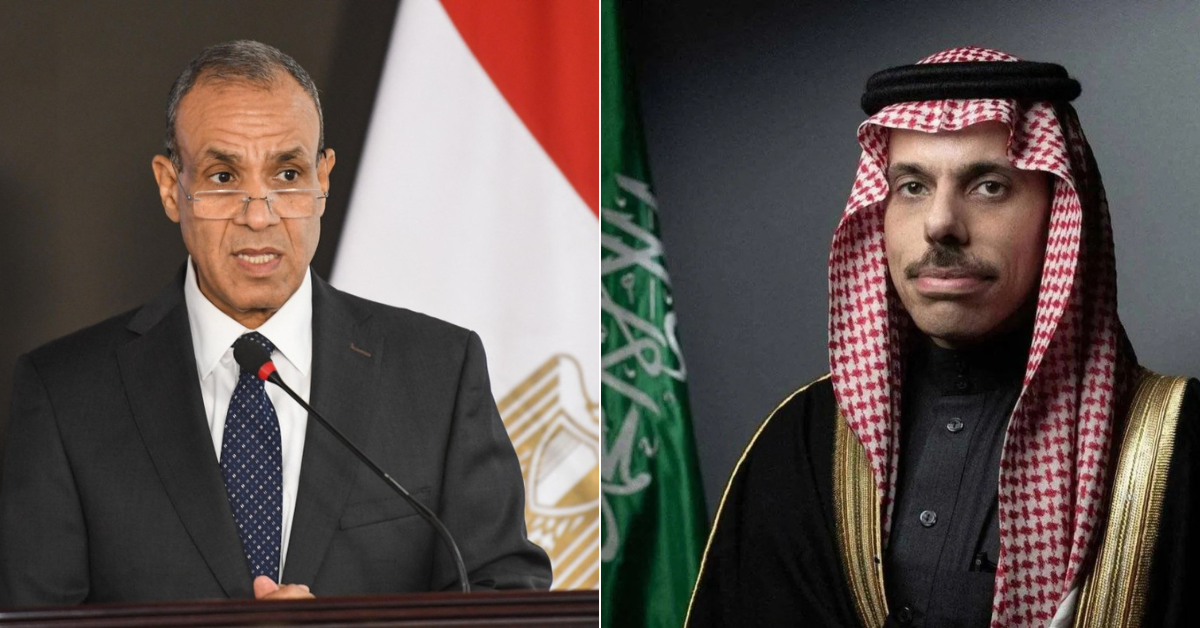
US strikes target Iranian sites near Bandar Abbas amid renewed fighting over the Strait of Hormuz. — Source: rfi The foreign ministers of France, Germany, and Britain have condemned Iran's attacks on shipping in the Strait of Hormuz and on countries in the region, as Iran and the United States have traded attacks in recent days, casting doubt on their interim agreement to end the war. [3] We condemn Iran's heinous attacks on merchant shipping in the Strait of Hormuz and on countries in the region, including Qatar, Kuwait, Oman and Jordan, the three countries, known as the E-3, said in a joint statement. [3] The statement was referring to Iran’s attack Sunday on a commercial vessel in the Strait of Hormuz, which caught fire and its crew were forced to abandon ship. [3] Egypt and Saudi Arabia have condemned repeated Iranian attacks targeting Kuwait, Bahrain, Oman, and Jordan. [1] The condemnation was also a focal point during a phone call between Egyptian Minister of Foreign Affairs Badr Abdelatty and Saudi Foreign Minister Prince Faisal bin Farhan. [1] Reviewing the regional escalation, the two officials stressed the critical need for an immediate halt to all escalatory actions that could widen the circle of conflict. [1] He nonetheless added that Tehran was continuing talks with mediators from Qatar, Pakistan and Oman in an effort to prevent any further escalation. [2] Pakistan, a key intermediary in negotiations, expressed deep concern at escalation in regional tensions, its foreign office said. [2]
Status of the April Ceasefire Agreement
There is no doubt that this document is in crisis, Iranian Ministry of Foreign Affairs spokesman Esmaeil Baqaei said of the memorandum of understanding (MOU). [2] Each time that the other party has failed to meet its obligations, we did not uphold ours, he added. [2] We will continue to act in this manner. [2] US President Donald Trump said Monday he considers the ceasefire to be over, while leaving the door open to further talks. [3] We had a deal. It was a done deal, and then they broke it. They always break it, he said in a telephone interview on Fox News' Fox & Friends programme. [3] So we're just going to hit them very hard. [3] Iran's top negotiator, Mohammad Baqer Qalibaf, struck a similar tone. [3] The era of one-sided deals is OVER, he posted on social media on Sunday. [3] We told you: keep your word or pay the price. Reality is knocking. [3] Mediators have been trying to salvage a diplomatic resolution to the war after US President Donald Trump this week said the ceasefire is over. [2] Chatham House associate fellow Bader al-Saif said the escalating attacks would merely delay a permanent agreement. [2] Both sides want to end the impasse on their own terms, and they are increasingly finding it difficult to do so. Hence the return to and increase in the scale of attacks, he said. [2] That only prolongs what will eventually happen: a negotiated settlement, the analyst said. [2]
Broader Regional Context
During the talks, Abdelatty and Prince Faisal agreed on the necessity of safeguarding freedom of navigation in the Strait of Hormuz in accordance with international law. [1] Discussions between the two diplomats also covered developments in Sudan, Libya, and the Red Sea, with both sides affirming the importance of continued close coordination on regional issues of mutual interest. [1] Addressing bilateral ties, the ministers praised the continuous momentum and development in Egyptian-Saudi relations across various fields under the directives of their political leaderships. [1] They reaffirmed their shared commitment to enhancing cooperation to serve the common interests of both nations. [1] The ministers exchanged views on regional de-escalation efforts, highlighting the role of the regional quartet—comprising Egypt, Saudi Arabia, Türkiye, and Pakistan—as an important platform for consultation, coordination, and supporting endeavours to contain tensions and entrench stability. [1]
What to watch next: Iran’s foreign ministry said the US attacks had caused the return of insecurity in the Strait of Hormuz and rendered futile all efforts at establishing peace in the region, while both sides continue talks with mediators from Qatar, Pakistan and Oman.