
Yemeni Government Strikes Sanaa Airport to Block Iranian Plane as Houthis Fire at Saudi Arabia
Yemen’s Saudi-backed government struck Sanaa airport to block an Iranian plane, prompting Houthi missile fire toward Saudi Arabia in the most serious flare-up in years that threatens to collapse the 2022 truce.
Yemen Airport Strike and Houthi Retaliation
The Saudi-backed Yemeni government claimed responsibility for targeting the runway at Sanaa International Airport to prevent an Iranian plane from landing after failing to divert a Houthi delegation returning from Tehran. [3] Yemen’s defence ministry accused the Houthis of allowing an Iranian plane to violate Yemeni territory, and consequently the airport runway was targeted in Sanaa. [3] Houthis responded by launching a ballistic missile toward southern Saudi Arabia, which was intercepted, and accused Riyadh of ending the de-escalation phase. [3] Coalition spokesman Turki al-Maliki said air defences dealt with a ballistic missile threat launched by the terrorist Houthi militia towards the southern region. [3] Houthi military spokesman Yahya Saree accused Saudi Arabia of ending the de-escalation phase and warned that this aggression will not go unanswered or unpunished. [3] Earlier in the day, the Yemeni government accused the rebels of preventing an International Committee of the Red Cross aircraft from leaving Sanaa airport and holding the pilot and co-pilot hostage, though an ICRC spokesman stated all ICRC staff and the crew of the plane are safe and accounted for. [3]
Risk to 2022 Ceasefire
The strikes risk unraveling the April 2022 ceasefire framework and could lead to renewed intense conflict, according to analysts. [3] Mohammed al-Basha of the US-based risk advisory Basha Report told AFP there was a risk of the 2022 ceasefire failing. [3] If this cycle of action and retaliation continues, it could effectively mark the collapse of the April 2022 ceasefire framework and signal a return to a much more intense phase of the conflict, he said. [3] The coming days will likely show whether both sides are prepared to move back toward sustained military escalation and ground war, he noted, adding that the next move of the plane, which the rebels said had landed, will likely determine how things will go. [3] For more than a decade, aircraft entering Yemeni airspace have needed prior clearance from the Saudi-led coalition that backs the government and says it enforces the restriction at its request. [3] The Houthis appeared to have challenged this arrangement by organising direct flights from Iran to Sanaa, angering the government and its backer. [3] Tensions had been rising for days, after the Houthis accused Saudi Arabia earlier this month of attacking an Iranian plane that landed in Sanaa and took off carrying the delegation. [3] The rebels had threatened at the time to hit Saudi airports and vital assets should Riyadh violate its airspace or attempt to attack it again. [3]
International Reactions
Iran condemned the airport attack as a violation of international law. [3] Iran condemned the attack on the airport, with foreign ministry spokesperson Esmaeil Baghaei describing it as a clear violation of international law, state news agency IRNA reported. [3] Egypt and Saudi Arabia jointly denounced repeated Iranian attacks on Gulf states and Jordan. [5] Egypt and Saudi Arabia have condemned repeated Iranian attacks targeting Kuwait, Bahrain, Oman, and Jordan, warning that the strikes constitute a blatant violation of state sovereignty and a direct threat to regional security and stability. [5] In an official statement, the Egyptian Ministry of Foreign Affairs expressed full solidarity with the four targeted nations, rejecting any practices that endanger Arab populations or their regional facilities. [5] The ministry demanded an immediate end to the attacks, urging respect for international law and the principles of good neighbourliness to spare the region further escalation. [5] The condemnation was also a focal point during a phone call between Egyptian Minister of Foreign Affairs Badr Abdelatty and Saudi Foreign Minister Prince Faisal bin Farhan. [5] During the talks, Abdelatty and Prince Faisal agreed on the necessity of safeguarding freedom of navigation in the Strait of Hormuz in accordance with international law. [5]
UN Warning on Wider Escalation
A UN official warned that Yemen and the wider region cannot afford another cycle of escalation. [2] Yemen and the wider region cannot afford another cycle of escalation, says Khaled Khiari. [2]
Israeli Minister’s Gaza Comments
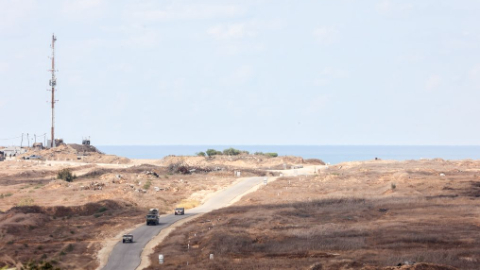
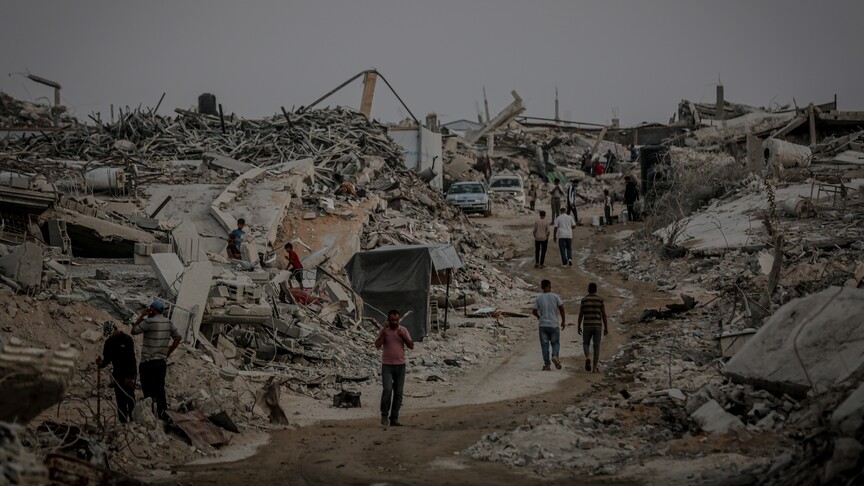
Separately, Israel’s defense minister described Gaza’s destruction as giving him a good feeling and the result of deliberate policy, while announcing plans for three military-linked settlement outposts in northern Gaza. [1] Israel Katz says devastation is result of deliberate policy, announces plan to establish 3 military-linked settlement outposts in northern Gaza. [1]
Broader Regional Context
The Houthis have been at war with Yemen’s government since 2014, in a conflict that has killed hundreds of thousands of people and triggered a major humanitarian crisis. [3] The rebels control Yemen’s capital Sanaa and much of the north, including most population centres, while the internationally recognised government holds much of the south. [3] Since the Saudi-led coalition entered the war in 2015 to back the government, it has been the one to conduct air strikes on Houthi targets on the authorities’ behalf. [3] Separately, Sudanese refugee arrivals continue in Chad. [4]
What to watch next: The next move of the plane will likely determine how things will go, and analysts note that the coming days will show whether both sides move back toward sustained military escalation.