
Israeli-Backed Militia Kills Two Hamas Operatives in Southern Gaza Amid Hostage Recovery Efforts
Gaza Strip — An Israeli-backed Palestinian militia announced the killing of two Hamas operatives in southern Gaza on Wednesday, escalating tensions in the ongoing conflict as Hamas simultaneously resumed its search for the remains of the last known Israeli hostage in the territory, according to reports from regional sources.
The militia operation, reported on January 7, 2026, at approximately 12:39 GMT, targeted Hamas fighters in southern Gaza, a region that has seen intensified clashes amid Israel's broader military campaign against the Islamist group. The militia, described as Palestinian and supported by Israel, claimed responsibility for the eliminations, highlighting fractures within Gaza's militant landscape. This incident underscores the medium-severity skirmishes that continue to punctuate the strip, even as major ground operations have shifted phases.
In a parallel development, Hamas has restarted efforts to locate the remains of the final Israeli hostage believed to be in Gaza, a source familiar with the matter told Xinhua on January 8, 2026. The resumption of the search comes amid ongoing negotiations and military pressures, reflecting the protracted hostage crisis that has defined much of the Israel-Hamas war. While specifics on the hostage's identity or location were not disclosed, the move signals potential progress—or stalling tactics—in ceasefire talks, which have repeatedly hinged on prisoner exchanges.
The militia action fits into a pattern of intra-Palestinian violence in Gaza, where anti-Hamas factions, often aligned with Israel, have conducted targeted killings to undermine the group's control. Southern Gaza, including areas like Rafah and Khan Younis, has been a hotspot for such operations since Israel's military incursion intensified in late 2023. These militias, comprising local clans and armed groups, have publicly reported similar strikes in recent months, aiming to disrupt Hamas supply lines and command structures. No independent verification of the two killings was immediately available, and Hamas has not commented on the specific incident.
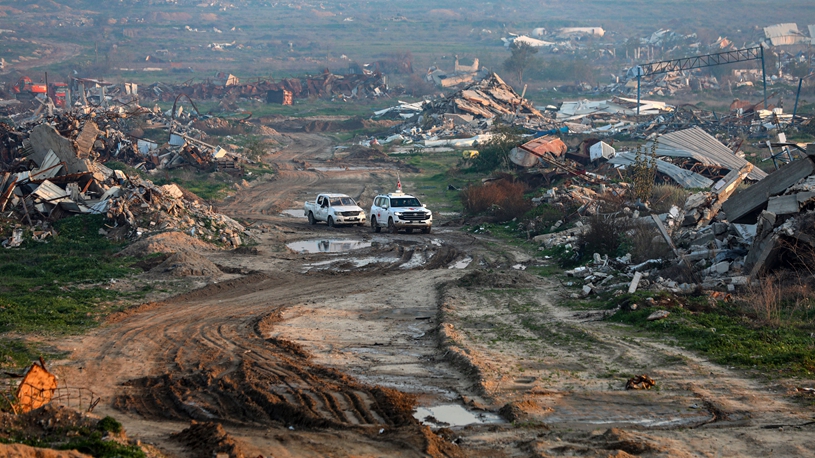
Hamas's hostage search, meanwhile, revives attention to the captives taken during the group's October 7, 2023, attack on southern Israel, which killed around 1,200 people and led to over 250 abductions. As of early 2026, most hostages have been released through deals, rescued by Israeli forces, or confirmed dead, leaving this "last" case as a lingering flashpoint. Previous recoveries, such as those in 2024 and 2025, involved delicate coordination between Hamas, mediators like Qatar and Egypt, and Israel. The Xinhua report, citing an unnamed source, did not specify triggers for the renewed search but noted it aligns with intermittent truces allowing access to rubble-strewn sites where remains are believed held.
Background on the Israel-Gaza Conflict
The current violence traces back to the October 7, 2023, Hamas assault, prompting Israel's declaration of war and a sweeping offensive in Gaza. By January 2026, the Gaza Health Ministry—run by Hamas—reports over 45,000 Palestinian deaths, while Israel claims to have neutralized more than 17,000 militants. The conflict has displaced nearly 90% of Gaza's 2.3 million residents, devastated infrastructure, and drawn international scrutiny, including accusations of war crimes on both sides investigated by the International Criminal Court.
Israel's strategy has evolved to include support for local proxies against Hamas, reducing its direct troop footprint while maintaining pressure. Militias like the one involved here echo historical anti-Hamas elements, such as the Doghmush clan or Popular Forces groups, which have clashed with the rulers since 2007. These alliances remain controversial, with critics arguing they exacerbate Palestinian infighting and complicate postwar governance prospects.
Hostage dynamics have been central to diplomacy. Truces in November 2023, January 2025, and sporadic 2026 pauses freed over 100 living hostages and dozens of bodies in exchange for Palestinian prisoners. The U.S., Egypt, and Qatar have mediated, but sticking points—full Hamas disarmament, Gaza reconstruction, and West Bank settlements—persist.
Broader Implications and Outlook
The dual events—militia strike and hostage search—illustrate the multifaceted nature of the conflict: military attrition, proxy warfare, and humanitarian bargaining. With no immediate Hamas retaliation reported for the killings, focus may shift to whether the hostage remains recovery yields results, potentially unlocking further exchanges.
International actors, including the UN, have called for de-escalation. UN Secretary-General António Guterres recently urged "unhindered access" for recovery efforts, warning of famine risks in Gaza. Israel maintains its operations target only militants, while Hamas frames searches as goodwill amid "genocide."
As winter sets in, aid convoys face blockades, and reconstruction talks stall. Analysts see these incidents as microcosms of a war without clear endgame, with risks of spillover to Lebanon—where Hezbollah tensions simmer—or the West Bank. Diplomatic windows remain narrow, hinging on verifiable actions like the ongoing hostage hunt.
(Word count: 712)






