
Israel Says War With Iran Far From Over as Defense Minister Warns of Strikes With Great Force
Israel’s defense minister has declared that the war against Iran is ‘far from over’ while Russia has escalated nuclear threats amid its stalled invasion of Ukraine, now matching the length of World War I at 1,567 days with heavy losses and no end in sight.
Israel’s Ongoing Conflict with Iran
Israel’s defense minister says war against Iran ‘far from over’. [1] Military prepared to strike Iran with ‘great force,’ says Israel Katz. [1] Israel Katz warns military is prepared to strike Iran with ‘great force’. [3] Israel’s defense minister says war against Iran ‘far from over’. [3] The statements underscore that the military remains ready for additional action as the situation stays unresolved. [1] Israel Katz has emphasized the preparedness of forces to respond with significant strength if required. [3] These declarations come as the conflict with Iran continues without a clear resolution. [1]
Russia’s Nuclear Rhetoric Intensifies
Moscow intensifies aggressive rhetoric and launches new threats with nuclear weapons at a time when the international community and Western allies warn that the war in Ukraine has turned into a strategic disaster for Vladimir Putin. [2] Russia’s deputy foreign minister Mikhail Galuzin has reaffirmed Moscow’s readiness to use nuclear weapons, citing alleged NATO force buildups near its borders. [2] Dan Negrea, the United States representative to the UN Security Council, described the Kremlin’s actions as a large-scale failure. [2] According to the American official, the invasion has not only lost momentum but has also brought devastating costs to the Russian Federation. [2] “Russia loses 5,000 soldiers monthly,” the official stated, noting that Moscow cannot achieve its objectives on the battlefield. [2] In response, Mikhail Galuzin reaffirmed the availability of Moscow to resort to the nuclear arsenal. [2] Galuzin invoked an alleged NATO force buildup at the borders of the two states as justification for maintaining a state of maximum alert. [2] Radical voices in Moscow call for the assassination of Zelensky and tactical attacks. [2] The increasing pressure felt by Russian forces on the front due to Ukrainian drone and missile attacks has led to a radicalization of public discourse in Russia. [2] In the pages of the pro-Kremlin daily Rossiiskaia Gazeta, military analyst Col. Iuri Knutov publicly called for declaring President Volodymyr Zelensky an “international terrorist” to facilitate a liquidation operation by the secret services. [2] Knutov also suggested that the Russian army is approaching the moment when it will be forced to use tactical nuclear weapons to break Ukrainian defensive lines and regain the initiative. [2] The massive use of drones by Ukraine has slowed the Russian offensive, forcing troops to disperse into small groups. [2] The solution proposed by radicals includes the use of small-caliber nuclear munitions, such as 152 mm shells with special charges, to unblock the front impasse. [2]
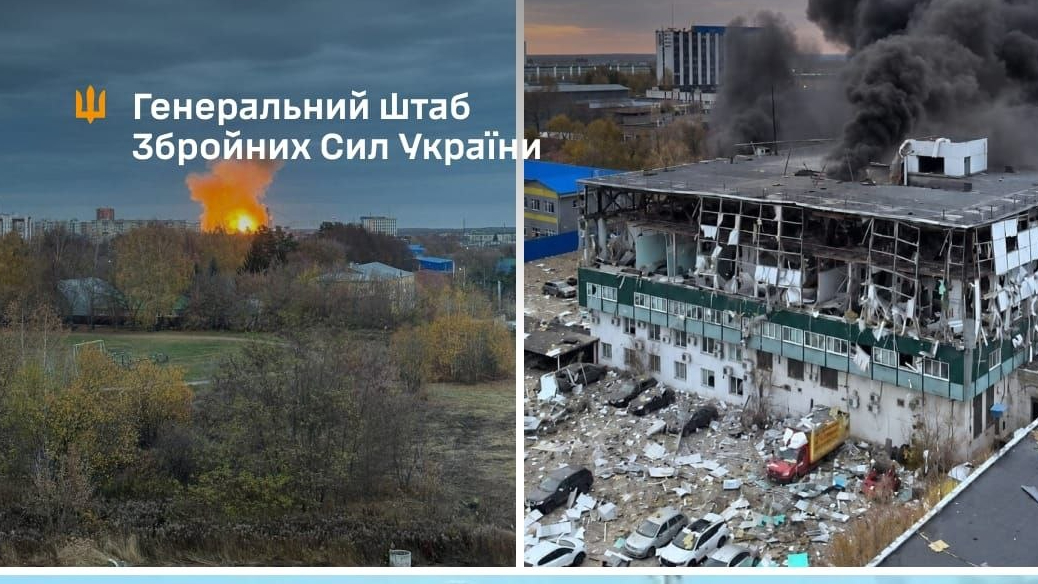
Russian officials escalate nuclear threats amid stalled Ukraine invasion now exceeding 1,567 days. — Source: gdelt
Ukraine War Reaches World War I Duration
Four years, three months and fourteen days after Russian President Vladimir Putin ordered the invasion of Ukraine, the reality on the ground contradicts Moscow’s initial estimates of achieving a quick victory. [4] From February 24, 2022, until today, 1,567 days have passed, making the current conflict as long as World War I, which took place from July 28, 1914, to November 11, 1918. [4] This is the second historical milestone surpassed by Russian aggression, after it exceeded the duration of the Great Patriotic War in January of last year. [4] The next symbolic threshold would be the total duration of World War II at 2,193 days. [4] According to the French Ministry of Defense, the military situation on the ground has remained generally stable in the last six months. [4] No significant Russian advances have been observed on the fronts in Sumy, Kupiansk-Pokrovsk or Zaporizhzhia-Kherson. [4] In parallel, the Ukrainian army continues to attack Russian logistics through targeted drone strikes, such as the one on the city of St. Petersburg. [4] Analysts warn that despite the obvious difficulties, “the Russians are not losing the war,” recalling that Ukraine faces questions about the number of casualties and has suffered significant material losses. [4] “Today, the duration of the SMO has exceeded the length of World War I and reached 1,567 days. Despite huge differences, these two wars have one thing in common – a long-lasting and so far insurmountable positional deadlock, which does not allow either side to advance effectively and quickly. They can only gnaw their way through, slowly, with effort and at the cost of heavy losses, km by km,” wrote the Russian telegram channel Military Informer. [5] The Russians may still officially call it a special military operation, but the author clearly admitted that this was no special operation, but a full-fledged war. [5] The second clear conclusion is that this Russian war is stuck in a stalemate, even an insurmountable one. [5] It has also been understood that the Russians are not capable of achieving any rapid advance. [5] This was exactly what characterized the trench warfare of World War I. [5] Today artillery and machine guns have been replaced by drones, but the outcome is the same. [5] It is no secret in Russia that the failure of Russian president Vladimir Putin and his regime is costing the country heavy losses. [5]
Ukrainian Gains and Russian Setbacks on the Ground
While the political rhetoric in Moscow becomes increasingly virulent, the reality on the ground shows a significant withdrawal of occupation forces. [2] The Ukrainian army has managed to recapture over 600 square kilometers of territory since the beginning of this year, reversing the balance of forces in its favor. [2] According to data provided by the resistance movement “Ateș,” units of the Russian army’s 337th regiment were forced to leave their positions on the Kinburn Peninsula in the Mykolaiv region, a critically important area located at the mouth of the Dnieper into the Black Sea. [2] The loss of this strategic position considerably weakens the defense capacity of occupied Crimea and gives Ukraine increased control over maritime routes in the northwestern Black Sea. [2] Sources indicate that Russian logistics in the area have been completely paralyzed due to intense drone attacks carried out by Ukraine’s Special Operations Forces. [2] Military experts, including Lieutenant General Evgeny Buzhinsky, warn that Ukraine could be preparing a large-scale airborne operation to penetrate Crimea. [2] The battle for Kostyantynivka is nearing its end. [5] Several positive signals allow consideration of options for the further advance of the Russian armed forces in Kostyantynivka and possibly beyond it. [5] The deteriorating situation of the city’s defenders is illustrated by a time-lapse map. [5] It shows the gradual engulfing of the city from east and west. [5] The Russians admitted that they were significantly more successful on the eastern flank, while on the western flank Ukrainian defenses were so far more or less holding. [5] Once the city falls, the Ukrainian army will lose an important stronghold that for a year blocked the Russian advance from the south toward Kramatorsk. [5] Two more strongholds have already been prepared behind it. [5] The first is the small town of Oleksiievo-Druzhkivka. [5] If this settlement falls, the Russians will face the much larger Druzhkivka. [5] Only after taking Druzhkivka could Russia attempt an attack on Kramatorsk from the south. [5]
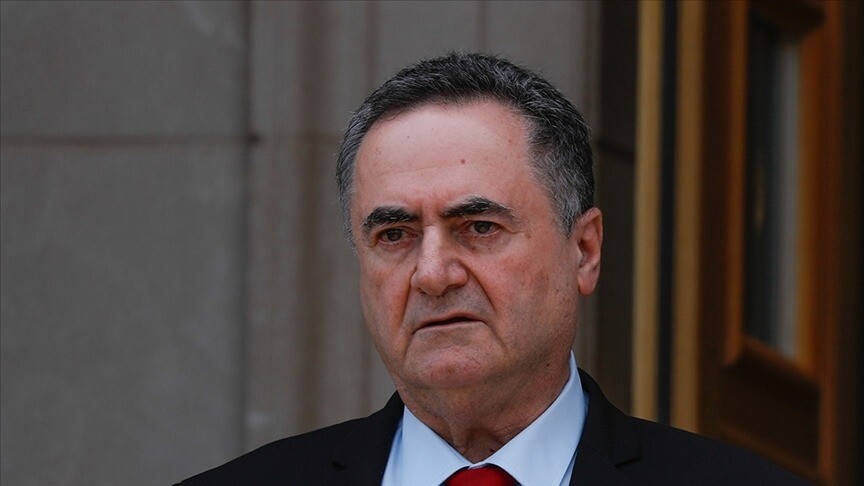
Israel Defense Minister Israel Katz warns that the war against Iran is far from over. — Source: anadolu
Russian Air Power Adaptations and Battlefield Realities
Air power is one way to break the stalemate, and Russia has a new tool in which it pins high hopes. [5] The photo published by French analyst Clément Molin comes from the Huliaipole area. [5] It illustrates the accuracy of Russian air power. [5] Thanks to his systematic monitoring of satellite imagery, Molin noticed that at least in this sector Russian air power was achieving high bombing accuracy and systematically clearing the way ahead for Russian infantry. [5] The problem for the Russians is that the deployment rate of the Su-34 type, which carries out this kind of mission, is high, leading to wear and tear on both equipment and personnel. [5] Russia has therefore come up with an innovation: instead of four precision-guided bombs it has started hanging as many as six under its tactical bombers. [5] In theory, this means increasing the effectiveness of air power in support of the army by up to 50 percent. [5] “Air power is trying its utmost to implement the plan to increase the amount of munitions dropped on the enemy,” the Russian aviation channel Fighterbomber said. [5] As early as the beginning of May it claimed that while the current monthly maximum was 10,000 precision-guided bombs dropped, after this modification there was a chance to reach 15,000, at most 16,000 bombs. [5] Fighterbomber mentioned a lack of qualified ground crew as one of the reasons why it was not possible to achieve a higher intensity of bombing. [5] The Ukrainian aviation account Sunflower questioned these claims at the end of April. [5] It argued that, despite the modification, Russia was in reality capable of dropping a maximum of 300 bombs a day, which is just under 10,000 per month. [5] In an extreme case and for a short period, Russia could reach 600 bombs a day, but only at the cost of losses. [5] For these ambitions to be sustained over the long term, Russia would need at least 200 aircraft and ideally around 300 crews. [5] The Ukrainians have attempted a counter-attack from Chasiv Yar. [5]
Diplomatic and Internal Pressures
On the diplomatic front, Ukrainian President Volodymyr Zelensky has proposed a meeting directly with his Russian counterpart Vladimir Putin in an open letter sent last week. [4] In parallel, international support for Kyiv continues, including through the unlocking of the European loan of 90 billion euros. [4] Also, the leaders of the Baltic states have reaffirmed their support for Ukraine’s integration into NATO through a joint statement that describes Ukraine’s path to the North Atlantic Alliance as “irreversible.” [4] Failures repeated military and logistical risks, illustrated also by recent incidents such as the explosion of an ammunition depot in the Belgorod region attributed to an internal error of the Russian army, have accentuated the state of insecurity at the top of power in the Kremlin. [2] Political sources indicate that the Russian president shows a high degree of paranoia in this period. [2] Putin reportedly ordered his two older daughters to move to his fortified residence to protect them from possible assassination attempts. [2] In addition, an emergency check and cyber security of the entire video camera system around government locations was ordered, for fear of security breaches that could disconnect the routes of the Russian leader. [2] Despite these internal tensions and tactical pressures, the civilian reality remains tragic: Russian forces continue to strike civilian infrastructure in Kharkiv, with the latest attacks again resulting in casualties among the population, including children. [2] While Russia relies on numerical superiority and mass industrial production, Ukraine has built in just a few years a military ecosystem based on rapid innovation and technology. [2] The new Bulgarian government intends to stop arms deliveries to Kyiv, and its leaders plead for a negotiated solution to the conflict and for a reassessment of sanctions. [2]
What to watch next: Ukrainian forces may prepare a large-scale airborne operation to penetrate Crimea while Russian forces continue efforts to increase monthly precision-guided bomb drops toward 15,000 amid the ongoing positional stalemate.