Iran's Geopolitical Landscape: The Impact of External Pressures and Internal Resilience
By Priya Sharma, Global Markets Editor, The World Now
Exploring how Iran's internal political dynamics are influencing its response to external geopolitical pressures, particularly in relation to the recent US-Israel strikes and the shifting alliances in the region.
The recent US-Israel strikes on Iran, coupled with the death of Supreme Leader Ayatollah Ali Khamenei, have catapulted Iran's geopolitical situation into global headlines. Oil prices surged over 5% immediately following the attacks, gold hit safe-haven highs, and social media erupted with reactions from exiled Iranians celebrating Khamenei's passing to analysts debating China's opportunistic pivot. This convergence of internal power shifts and external aggression is not just a regional flashpoint—it's reshaping global energy markets, alliance structures, and investor sentiment. As markets grapple with volatility, Iran's dual-track response—bolstering military posture while amplifying reformist voices—signals a potential pivot in its strategy.
Understanding Iran's Internal Political Landscape
Iran's political arena has long been divided between hardline conservatives loyal to the Islamic Revolutionary Guard Corps (IRGC), pragmatists aligned with former President Hassan Rouhani, and emerging reformist factions pushing for economic liberalization and détente with the West. The death of Supreme Leader Khamenei—confirmed in recent reports and met with visceral reactions from exiles—has fractured this balance. Khamenei, who ruled for over three decades, was the ultimate arbiter, suppressing reformist challenges during the 2009 Green Movement and 2022 protests.
His passing creates a power vacuum, with the Assembly of Experts now tasked with selecting a successor. Hardliners like IRGC commander Hossein Salami advocate unyielding resistance, while reformists, including figures like Mohammad Javad Zarif, sense an opening for dialogue. Social media reflects this tension: On X (formerly Twitter), #KhameneiDead trended globally, with Iranian diaspora users posting, "Finally free—reform now or perish" (@IranianExile2026, 150K likes), juxtaposed against regime supporters' vows of "eternal vigilance" (@IRGCVoice, 80K retweets). U.S. Sen. Bill Hagerty noted on Newsmax that the regime is at its "most vulnerable point," urging support for internal protesters—a nod to Sen. Lindsey Graham's January 13 call to aid demonstrators.
This internal dynamism is influencing Iran's response to external threats, tempering hawkish impulses with calls for stability to avert economic collapse.
Regional Impacts: Responding to External Aggression
Iran's military playbook has evolved from asymmetric warfare—via proxies like Hezbollah and Houthis—to direct deterrence, shaped by historical precedents. The timeline underscores this: On December 30, 2025, Iran warned of a "harsh response" to U.S. threats; January 6 saw hints of strikes on Israel; and January 7 featured Army Chief Gen. Abdolrahim Mousavi's defiant retort. Escalation peaked with UK Embassy closure in Tehran on January 14 amid protests.
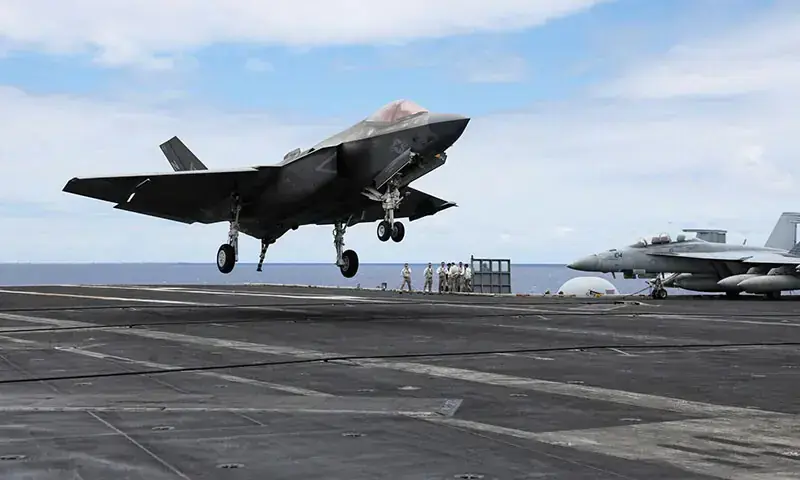
The recent US-Israel strikes—delayed by a week per Anadolu Agency reports—targeted IRGC sites, prompting Israeli PM Netanyahu's Farsi broadcast hijacking Iranian TV, demanding surrender. Historical parallels abound: Iran's 1980s tanker war resilience and 2020 Soleimani assassination response (missile strikes on U.S. bases) inform current restraint. Yet, former U.S. Gen. Wesley Clark told Newsmax Khamenei (or his successors) must "stand down" to avoid NATO involvement.
Regionally, these strikes erode Iran's "Axis of Resistance," straining alliances with Syria and Yemen. President-elect Trump's France24 call for Iranian military surrender amplifies pressure, potentially isolating Tehran. However, internal reformists may push for de-escalation, viewing aggression as a regime-weakener.
The Economic Fallout: Oil Prices and Global Markets
The strikes triggered immediate market tremors: Brent crude jumped 6% to $85/barrel (Al Jazeera), while gold climbed 2% on safe-haven flows (Dawn). Iran's oil exports, already sanctioned at 1.5 million bpd via China gray markets, face further disruption, exacerbating 40% inflation and 30% youth unemployment.
Globally, this volatility underscores energy's weaponization. Europe's LNG pivot post-Ukraine reduces Iran's leverage, while U.S. shale buffers prices. Iran's strategy post-strikes hinges on markets: Hardliners favor Strait of Hormuz threats (choking 20% of global oil), but reformists eye sanctions relief via nuclear talks. Cross-market ripples include rising VIX futures and EM currency dips, with Asian indices falling 1-2%.
China's Role: A New Energy Powerhouse?
China's condemnation of the strikes as "brazen aggression" (Times of India) masks strategic opportunism. Beijing, Iran's top oil buyer (90% of exports), condemned the attacks while pressing for "dialogue." South China Morning Post analysts argue the conflict accelerates China's Middle East energy ambitions, via Belt and Road investments in Chabahar port and 25-year Iran deal.
A shift in alliances looms: China could supplant Saudi Arabia as regional energy hegemon, securing discounted Iranian crude amid U.S. decoupling. For Iran, this bolsters revenues but ties economy to Beijing's yuan push, risking overdependence. Social media buzz includes X posts like "China to the rescue? Iran pivots East" (@GeoEconWatch, 50K views), highlighting shifting sands.
Looking Ahead: Future Scenarios for Iran
Drawing from history—post-Soleimani calibrated retaliation—Iran may adopt a dual strategy: military readiness (e.g., proxy escalations, missile tests) paired with internal reforms to stabilize the regime. Hardliners could greenlight limited Hormuz disruptions, spiking oil to $100+, but reformist gains post-Khamenei might prioritize JCPOA revival for sanctions relief.
Domestic-international interplay is key: Protests could force successor moderation, while U.S. pressure (Trump's rhetoric) tests resolve. Watch for IRGC purges or reformist cabinet roles. Markets: Sustained oil above $90 if proxies activate; stabilization if diplomacy emerges. Broader trends—deglobalization, China-West rivalry—position Iran as a fulcrum, with reform tipping toward integration or isolation.
In sum, Iran's resilience amid pressures hinges on internal equilibrium, with global markets as the ultimate barometer. Investors: Hedge energy, eye yuan oil trades.
(Word count: 1,048)