
Iran's Foreign Ministry Voices Support for Protests as Clashes Escalate Nationwide
Tehran, Iran – In a rare and striking development, Iran's Foreign Ministry has publicly expressed support for ongoing protests sweeping the country, even as reports emerge of violent clashes between demonstrators and security forces, including the deaths of two police officers. The ministry's stance, announced on January 2, 2026, signals deepening political divisions amid high-severity civil unrest that has spread to multiple regions.
The protests, which began intensifying around January 2, 2026, at 07:26 GMT, have drawn semi-official Iranian media reports of significant violence. According to coverage from BBC News, two police officers were killed in a western town, with videos circulating online showing security forces deploying tear gas and live ammunition against crowds. The unrest has expanded beyond initial hotspots, raising concerns over stability in the Islamic Republic.
The Foreign Ministry's endorsement marks an unusual alignment, typically at odds with domestic security crackdowns. Spokespersons described the demonstrations as a "legitimate expression of public grievances," though specifics on demands—ranging from economic hardships to political reforms—remain fluid. This position contrasts sharply with the actions of law enforcement, highlighting potential rifts within the government apparatus.
Escalating Violence and Security Response
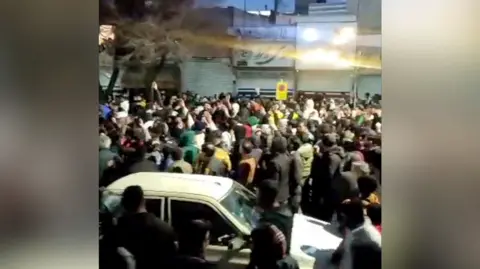
Eyewitness videos and semi-official reports paint a picture of intensifying confrontations. In the western town, state-affiliated media confirmed the fatalities of two officers during clashes, attributing the incident to "rioters." Elsewhere, footage verified by independent observers depicts protesters hurling stones and setting fires, met with volleys of gunfire and tear gas from riot police and Basij militias. Demonstrations have proliferated to major cities including Tehran, Isfahan, and Shiraz, with crowds chanting against inflation, corruption, and restrictions on freedoms.
The severity of the unrest has been classified as "HIGH," underscoring risks to public safety and governance. Internet blackouts have been reported in affected areas, a common tactic in past Iranian protests to curb information flow, though VPN usage has allowed videos to surface on social media platforms.
No official casualty figures for protesters have been released, but human rights groups monitoring the situation estimate dozens injured. Security forces, bolstered by reinforcements, have established barricades around government buildings and key infrastructure.
Historical Context of Iranian Protests
Iran has a long history of civil unrest, often triggered by socioeconomic pressures compounded by international sanctions and internal policies. The 2022 "Woman, Life, Freedom" protests, sparked by the death of Mahsa Amini in morality police custody, saw widespread demonstrations suppressed with hundreds killed, according to Amnesty International. Economic woes persist, with inflation exceeding 40% in recent years per World Bank data, youth unemployment hovering around 25%, and subsidy cuts fueling public anger.
Previous waves, including the 2019 fuel price hikes and 2009 Green Movement, similarly escalated into violence, with security responses drawing global condemnation. The current unrest echoes these patterns but is distinguished by the Foreign Ministry's support, potentially indicating factional struggles within the regime or a strategic pivot amid external pressures like ongoing nuclear talks and regional conflicts.
International observers note Iran's geopolitical context: proxy wars in the Middle East, strained U.S. relations post-JCPOA collapse, and alliances with Russia and China. Analysts suggest the ministry's backing could be an attempt to frame protests as internally driven while deflecting foreign interference accusations.
Reactions and Implications
Domestic responses vary. Hardline outlets like Kayhan have decried the protests as "sedition," calling for swift suppression, while reformist voices amplify the ministry's support. Protesters, in viral clips, express surprise at the endorsement but demand concrete reforms.
Globally, the U.S. State Department urged restraint, stating, "Iranian authorities must respect peaceful assembly." The EU echoed calls for dialogue, while allies like Russia emphasized non-interference.
As night falls, protests continue in pockets, with security forces on high alert. The Foreign Ministry's position raises questions about policy coherence—will it temper crackdowns or embolden demonstrators?
Outlook Amid Uncertainty
The trajectory remains unclear. If the ministry's support translates to de-escalation, it could mark a turning point toward concessions. However, history suggests prolonged unrest risks broader instability, potentially impacting oil markets (Iran produces ~3 million barrels daily) and regional security.
Iranian authorities face a delicate balance: addressing grievances without undermining control. For now, the streets remain a flashpoint, testing the regime's resilience in 2026.
(Word count: 612)






