
Iran's Army Chief Warns of Preemptive Action as Tensions Escalate with US and Israel Over Protests
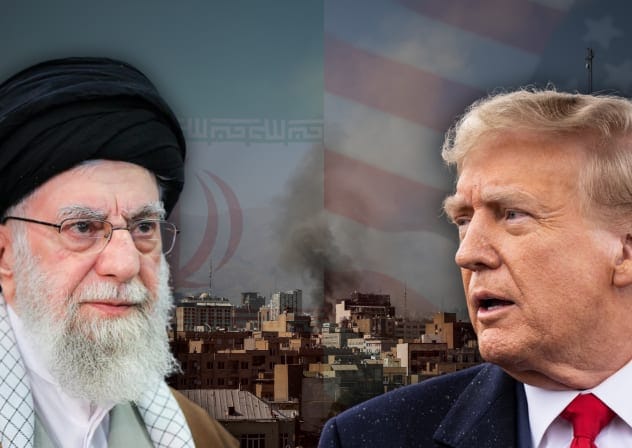
Tehran, Iran – Iran's top army general has issued stark warnings of a potential preemptive strike and firm retaliation against perceived threats from the United States and Israel, amid intensifying rhetoric tied to the Islamic Republic's ongoing crackdown on anti-government protests.
The statements from Major General Abdolrahim Mousavi, Iran's army chief, come just days after U.S. President Donald Trump voiced strong support for demonstrators challenging Tehran's authority. On January 7, 2026, Mousavi threatened a preemptive attack in response to "rhetoric targeting the country," directly referencing recent comments from Trump. According to reports, he vowed that Iran would "hit back" if the U.S. and Israel persist in backing the protests, which have seen violent suppression by security forces.
This escalation follows Trump's public pledge to intervene should Iranian authorities continue killing protesters, a position echoed by U.S. Senator Lindsey Graham. Graham stated that Trump would target Supreme Leader Ayatollah Ali Khamenei if the regime persists in its crackdowns, heightening fears of direct confrontation.
Rising Rhetoric Amid Domestic Unrest
The army chief's remarks, reported across multiple outlets, mark a medium-severity escalation in regional geopolitics. On January 6, Iranian officials hinted at possible preventive strikes against Israel, signaling broader tensions. By January 7, Mousavi's response explicitly addressed threats from both Trump and Israeli Prime Minister Benjamin Netanyahu, framing U.S. and Israeli support for protesters as existential dangers.
Associated Press coverage highlighted Mousavi's preemptive attack threat as a direct reaction to Trump's comments, underscoring Iran's sensitivity to external encouragement of its domestic dissent. France 24 detailed how the general positioned these statements in the context of "threats" from Washington and Jerusalem, days after Trump's intervention warning amid Tehran's "worsening crackdown."
The Jerusalem Post quoted Graham amplifying the U.S. stance, claiming Trump’s resolve extends to eliminating Khamenei to halt protester deaths. This exchange has unfolded rapidly: Mousavi's initial vow was published at 09:28 GMT on January 7, followed by AP at 10:39 GMT and Jerusalem Post at 11:39 GMT.
Background: Protests and Long-Standing Rivalries
Iran has faced waves of anti-government protests for years, with recent unrest echoing the 2022 demonstrations sparked by the death of Mahsa Amini in morality police custody. These movements have demanded greater freedoms, an end to mandatory hijab laws, and broader political reforms, met with lethal force from Iran's Revolutionary Guards and Basij militia. Human rights groups have documented hundreds of deaths and thousands of arrests in prior episodes, fueling international condemnation.
Geopolitically, Iran-Israel relations remain hostile, marked by Iran's support for proxy groups like Hezbollah and Hamas, Israeli airstrikes on Iranian assets in Syria, and mutual accusations of sabotage. The U.S., under Trump's second term following his 2024 election victory, has reimposed "maximum pressure" sanctions on Iran, withdrawn from the 2015 nuclear deal, and conducted strikes against Iran-backed militias in Iraq and Syria.
Trump's latest comments revive his first-term "maximum pressure" campaign, which included the 2020 assassination of General Qasem Soleimani. Netanyahu, facing his own domestic challenges, has long advocated preemptive action against Iran's nuclear program, estimated by the International Atomic Energy Agency to be advancing despite sanctions.
Iran's military posture has correspondingly hardened. Mousavi, appointed army chief in 2017, oversees conventional forces distinct from the ideological Revolutionary Guards. His threats align with Supreme Leader Khamenei's directives to deter aggression while projecting strength amid economic woes from sanctions and protests.
Potential Implications
No immediate military actions have been reported as of January 7, 2026, but the rhetoric risks miscalculation in a volatile region. Iran's hints at strikes against Israel, combined with vows of response to U.S. intervention, could involve missile barrages, cyber operations, or proxy activations—tactics seen in April 2024's direct Iran-Israel exchanges.
Diplomatic channels remain strained. The U.S. State Department has not commented on Mousavi's threats, while Israel’s defense ministry reiterated its right to self-defense. European allies, including France, have urged de-escalation, mindful of oil price spikes and Red Sea disruptions from related Houthi attacks.
Analysts note that while Iran's leadership often uses bellicose language to rally domestic support, the specificity of preemptive warnings—amid Trump's return and Netanyahu's firmness—elevates risks. Protests continue in cities like Tehran and Isfahan, with internet blackouts limiting information flow.
As world leaders monitor the Middle East, this standoff underscores the interplay of Iran's internal fragility and external pressures, with potential to reshape alliances and security dynamics in 2026.
(Word count: 612)






