
Iranian General Threatens Harsh Response if US or Israel Strikes During Khamenei Funeral
Iranian Commander Warns Against Attacks During Khamenei Funeral
The commander of Khatam al-Anbiya, Ali Abdollahi, threatened Israel and the US against making “any miscalculation” during former Supreme Leader of Iran Ali Khamenei's week-long funeral, warning of “harsh and regrettable responses” in the case of an attack in a Friday statement. [4] Khatam al-Anbiya is the Joint Command of Iran's military. [4] Khamenei's funeral is slated to begin on Saturday and is expected to be the largest event in the history of the Islamic Republic. [4] The event will last a week and span several major cities in Iran and Iraq, with ceremonies in Tehran, Qom, Mashhad, Najaf, and Karbala. [4] Iranian media reported that millions of people are set to participate in the mass event, with the mayor of Tehran estimating 15 to 20 million attendees in the capital alone. [4] Khamenei was killed in Tehran in joint US-Israeli strikes at the start of operations Roaring Lion and Epic Fury in February, alongside his daughter, grandchild, daughter-in-law, and son-in-law. [4] His son, Mojtaba, has since taken on the mantle of supreme leader. [4] In an "unannounced event" amid the ongoing funeral preparations, Khamenei's coffin was put on display in Tehran, according to a late Thursday X/Twitter post by the State TV broadcaster, Islamic Republic of Iran Broadcasting (IRIB). [4] Footage shared by IRIB on social media appears to show a large, cheering crowd standing before a stage decorated with flowers. [4] Standing alongside the displayed coffin are several Iranian officials, including Islamic Revolutionary Guard Corps (IRGC) Commander Ahmad Vahidi in his first public appearance since the start of the Israel-Iran War. [4] Vahidi also reportedly met with Iranian Parliament Speaker Mohammad Bagher Ghalibaf, Iranian President Masoud Pezeshkian, and other senior officials to address matters related to the funeral preparations. [4]
Calls for Revenge and International Participation
Ghalibaf urged Iranians to “rise up” and “demand revenge” during a speech on Thursday. [4] “I call on all members of the Iranian people to create a glorious page in the history of Islamic Iran with their impressive presence and to prove once again that the Iranian nation in its great moments stands united and loyal to its alliance,” said Ghalibaf. [4] “The noble and deep-rooted Iranian people are not silent in the face of injustice and arrogance and will not give up on the blood of their leader,” he added. [4] N12 reported that Ghalibaf met with representatives of the Amal Movement, a Lebanese Shia political party, on Wednesday as part of the ceremony’s preparations. [4] Members of the movement will reportedly attend Khamenei's funeral as well. [4] Other world leaders and officials from more than 30 countries, including Tajikistani President Emomali Rahmon, are expected to attend the funeral, Iran’s state-owned Press TV noted. [4] The report cited Iranian Deputy Interior Minister Ali Akbar Pourjamshidian as confirming their attendance, as well as the attendance of religious leaders from over 90 countries. [4] The ceremony was scheduled months earlier but was postponed due to the ongoing conflict with the US. [4]
China Urges Settlement Over Strait of Hormuz
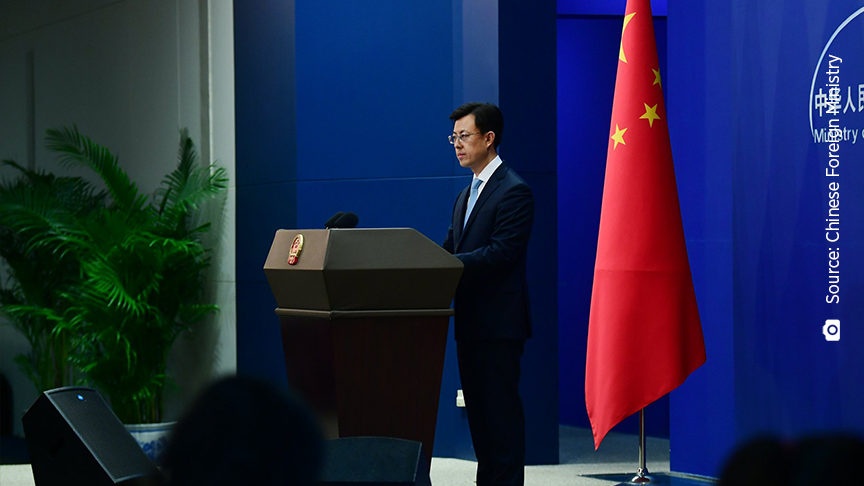
China stated that shared concerns over disruptions in the Strait of Hormuz need a proper settlement, coinciding with planned US-Iran talks in the third week of July. [1] Beijing says 'shared concerns' over Hormuz 'need a proper response' as US, Iran set to resume talks in 3rd week of July. [1]
Taiwan Opposition Blocks Condemnation of China’s Ethnic Unity Law
In Taiwan, KMT and TPP lawmakers blocked a DPP motion to condemn China’s new Law on Promoting Ethnic Unity and Progress, which the DPP says enables transnational repression and threatens Taiwanese sovereignty and human rights. [3] The Chinese Nationalist Party (KMT) and Taiwan People’s Party (TPP) today blocked a motion proposed by the Democratic Progressive Party (DPP) legislative caucus to condemn Beijing’s new “ethnicity unity” law. [3] All 60 lawmakers from the KMT and TPP voted against placing the proposal on the legislative agenda, while 48 DPP lawmakers voted in favor. [3] China’s Law on Promoting Ethnic Unity and Progress aims to "forge a strong sense of community for the Chinese nation.” [3] The law, which took effect on Wednesday, uses legislation as a tool of intimidation and seeks to create a chilling effect in the international community while threatening the personal safety of Taiwanese, the DPP caucus said, proposing a motion to condemn Beijing’s transnational repression efforts. [3] The law could threaten people around the world, particularly those in Taiwan who maintain that the Republic of China (Taiwan’s official name) is an independent sovereign state, DPP caucus chief executive Chuang Jui-hsiung said. [3] Beijing's implementation of the law represents an attempt to use domestic legislation to infringe on the sovereignty and human rights of other countries, extend authoritarian political control beyond its borders and expand transnational repression, the motion said. [3] The law has drawn strong criticism and concern from the UN, the European Parliament, multiple governments and international human rights organizations, it said. [3] The law's provisions are vaguely defined and subject to arbitrary enforcement, seriously contravening international norms, including principles enshrined in the UN Charter, the motion said. [3] Under the law, people who insist that "the Republic of China is a country," acknowledge the de facto existence of the Republic of China, advocate "equality and dignity" in relations with China or oppose Beijing's authoritarian rule could face persecution, it said. [3] The motion called on lawmakers, regardless of party affiliation, to issue their strongest condemnation of the law and jointly safeguard the security of Taiwanese. [3] The government should take countermeasures, as the law significantly increases risks for Taiwanese traveling, conducting business or engaging in academic exchanges overseas, the motion said. [3] Suggested measures include revising relevant laws, imposing penalties on those who assist in unlawful enforcement activities and improving risk-warning mechanisms for travel to China and other destinations, it said. [3] The law grants Chinese authorities broad powers of interpretation and enforcement, amounting to a form of global long-arm jurisdiction that transcends nationality and geography, it said. [3] The motion called on like-minded countries to deepen cooperation, jointly resist authoritarian expansion, prevent infringements on national sovereignty and uphold universal human rights values. [3]
NATO Summit in Türkiye to Address Alliance Strains
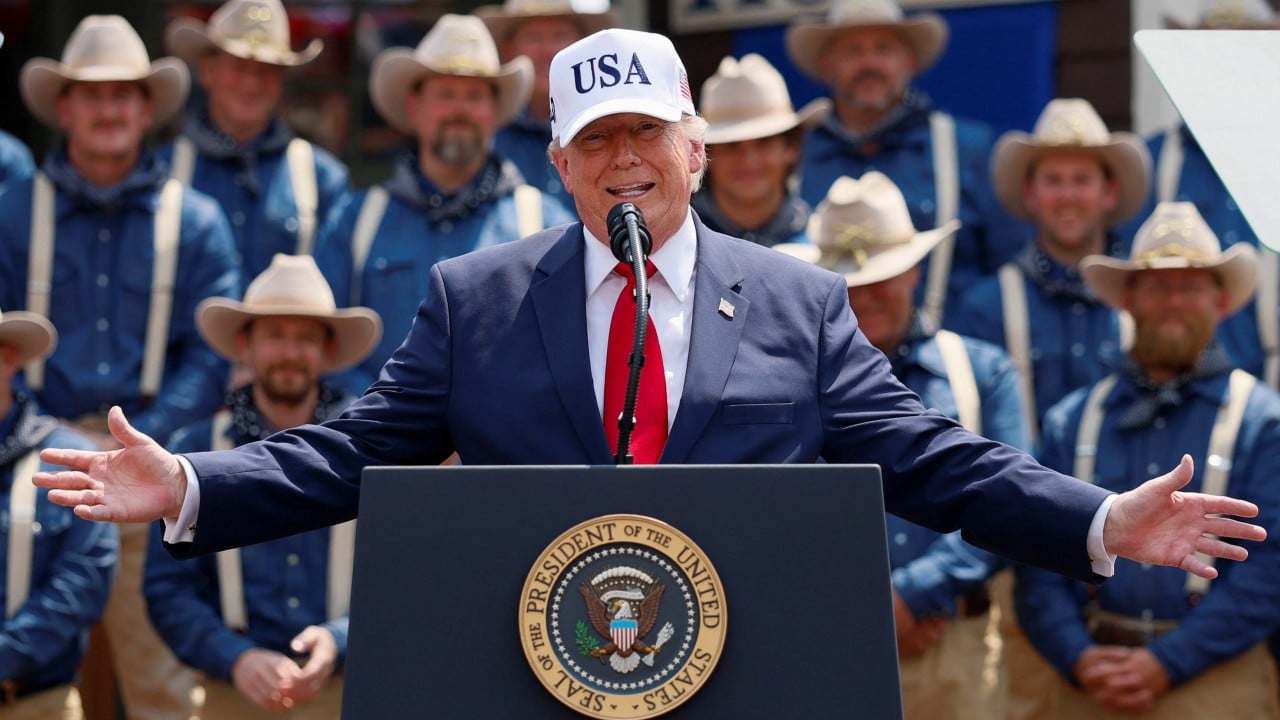
South Korean President Lee Jae-myung will attend the NATO summit in Ankara on July 7-8, which aims to demonstrate European defense spending increases and alliance unity despite tensions with US President Trump over the Iran war and other issues. [2] Lee Jae Myung will also participate in defense industry forum as part of the alliance's July 7-8 meeting. [2] NATO leaders gather next week in Ankara, where Europeans aim to set aside strife with U.S. President Donald Trump over Iran and Greenland and show they are stepping up to defend the continent as Washington cuts back on its commitments to the alliance. [5] NATO Secretary General Mark Rutte says the gathering next Tuesday and Wednesday will show Europeans are honouring pledges to hike defence spending to deter Russia from any attack, with arms deals worth tens of billions of dollars to be signed. [5] Leaders are also expected to vow to keep funding weapons for Ukraine’s fight against Russia’s invasion. [5] Ukrainian President Volodymyr Zelenskiy will attend a dinner hosted by Turkish President Tayyip Erdogan, who will also hold bilateral talks with Trump. [5] European officials say they hope Trump’s strong relationships with Erdogan and Rutte will ensure a smooth summit but cannot be sure, given lingering transatlantic bitterness over the Iran war and the U.S. president’s frequent criticism of NATO. [5] In a Truth Social post on Thursday, Trump complained the United States was spending money to protect NATO members “without getting any benefit from so doing”. [5] Rutte and other NATO leaders have insisted the alliance contributes to the United States’ own security and that Europeans are heeding Trump’s longstanding calls to spend more on their own defence. [5] “The summit next week will focus on turning extra spending into combat-ready capabilities, and significantly scaling up our defence industries,” Rutte said in Berlin on Wednesday. [5] “NATO is, and will always be, a transatlantic alliance but we need to rebalance it for the better,” he added. [5] “Working closely with the United States, European allies and Canada are taking greater responsibility for conventional defence in Europe.” [5] Rutte said last month that NATO’s European members and Canada spent $90 billion more on defence in 2025 than in the previous year, to reach a total of more than $570 billion. [5] In The Hague last year, NATO leaders agreed to spend 3.5% of GDP on core defence items such as weapons and troops by 2035 – up from a previous goal of 2%. [5] They also agreed to invest a further 1.5% of GDP on broader defence-related investments such as boosting cybersecurity. [5] European officials are hoping for a repeat of that summit, where Trump reaffirmed the U.S. commitment to the 32-member alliance and its Article 5 mutual defence pact, as well as praising his fellow leaders. [5] But the past 12 months have severely strained the alliance, with Trump threatening to take Greenland from fellow NATO member Denmark and then waging a war against Iran that roiled the global economy without consulting European allies. [5] The U.S. has also announced troop withdrawals from Europe, cut the forces it assigns to NATO’s defence plans – including an aircraft carrier, refuelling aircraft, fighter jets and drones – and launched a six-month review of its military presence on the continent. [5] “The alliance is alive and kicking but a bit bruised,” said a European diplomat, speaking on condition of anonymity. [5] European officials worry that the Iran war could overshadow the summit – if there is a flare-up in the conflict, currently the subject of a fragile ceasefire, or if Trump vents his anger at Europeans for not doing more to assist U.S. military operations. [5] NATO officials also say the vast majority of allies honoured commitments to allow the U.S. to use their airspace and bases on their territory, even though the war was deeply unpopular in Europe and many European leaders did not support it. [5] The war also ruptured personal ties between Trump and European leaders such as Italian Prime Minister Giorgia Meloni and outgoing British Prime Minister Keir Starmer, raising the possibility that those strains could resurface at the summit. [5] “I’m optimistic (that won’t happen) because I think the leaders know what is at stake,” a senior NATO diplomat said. [5] “And if something like that does occur, then we always have the ultimate marriage counsellor, Mark Rutte, to smooth things over.” [5]
What to watch next: US-Iran talks are set to resume in the third week of July, while NATO leaders meet July 7-8 in Ankara with South Korean President Lee Jae-myung in attendance.