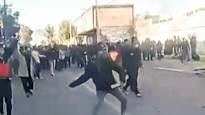
Iranian Foreign Ministry Backs Protests Amid Escalating Civil Unrest

Latest from X
Iranian Foreign Ministry Backs Protests Amid Escalating Civil Unrest
In a rare and significant political move, the Iranian Foreign Ministry has expressed support for ongoing nationwide protests, marking a potential shift in the government's stance amid severe civil unrest that began on January 2, 2026. The demonstrations, driven by economic hardship and widespread dissatisfaction, have drawn international scrutiny, including warnings from former U.S. President Donald Trump about potential U.S. intervention if the situation worsens.
The protests erupted in early January 2026, fueled by Iran's deepening economic crisis, including skyrocketing inflation exceeding 40% and the Iranian rial plummeting to record lows of 1.4 million rials per USD. According to reports, these events have led to demonstrations in over 50 cities, including Tehran, Isfahan, and Qom, with participants calling for economic reforms and greater political freedoms. The Iranian Foreign Ministry's endorsement, as described in recent event details, represents an unusual alignment with public dissent, potentially signaling internal divisions within the government or a strategic response to mounting pressure.
This development comes as the protests enter their fourth day, with reports of widespread participation from various segments of society, including merchants, students, and workers. The unrest has been exacerbated by factors such as bazaar shutdowns and fuel shortages, echoing similar movements in recent years. International observers note that the current wave is among the largest since the 2022-2023 Mahsa Amini protests, which were sparked by issues of women's rights and government repression. While the Foreign Ministry's support could be interpreted as an attempt to de-escalate tensions, it has not quelled the demonstrations and may instead embolden protesters.
Adding to the complexity, the situation has attracted global attention. A recent article from ylenews highlighted former U.S. President Donald Trump's warning that the United States might strike Iran if more protesters are killed, underscoring the potential for foreign involvement. Trump's statement, made in the context of the protests' escalation, reflects ongoing U.S.-Iran tensions and could heighten the risk of international conflict. The article, published on January 5, 2026, noted that the protests began about a week prior, aligning with the timeline of the current unrest.
Posts on X from verified accounts, including those from journalists and analysts, have amplified reports of the protests' scale, describing demonstrations in major cities and the regime's efforts to maintain order. These posts suggest a atmosphere of fear and urgency, with mentions of security forces deploying in urban areas to prevent further escalation. However, such social media reports should be treated as indicative of public sentiment rather than definitive evidence, as they often reflect unverified claims and varying perspectives.
Historically, Iran has experienced periodic waves of civil unrest, often tied to economic woes and political repression. The 2019 protests, for instance, were sparked by fuel price hikes and led to a heavy-handed government response, resulting in hundreds of deaths. More recently, the 2022-2023 movements highlighted gender-based inequalities and human rights issues. In the current context, experts point to Iran's ongoing sanctions, regional instability, and internal economic policies as key drivers. The Foreign Ministry's support could be seen as a response to these pressures, though it remains unclear whether this is a genuine policy shift or a tactical maneuver.
As the protests continue, the outlook remains uncertain. The Iranian government's ability to address underlying economic issues, such as inflation and currency devaluation, will be critical in diffusing tensions. Internationally, the U.S. warning adds a layer of volatility, potentially influencing diplomatic relations and regional dynamics in the Middle East. While some observers hope for dialogue between protesters and authorities, others fear escalation into broader conflict. The situation underscores the fragility of Iran's domestic stability and the interconnectedness of global politics.
In summary, the Iranian Foreign Ministry's backing of the protests marks a pivotal moment in the country's ongoing civil unrest, set against a backdrop of economic turmoil and international scrutiny. As events unfold, the world watches closely for signs of resolution or further instability.
Track this story live
Original Sources
- •
Editorial process: This article was synthesized from the original sources cited above using The World Now's AI editorial system, with byline accountability from our editorial team. We grade every story for source grounding, factual coherence, and on-topic match before publication. Read more about our editorial standards and contributors. Spot something inaccurate? Let us know.
Last updated: January 5, 2026






