Iran war reaches day 92 with US and Iran closer to ceasefire extension
US and Iran appeared closer to a deal extending the ceasefire on day 92 of the war iran, three months after the killing of Supreme Leader Ali Khamenei. Tehran continues to state that talks remain active without any finalized pact in place.
Ceasefire Negotiations
Negotiations between the United States and Iran focus on extending the existing ceasefire reached earlier in the conflict. Reports indicate that both sides have moved nearer to an agreement on day 92, though Iranian officials maintain that discussions are ongoing and no final document has been concluded [1]. The United States and Iran appeared closer on Thursday to a deal extending the ceasefire, according to updates from the period [5]. These talks occur against the backdrop of the three-month mark since the start of hostilities, with Washington evaluating next steps while Tehran emphasizes the absence of a completed accord [1].
UAE Military Role
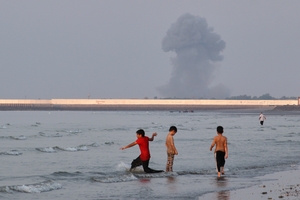
The United Arab Emirates participated in military operations against Iran from the initial phase of the war. A report details that the UAE carried out dozens of air strikes alongside the United States and Israel, functioning as a third member of the coalition [2]. This involvement began at the outset and included coordinated strikes on Iranian targets, as confirmed through accounts of operations in the early stages of the conflict. Foreign workers observed plumes of smoke rising after explosions linked to these actions in industrial zones [2].

UAE carries out air strikes on Iran from Fujairah at the start of the war. — Source: middleeasteye
US Household Energy Costs
Fuel costs tied to the conflict have offset anticipated tax refund benefits for American households. Three months into the U.S.-Iran war, rising energy prices have eliminated the expected gains from tax refunds that households had projected for the year [3]. The same pattern appears in additional reporting, where war-related fuel expenses have fully absorbed those refund advantages [4]. This development reflects the broader economic pressure on U.S. consumers as the conflict extends into its fourth month.
Iranian Regime Status
The Iranian regime remains in place three months after the death of Supreme Leader Ali Khamenei. Despite the loss of its top leader, which triggered the war, the government structure has not collapsed [5]. Analysts note that the regime’s continuity stands as a key observation at the three-month point, with discussions centering on how internal stability has persisted amid external military pressure.
Iran war energy costs wipe out gains from Trump tax refunds per new report. — Source: newsmax
War Iran Timeline
The war Iran timeline places the current developments at exactly three months since the killing of Supreme Leader Ali Khamenei by United States and Israeli forces [5]. This event marked the trigger for the full-scale conflict, leading to day 92 of active hostilities. The milestone aligns with renewed focus on ceasefire extension talks between Washington and Tehran, as both sides assess options for de-escalation [1]. The timeline underscores that the regime in Iran has endured through this period without immediate collapse.
Negotiations Outlook
Further updates on the ceasefire process show the United States weighing options for a potential deal while Iran reiterates that no agreement has been reached [1]. The day 92 status combines progress signals with continued insistence from Tehran that talks are fluid [5]. Observers track these exchanges closely as the three-month anniversary of Khamenei’s death passes, highlighting the sustained nature of diplomatic efforts amid ongoing military postures.
Broader Conflict Markers
Key facts from the period include the UAE’s early air strikes conducted jointly with U.S. and Israeli forces, the erasure of tax refund benefits by fuel price spikes, and the continued operation of the Iranian government structure [2][3][5]. These markers illustrate the multi-front dimensions of the war iran without resolution on any single front. Reporting confirms that negotiations persist without finality, keeping the ceasefire extension as an active but unsettled matter [1].
What to watch next: Continued assessment of the ceasefire extension talks between the United States and Iran, with Tehran maintaining that no final agreement exists yet.