
Iran War Ends With US Agreement to Reopen Strait of Hormuz
The United States and Iran have reached a preliminary agreement to end more than three months of war, immediately halt military operations on all fronts including Lebanon, and reopen the Strait of Hormuz, with the formal signing scheduled for June 19 in Switzerland and broader talks on Iran's nuclear program and sanctions to follow over the next 60 days. [1] [4]
Announcement of the Preliminary Agreement
Pakistan served as the key mediator in securing the preliminary agreement that brings an end to the Iran war. Prime Minister Shehbaz Sharif announced the deal after talks involving Qatar, Turkey and Egypt, stating that both sides have declared the immediate and permanent termination of military operations on all fronts, including in Lebanon. [1] [4] The official signing ceremony will take place on June 19 in Switzerland, according to Sharif. [3] [5]
U.S. President Donald Trump, who turned 80 on the day of the announcement, wrote on social media that the deal with the Islamic Republic of Iran is now complete. [1] [4] He authorized the toll-free opening of the Strait of Hormuz and the immediate removal of the United States naval blockade, though he later clarified that the strait would not open until after Friday’s signing to allow time for mine clearance. [1] [5] Iran’s deputy foreign minister Kazem Gharibabadi confirmed the agreement on state television but stated that implementation would not begin until the signing. [1] [4]
Iran’s Supreme National Security Council said the war on all fronts will end immediately and permanently beginning the night of the announcement, while the U.S. blockade will be terminated immediately and in full. [1] [5] Separate preparatory meetings with each side are scheduled to take place in Doha this week. [1] The text of the memorandum of understanding has been finalized and will be published after the signing. [4]
Timeline of the War
The Iran war began on February 28 when the United States and Israel launched strikes that killed Supreme Leader Ayatollah Ali Khamenei. [1] [3] Iran confirmed the death of Khamenei and several family members along with other top officials in the initial attacks. [3] A U.S.-Israel airstrike on an elementary school in southern Iran killed more than 170 people, most of them schoolgirls. [3]
Iran retaliated with attacks on at least seven Gulf states, striking civilian infrastructure and damaging airports in the UAE and Kuwait while deploying a drone over residential areas in Qatar. [3] The total death toll in Iran crossed 700 within days, and the United Nations later said up to 3.2 million people in Iran had been displaced since the start of the war. [1] [3] Iran continued missile and drone attacks on Israel and several Arab Gulf nations after the initial exchanges. [1]
A ceasefire was reached on April 7, but ten days later the U.S. military imposed its blockade. [1] Throughout the conflict, Iran’s Assembly of Experts selected Ayatollah Mojtaba Khamenei as the new supreme leader. [3] The war featured repeated escalations, including U.S. strikes on Kharg Island and threats by Trump to obliterate Iranian power plants if the Strait of Hormuz was not reopened. [3] Pakistan, Turkey and Egypt facilitated a five-day pause in planned U.S. strikes on Iranian energy infrastructure in late March. [3]
Key Provisions and Remaining Issues

Iranians walk past a national flag in Vanak Square as the US-Iran war ends. — Source: middleeasteye
The agreement covers an immediate and permanent end to hostilities on all fronts, including Lebanon, along with the reopening of the Strait of Hormuz and the lifting of the U.S. naval blockade of Iranian ports. [1] [4] [5] Trump authorized the immediate removal of the blockade, while Iran’s Supreme National Security Council confirmed the termination of military operations beginning the night of the announcement. [1] [5]
Broader negotiations on outstanding issues such as Iran’s nuclear program will continue over the next 60 days. [1] [4] If the sides fail to reach a resolution within that time, the timeline could be extended. [1] The core question of Iran’s nuclear program remains deferred, with Tehran emphasizing that the current deal focuses on ending the war while discussions on enrichment and related matters are put off until later. [1] [5]
The deal returns the region to a status that existed before the war, but with thousands of people dead and Iran wielding new negotiating pressure through its ability to influence shipping in the strait. [1] The waterway is crucial to significant shipments of oil, natural gas and related products, and its effective closure had rocked the global economy. [1] [4]
Reactions Inside Iran
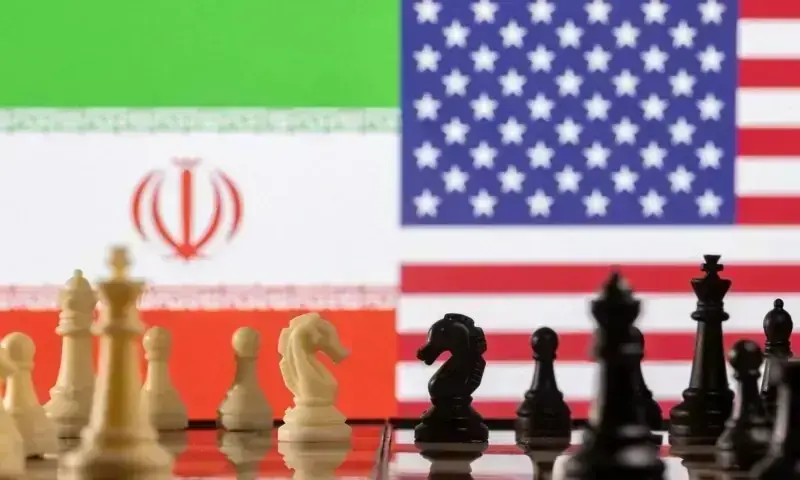
Pakistan mediated preliminary US-Iran agreement to end war, reopen Strait of Hormuz and halt operations in Lebanon. — Source: dawn
Iranians reacted with a mix of relief that fighting has paused, hope for lifted sanctions and economic recovery, suspicion that the deal will not last, and criticism from both hardliners and opposition figures. [2] Sepideh, a 32-year-old Tehran resident who sells handmade jewellery online, expressed exhaustion from months of conflict and internet disruptions that froze her business, saying she hopes everything goes back to normal. [2]
Darya, a 28-year-old from Sari, described the agreement as feeling like a miracle and said she wants sanctions to be lifted because most problems in Iran come from sanctions. [2] She plans to leave Iran temporarily to study in France but hopes conditions improve by the time she finishes. [2]
Mohammad, 43, voiced skepticism that Iran and the United States will reach an agreement on difficult issues like the nuclear programme and sanctions relief, noting the long time it took to reach even this small understanding. [2] Opposition supporter Amir, 19, from Karaj, said he felt fooled and betrayed, arguing that the deal leaves the Islamic Republic free to turn its attention back to the people with more repression. [2]
Hardline government supporter Emad, 38, from Tehran, cursed negotiators and warned that the timing of the deal gives Trump peace of mind during the World Cup before a possible return for another attack. [2] Maryam, a 59-year-old political science graduate, questioned whether so many civilian deaths and destroyed infrastructure were necessary just to return the Strait of Hormuz to normal. [2]
International and Market Responses
The United Nations secretary-general’s spokesperson described the deal and framework for further negotiations as a critical step towards the peaceful settlement of the conflict. [1] [5] UK Prime Minister Keir Starmer said he was ready to aid further technical talks and hopes the reopening of the Strait of Hormuz will stabilise energy markets. [5] French President Emmanuel Macron praised the deal and said Paris would support the Lebanese government, while European Union chief Antonio Costa welcomed the agreement and said the bloc is ready to contribute to a strategy for lasting peace. [5]
The deal drew criticism from Israel’s government and from some Democrats in the United States. [1] [5] Senator Chris Coons said the deal moves the situation in the right direction but several questions remain, while Senator Chris Murphy called it a surrender to Iran yet added that the United States should be glad because every day the war continues makes the country weaker. [5]
Oil prices dropped immediately, with global benchmark Brent crude futures falling more than 3 percent. [4] [5] Asian stock markets rose, with gains exceeding 5 percent in Japan and South Korea. [5]
Outlook for Implementation
Mutual distrust between the sides remains high, and both want to avoid giving the other any opportunity to claim victory. [4] Preparatory meetings will take place in Doha this week to lay the foundation for the technical talks. [1] [4] The Iranian regime will have to convince the Revolutionary Guard of the terms, while Washington’s version of the agreement stresses gradual implementation of financial rewards as Iran fulfills obligations. [4]
The 60-day period for broader negotiations will address the nuclear program, sanctions relief, release of frozen assets and reconstruction. [1] [4] [5] Iran’s deputy foreign minister warned that if the Islamic Republic considers that the United States has violated the terms, Tehran will take its own measures. [4] The deal is expected to leave Iran with its missile program and support for proxies like Hezbollah intact while returning the region to a pre-war status. [1]
What to watch next: The June 19 signing in Switzerland, the start of preparatory meetings in Doha, and whether the 60-day timeline for nuclear and sanctions talks holds or requires extension.