Iran War Ends with Signed US Memorandum as Lebanon Ceasefire Faces Immediate Violations
The Iran war has concluded through a signed agreement between the United States and Iran, though a separate ceasefire between Israel and Hezbollah that took effect Friday already shows signs of strain from continued strikes in Lebanon.
Overview of the US-Iran Deal and Ceasefire
A 14-point memorandum was signed this week between the United States and Iran to end the four-month conflict. Peace talks are set to resume in Switzerland between US and Iranian officials, with US envoy Steve Witkoff and Iranian foreign minister Abbas Araghchi scheduled to join Jared Kushner, who is already in the country. The talks aim to begin technical negotiations for a permanent truce. The agreement opens a 60-day window to resolve disputes over Iran’s nuclear program and other issues. Israel and Hezbollah agreed to a ceasefire on Friday that was due to take effect at 4pm local time, though at least five people were killed by Israeli strikes in Lebanon as of Saturday after the agreement. Hours before the ceasefire, deadly exchanges occurred, with Lebanese authorities reporting 47 people killed in the pre-ceasefire flare-up and Israel announcing the deaths of four of its soldiers. Israeli ambassador to the United States Yechiel Leiter denied attacking Lebanon after the ceasefire, stating that Israel halted all offensive operations at 11:30 that morning. [3]
Casualty Figures in Iran
Official figures report more than 7,300 deaths in Iran and Lebanon since February 28, including hundreds of children and dozens of health workers, though analysts say the true toll is likely higher due to restricted access and government controls. Iran's official count as of mid-April stood at 3,468 deaths including 1,460 civilians, while the US-based HRANA group documented 3,636 deaths including 307 children. For mid-April, at least 3,468 Iranians, among them 499 women, had died since the start of the US and Israeli attacks, according to official government figures from Iran. This total includes 1,460 civilians and 2,008 military personnel, as reported by the state news agency IRNA on 26 April. The US-based HRANA group reported a higher figure of 3,636 deaths in a report published on 18 May, comprising 1,701 civilians including 307 children, 1,221 military personnel, and 714 people whose identity or status could not be confirmed. HRANA described its documented figures as absolute minimums because access to information on deaths was severely limited by difficulties reaching sites, government-imposed internet blocks, and political repression. Iranian authorities have accused the United States and Israel of striking civilian infrastructure in bombings across the country. Investigations found that a US missile strike on the first day of the war hit a school in the city of Minab, killing 168 people including 110 children, according to Iranian officials. Days later, Iranian authorities reported that 20 people died when a missile struck a sports hall during a women's volleyball match in the city of Lamerd. The United States denied responsibility for that attack, but experts stated to BBC Verify that the weapon used was likely a US-made PrSM precision missile. [1][4]
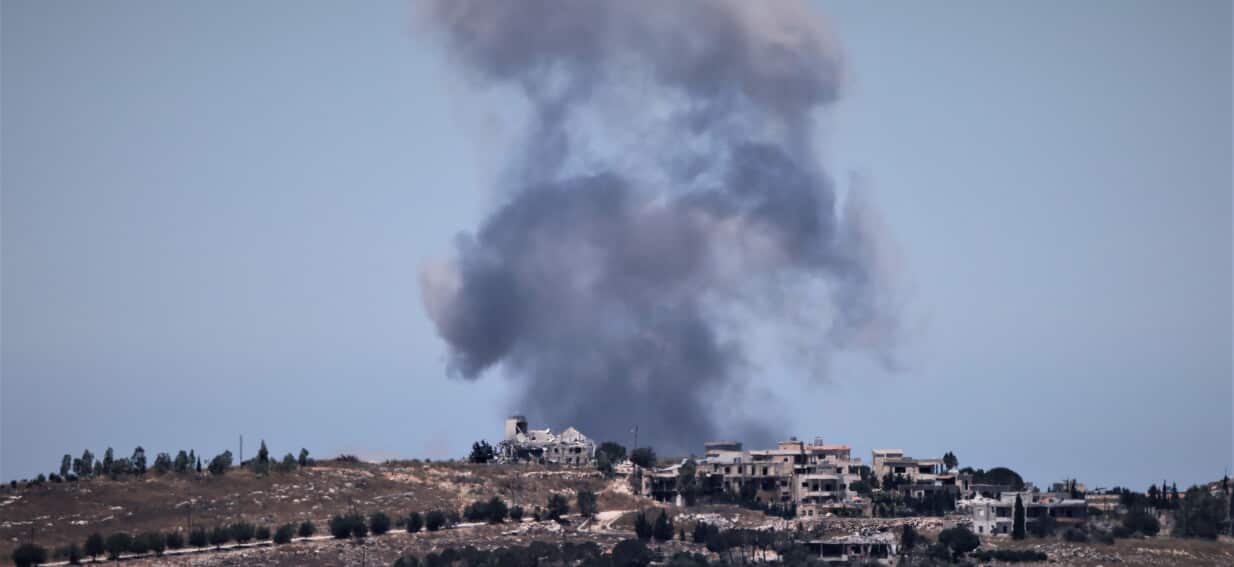
Israel and Hezbollah ceasefire takes effect amid ongoing strikes in Lebanon. — Source: sbsaustralia
Casualty Figures in Lebanon
Lebanese authorities report 3,912 deaths from Israeli strikes including 247 children, with Israel claiming 3,000 Hezbollah fighters killed; seven UN peacekeepers have also died. Since the conflict between Israel and Hezbollah resumed on 2 March, Lebanese health authorities say 3,912 people have been confirmed killed in Israeli attacks, including 366 women and 247 children. It remains unclear how many Hezbollah fighters are among the dead. Israeli Prime Minister Benjamin Netanyahu said last month that 3,000 Hezbollah fighters had been killed since the war with Iran began. Early in March, the Lebanese Health Ministry reported that 41 people died in a major Israeli air and ground operation around a town in the eastern Bekaa Valley. The Israel Defense Forces said their troops were recovering the remains of an Israeli military aviator missing from a conflict in Lebanon 40 years earlier, but Lebanese officials said three Lebanese soldiers died along with several civilians and children. On 8 April, a massive wave of Israeli strikes killed at least 361 people in 10 minutes, according to Lebanese authorities. The Israel Defense Forces said they targeted 250 Hezbollah agents that day, but the Lebanese Health Ministry disputed the claim and said the vast majority of the dead were civilians. The United Nations says seven of its blue helmets also died in Lebanon, with the most recent case on 4 June. [1][4]
Israeli and Regional Casualties
Israel reports 60 deaths including 29 civilians from Iranian attacks and 31 soldiers in combat; Iran has been accused of using cluster munitions on civilian areas. Israeli authorities state that 60 people have died, mostly in Iranian attacks and fighting with Hezbollah. Of these, 29 were civilians, 21 of whom died in Iranian missile attacks, according to government figures provided to the BBC. Another 31 were Israel Defense Forces soldiers killed in combat, and one person died from accidental friendly fire, according to the government. Israel has frequently accused Iran of using cluster munitions against population centers in the country. In one attack, the Israel Defense Forces reported that a couple over 70 years old died while heading to an air-raid shelter after submunitions from a cluster bomb struck the city of Ramat Gan. In March, Human Rights Watch accused Tehran of committing war crimes by targeting civilian centers with cluster munitions. The initial Iranian response to the US and Israeli attacks also included strikes on neighboring Arab states hosting US bases. Iranian forces launched waves of ballistic missiles and explosive drones, many of which hit civilian locations including airports, energy facilities, and ports. BBC Verify has documented attacks on military bases in eight countries: Saudi Arabia, the United Arab Emirates, Qatar, Kuwait, Iraq, Jordan, Bahrain, and Oman. [1][4]

US and Iranian officials sign 14-point memorandum ending four-month conflict. — Source: thediplomat
Challenges in Verifying the Death Toll
The real death toll across the Middle East is difficult to determine because figures are often incomplete, delayed, or impossible to verify independently due to the multi-country conflict, government restrictions on media and internet, armed groups, and pressures on families not to speak publicly. Experts told BBC Verify that restrictions on internet and media access by governments, along with unreliable figures due to the presence of armed groups in some areas, have made collecting information difficult. Iain Overton, executive director of the British charity Action on Armed Violence, said that because the conflict spans multiple countries, casualty figures are usually incomplete, delayed, or impossible to verify independently. He added that the final death toll is likely to remain a matter of controversy for years after the conflict ends. HRANA noted that authorities often conceal information about victims and families may face pressure not to speak publicly about the circumstances of a death. Determining an exact total death toll across the region is very difficult because not all countries publish casualty figures. [1][4]
Impact on Regional Stability and Global Shipping
The agreement includes reopening the Strait of Hormuz, which had been closed and caused global energy price rises, with 25 commercial vessels crossing on Thursday after the US lifted its naval blockade. A total of 25 commercial vessels crossed the newly reopened strait on Thursday, the highest number since mid-April, according to data from maritime tracking firm AXSMarine published on Friday. American forces on Thursday lifted their parallel naval blockade of Iranian ports, the US military said, noting that American warships will remain in the general area. Iran's maritime authority said on Friday that all ships seeking to cross the Strait of Hormuz should submit a transit request 48 hours in advance despite its reopening. The deal signed this week by President Donald Trump and Iranian counterpart Masoud Pezeshkian aims to end a war that began on February 28 with US-Israeli strikes killing supreme leader Ayatollah Ali Khamenei. At the G7 summit in Paris, President Trump criticized Israeli tactics, stating that too many people have died and that there is no need to demolish an apartment building every time someone is sought because many people live in those buildings and not all are Hezbollah. Reactions from Gulf states included a post on X by UAE presidential adviser Anwar Gargash stating that the war is not against neighbors and that the escalation confirms the narrative of those who see Iran as the main source of danger in the region. Peace talks are resuming in Switzerland between US and Iranian officials including Jared Kushner, despite flare-ups in Lebanon where at least five more people were killed by Israeli strikes after the ceasefire. [3]
What to watch next: Technical negotiations in Switzerland are expected to continue with the goal of securing a permanent truce while the 60-day window remains open to address Iran's nuclear program and related disputes.