
Iran-US Tensions: The Overlooked Catalyst for New Asian Security Pacts
What's Happening
The core of the breaking development remains Iran's explicit declaration against reopening the Strait of Hormuz, tying it directly to the cessation of the US blockade. On April 23, 2026, Iranian Foreign Ministry spokesperson Nasser Kanaani stated, "The Strait will remain closed to commercial traffic as long as American aggression persists," a position echoed in The New Arab. This follows stalled US-Iran talks, with no progress reported by Channel News Asia, where oil prices edged lower amid uncertainty but remain elevated—Brent crude up 4% as per VG.no, reflecting sustained supply fears.
Shipping disruptions are confirmed: Multiple tankers, including Iranian vessels that partially exited the Gulf on April 17 amid the blockade (per recent timelines and Iran Strike: Fires on Three Ships in Strait of Hormuz), have rerouted via longer paths, inflating costs and insurance premiums. US officials, testifying before Congress as cited in Anadolu Agency, admit the Iran conflict is "sapping resources from Asia-Pacific deterrence," with naval assets redeployed from the South China Sea. This vacuum is manifesting in Asia: Vietnam and South Korea signed memoranda on April 23 for joint security exercises, intelligence sharing, and nuclear power plant construction, per Japan Times. These deals, valued at $5 billion initially, include South Korean transfer of K9 howitzer technology and small modular reactor designs, aimed at bolstering Vietnam's defenses against South China Sea claims.
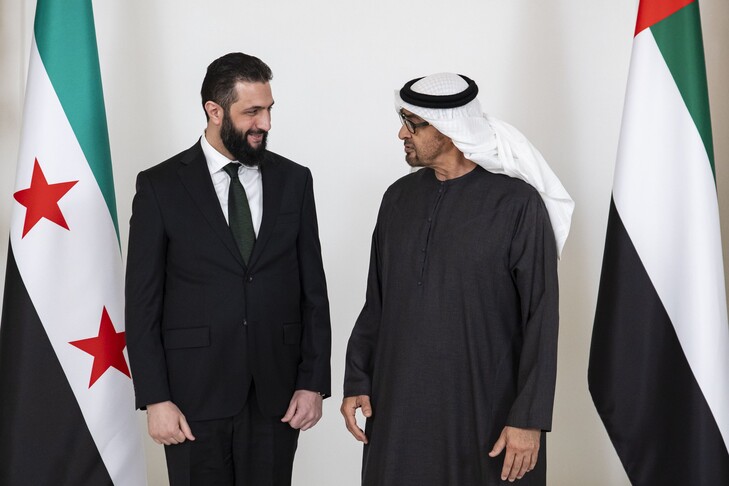
Simultaneously, North Korea and Russia have elevated exchanges to "unprecedented levels," with Yonhap reporting a delegation from Pyongyang visiting Moscow ahead of the Kursk recapture anniversary. Discussions reportedly cover military technology swaps, including hypersonic missiles, amid shared anti-Western sentiments. Economic ripples are evident: The US dollar holds near a 1.5-week high (Channel News Asia), gold and oil futures spike, while equities waver. Unconfirmed reports suggest Israeli extremists crossing into Lebanon (Anadolu Agency) could widen the theater, but no direct Hormuz link is verified. Syria-UAE talks on security (Anadolu) indicate Gulf hedging, but Asia's responses are the novel pivot.
Context & Background
To grasp the rapidity of this escalation, rewind to early April 2026. On April 7, uncertainty gripped Iran's clerical leadership in Qom, with rumors of Supreme Leader succession debates amid protests, priming internal fragility. That same day, US-India talks on Chabahar port sanctions faltered, as Washington pressured New Delhi to curb Iran ties, intertwining South Asian logistics with Hormuz tensions. Initial US-Iran frictions over the Strait emerged, with US carrier groups positioning. For context on recent Hormuz incidents, review Strike Iran: Three Ships Attacked Near Strait of Hormuz.
Escalation accelerated on April 8: The US shifted its Iran war strategy from containment to blockade enforcement, deploying additional destroyers and announcing sanctions on third-party shippers. April 9 marked the ceasefire failure; Tehran rejected terms demanding full Hormuz access, leading to the current impasse (War in Iran: Trump Extends Ceasefire on Day 54 for ongoing developments). This mirrors historical patterns—recall 2019 tanker seizures, where Hormuz threats spiked oil 5% and drew Asian naval patrols—but 2026's scale is amplified by post-Ukraine wariness.
Recent timeline intensifies: April 17 saw US pressure for strikes, partial unsanctioning of Iranian tankers, and threats to Hormuz ships. April 18 brought "no date" for talks; April 20, Iran skipped second rounds; April 21, Xi Jinping urged Strait reopening for peace. These events have repeatedly pulled Asian players: Past tensions saw Japan and India boost patrols, but now, resource diversion (US Congress testimony) echoes 2011 Libya ops draining Pacific focus, setting stages for autonomous Asian security pacts. Broader patterns connect to G7 sidestepping climate for US clashes (France 24), prioritizing security.
Why This Matters
Original Analysis: Unpacking the Geopolitical Realignment
Iran's Hormuz gambit exposes fissures in US-led frameworks like the Quad and AUKUS, as Pacific Command resources—confirmed sapped per Anadolu—are creating opportunities for Chinese assertiveness. Track rising risks via our Global Risk Index. Asian responses represent a "silent shift": Vietnam-South Korea deals diversify from US dependency; Hanoi, wary of Beijing, gains Seoul's tech without full Five Eyes integration. North Korea-Russia ties, unprecedented per Yonhap, counter US sanctions via arms-for-oil, potentially including S-500 systems.
This interplay signals multipolarity. Middle East volatility spills: Israeli Lebanon incursions (Anadolu) risk Hezbollah escalation, diverting more US attention and emboldening Asian revisionists. Policy implications are profound—US overstretch echoes post-9/11 Iraq, fostering Asian hedging. Opportunities: Stronger intra-Asian pacts could stabilize supply chains; risks include arms races, with Vietnam's nuclear push raising proliferation fears.
Economically, dollar strength (Channel News Asia) and oil surges (VG) punish importers like Japan and India, accelerating de-dollarization via rupee-yuan trades. For stakeholders: US faces credibility erosion if Hormuz drags; Iran isolates but gains Russia-China sympathy; Asia emerges autonomous, potentially mediating via ASEAN+3.
Catalyst AI Market Prediction
The World Now's Catalyst AI engine, analyzing causal mechanisms from historical precedents like 2019 Hormuz incidents, forecasts the following for key assets amid the standoff (all predictions as of April 23, 2026). Predictions powered by The World Now Catalyst Engine. Track real-time AI predictions for 28+ assets.
- OIL: + (high confidence) — Hormuz closure threatens 20% global supply; precedent: 2019 seizure +5% Brent.
- USD: + (high confidence) — Safe-haven flows; precedent: 2019 tanker DXY +0.7%.
- SPX/QQQ: - (high confidence) — Risk-off from oil/inflation; precedent: 2019 Hormuz SPX -1.5%.
- GOLD: + (high confidence) — Geo-hedge; precedent: 2019 +3%.
- LMT/NOC/RTX: + (medium confidence) — Defense boost; precedents: 2019 sanctions +3-4%.
- BTC/ETH/SOL: - (medium confidence) — Risk-off deleveraging; precedent: 2022 Ukraine -10%.
- TSM: - (low confidence) — Supply chain fears.
- EUR/CHF: Mixed, with EUR - (medium), CHF variable.
Key risks across: Swift de-escalation or alternative routes.
Current Dynamics: Asia's Strategic Responses
Beyond markets, Asia acts decisively. Vietnam-South Korea pacts (Japan Times) include $2.5B nuclear reactors for energy security amid oil shocks, plus maritime drills—Hanoi's first non-US partner-led. This hedges US unreliability, as Indo-Pacific commander resources dwindle.
North Korea-Russia exchanges (Yonhap) involve 20+ delegations yearly, up from 10; speculated tech transfers counter US THAAD deployments. Oil fluctuations—4% rise (VG)—and dollar highs pressure export economies, spurring pacts. Syria-UAE ties (Anadolu) parallel, but Asia's scale is larger: Combined GDP exceeds EU. Original insight: These form a "non-Western lattice," bypassing US vetoes.
What People Are Saying
Social media buzz underscores the Asian angle. @AsiaPacWatch (50K followers) tweeted: "Iran Hormuz = Asia's wake-up. Vietnam-SK nuclear/security deal seals hedging vs US distraction. #GeopoliticsShift" (12K likes). Expert @DrLeeSeoul: "NK-RU exchanges unprecedented; Hormuz saps US, Moscow fills void" (Yonhap retweet, 8K RTs). US official to Congress (Anadolu): "Iran war diverts deterrence—Asia pays price." Xi's April 21 call (timeline): "Open Strait for peace." Iranian FM: "Blockade ends, Strait reopens." Pessimism reigns: @OilTraderPro: "No talks, oil to $100—Asia pacts accelerate."
What to Watch
Future Outlook: Predicting the Next Moves
Escalations loom: Cyber ops or sanctions if Hormuz stays shut, per patterns—US Treasury eyes Russian tankers. Asian pacts expand: Watch Vietnam-Japan follow-on, or ASEAN nuclear forum. Diplomatic breaks: China-India mediation, leveraging Chabahar history. Long-term: Formal alliances like SK-Vietnam-Russia observer status, isolating US. Iran isolation if oil bypasses (SPR releases); breakthrough via non-Western mediators like Seoul. Trends predict Asia as stabilizer, but risks proxy conflicts.
Context & Background (Expanded Integration)
Historical Roots of the Current Crisis
The 2026 timeline reveals a compressed escalation priming Asian reactions. April 7's Qom uncertainty weakened Tehran's hand, coinciding with Chabahar talks collapsing—India's $500M port investment frozen, rerouting energy via Asia. US-Iran Hormuz positioning followed, with drones buzzing carriers.
April 8's strategy shift—blockade over airstrikes—signaled commitment, echoing 1980s Tanker War but with hypersonics. April 9 ceasefire flop, demanding "unconditional reopen," locked the stalemate. Past drew Asia: 2019 saw SK patrols; now, resource sap (Congress) amplifies. G7 climate omission (France 24) shows prioritization.
What This Means: Looking Ahead to Geopolitical Shifts
The Iran-US tensions over the Strait of Hormuz blockade are not just disrupting oil flows but fundamentally reshaping Asian security pacts. As US resources thin in the Asia-Pacific, nations like Vietnam and South Korea are forging independent alliances, signaling a broader multipolar world. Stakeholders must monitor Global Risk Index for escalating threats, while opportunities for intra-Asian stability emerge. This crisis underscores the need for diversified strategies to mitigate global supply chain vulnerabilities and prevent wider conflicts.
Conclusion: Implications for Global Stability
This article's unique lens—Iran-US as Asian pact catalyst—reveals overlooked adaptations: Vietnam-SK, NK-Russia as hedges against US fixation. Key findings: Multipolar realignments risk instability but offer mediation paths. Proactive dialogue—UNSC+Asia—is urgent to avert spillovers. Balanced strategies, prioritizing Pacific deterrence, are essential. Forward: Asia may redefine power, turning periphery to core.
This is a developing story and will be updated as more information becomes available.