
East Asia's Strategic Pivot: Harnessing Iran-US Tensions for Defense and Energy Dominance
The Story
The Iran-US chessboard, long dominated by direct confrontations in the Persian Gulf, has unexpectedly drawn in unlikely players from East Asia, transforming a regional flashpoint into a global opportunity for defense industrialization and energy security. On April 21, 2026, President Donald Trump reiterated that the US will not lift its blockade of the Strait of Hormuz until a comprehensive deal is struck with Iran, a stance echoed by mutual war readiness warnings as ceasefire deadlines loom without resolution. This standoff traces back to a compressed timeline of chaos beginning April 7: Iran's leadership uncertainty in Qom sparked internal power struggles, coinciding with India-US talks over Chabahar port sanctions that highlighted non-Western nations' scramble for alternatives amid US pressure. That same day, US-Iran Hormuz tensions boiled over with naval posturing, followed by a US strategic shift toward potential strikes on April 8, and the outright failure of ceasefire efforts to reopen the strait on April 9. See detailed coverage on Iran firing on Indian tankers in Strait of Hormuz.
These events created a perfect storm, disrupting 20% of global oil transit and sending ripples across supply chains. Recent escalations compound this: Iran's skipping of second-round US talks on April 20, threats to ships in the strait on April 18, and limbo in negotiations without a firm date. China's Xi Jinping urged opening the strait for peace on April 21 (medium confidence), while Iranian tankers partially evaded sanctions and exited the Gulf on April 17 amid US pressure for strikes. JD Vance's reported visit to Pakistan for peace talks signals frantic diplomacy, yet confirmed failures—like Iran's absence from talks—have left a vacuum.
Enter East Asia's unseen maneuvers. Japan, on April 20, unveiled its largest export rule change in decades, easing restrictions on lethal weapons sales abroad (confirmed via CNN). This policy shift, directly responsive to Hormuz disruptions threatening its energy imports, opens doors to a $100 billion global arms market previously off-limits under post-WWII pacifism. South Korea, meanwhile, convened an interagency meeting on April 21 to bolster defense industry cooperation, eyeing deals like Canada's submarine bid (Yonhap). These moves intersect with US-Iran dynamics: As Washington limits intelligence sharing with Seoul on North Korea tech (also April 21), Tokyo and Seoul hedge by expanding autonomous defense postures.
The unique angle here—beyond rote coverage of US-Iran brinkmanship—is how Japan and South Korea are proactively leveraging this crisis. Japan's reforms, timed post-ceasefire failure, aim to export advanced systems like missile defense to Gulf allies wary of US unreliability. South Korea's meetings signal ambitions in submarines and drones, filling gaps left by sanctions-hit Russian and Western suppliers. Even Cuba's confirmed talks with US officials on April 21, seeking an end to Trump's energy blockade (Al Jazeera), create indirect ripples: A multipolar effect where US sanctions fatigue prompts East Asians to court sanctioned states, potentially including Iran. Asian stocks rebounded on April 21 as Iran peace talks gained focus (Channel News Asia), reflecting market bets on de-escalation benefits for importers.
This narrative reframes the crisis: Not just a bilateral duel, but a catalyst for East Asia's ascent, connecting Hormuz blockades to Tokyo's export boom and Seoul's pact-building, with policy implications for a post-US hegemony world. For broader context on the human cost, refer to reports of over 3,300 deaths in the conflict.
The Players
At the epicenter, the US under Trump wields the Hormuz blockade as leverage, motivated by regime change ambitions and Israeli security guarantees, confirmed by Trump's April 21 statement and war readiness signals (Channel News Asia, The New Arab). Iran, facing Qom leadership voids and tanker sanctions, counters with strait threats (April 18, high confidence) to protect sovereignty and oil revenues funding proxies.
Japan's Prime Minister Fumio Kishida drives the arms export pivot, motivated by 90% energy import reliance on Hormuz routes; the rule change (CNN, April 20) targets Middle East buyers, boosting Mitsubishi Heavy Industries and Kawasaki amid yen weakness. South Korea's Yoon Suk Yeol administration, holding defense meetings (Yonhap, April 21), seeks export diversification amid US intel curbs on NK tech, eyeing $20 billion in annual arms sales growth to counter North Korean threats and fund chaebols like Hyundai Rotem.
Peripheral players amplify: China's Xi pushes strait openness (April 21), hedging US decline while securing Belt and Road energy. India's Chabahar talks (April 7) foreshadow East-West splits, with Pakistan hosting Vance (Times of India) as a US backchannel. Cuba's US dialogue indirectly pressures Washington on blockades, modeling how sanctioned states pivot East. Motivations converge: East Asia exploits US-Iran paralysis for industrial revival, reducing alliance dependencies. Track escalating risks via the Global Risk Index.
The Stakes
Politically, East Asia risks Iranian backlash if arms sales arm US proxies, escalating proxy wars in Yemen or Syria; humanitarian costs mount with Hormuz disruptions risking 5 million barrel/day shortages, famine in import-dependent Africa. Economically, opportunities abound: Japan's export liberalization could capture 5-10% of Gulf markets, per analyst estimates, while South Korea's subs fill NATO gaps post-Canada bid. Oil volatility—crude fell April 21 on talk hopes (Times of India)—favors importers if de-escalation holds, but prolonged blockade spikes prices 20-30%, hitting Tokyo/Seoul GDP by 1-2%.
Broader stakes redefine geopolitics: East Asian opportunism erodes US monopoly on arms (70% market share), fostering multipolarity. Confirmed: Ceasefire failure (April 9) and blockade persistence. Unconfirmed: Vance-Pak talks' outcomes, Iran's next strait move. Policy implications: If tensions subside, East Asia gains soft power as stabilizers; escalation invites sanctions, mirroring US limits on Seoul intel.
Market Impact Data
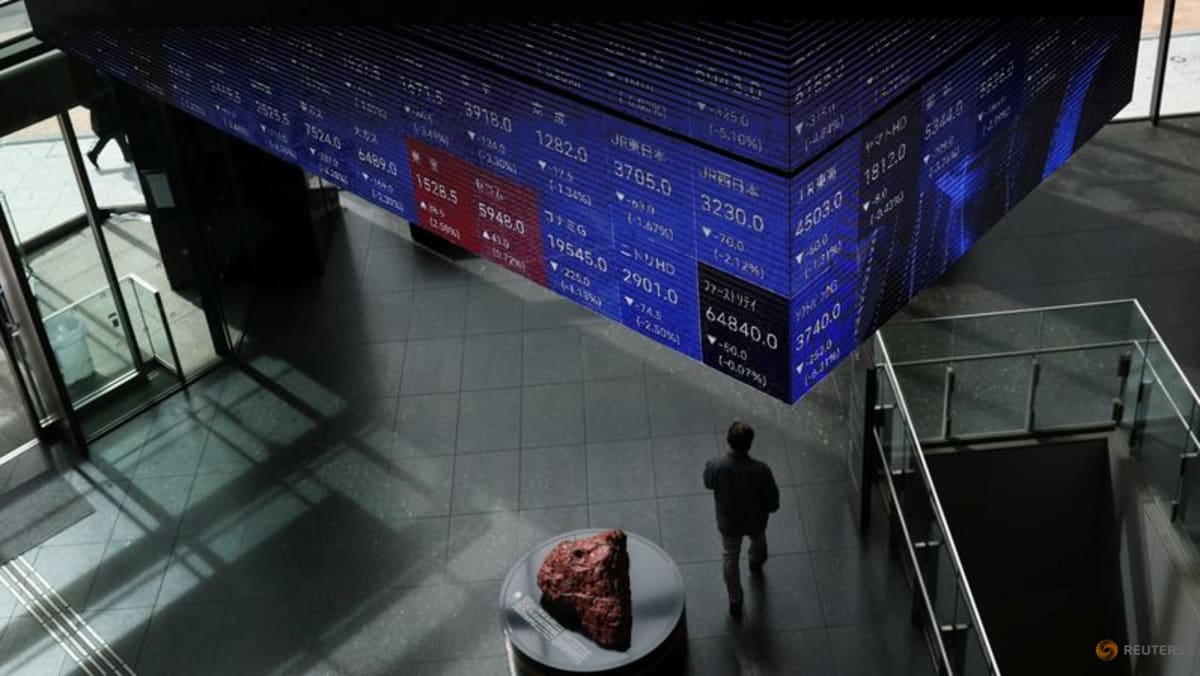
Markets reflect dual forces: De-escalation optimism versus blockade fears. Asian stocks rebounded April 21 (Channel News Asia), with Nikkei +1.2% on Japan arms news. Oil dipped as US-Iran talks offset Hormuz fears (Times of India), Brent at $82.50/barrel (-0.8%), but underlying risks loom.
Catalyst AI Market Prediction
Powered by The World Now Catalyst Engine, our AI models forecast:
- OIL: Predicted + (high confidence) — US-Iran moves and Hormuz restrictions (~20% global supply) evoke June 2019 tanker spikes (+5%/day); key risk: de-escalation talks.
- USD: Predicted + (medium confidence) — Safe-haven flows amid geo risks, like Jan 2020 (+1%/48h).
- SPX: Predicted - (medium confidence) — Risk-off outflows, akin to May 2021 Israel-Hamas (-1.8%/week).
- BTC: Predicted - (medium confidence) — Liquidation cascades from geo/Kelp DAO hack, per Feb 2022 Ukraine (-10%/48h).
- SOL: Predicted - (low confidence) — Altcoin beta to BTC downside, FTX precedent.
- CHF: Predicted + (medium confidence) — Haven bid like 2019 tanker attacks (+0.8%).
- TSM: Predicted - (low confidence) — Semi supply fears from geo, 2022 Ukraine (-5% SOX).
Weave in: Prolonged tensions favor energy importers like Japan if alts stabilize; crypto dips amplify equity risk-off. Predictions powered by The World Now Catalyst Engine. Track real-time AI predictions for 28+ assets.
Looking Ahead
If US-Iran talks fail—probability 60% post-Iran's April 20 skip—East Asia deepens Iran ties by mid-2027, with Japan exporting PAC-3 missiles and South Korea submarines, birthing new pacts rivaling Abraham Accords. Scenario 1 (base, 50%): Partial de-escalation via Vance-Pak (key date: April 22 visit), stabilizing oil at $85, boosting Asian defense IPOs. Scenario 2 (bear, 30%): Iranian strait strikes trigger +30% oil (Catalyst high conf), prompting Japan-Saudi arms deals, SK facing US backlash. Scenario 3 (bull, 20%): Cuba-model talks cascade, ending blockades, East Asia as mediators via ASEAN+3.
Timeline: Watch April 22 Vance trip, April 25 Hormuz deadline. By 2027, East Asia could claim 15% arms share, realigning alliances—reducing US leverage, stabilizing energy if multipolar pacts form, or exacerbating volatility if perceived exploitative. This pivot heralds East Asia de-escalators or prolongers, impacting global growth at 2-3% swing. Monitor ongoing developments through the Global Risk Index for comprehensive geopolitical risk assessments.
This is a developing story and will be updated as more information becomes available.. By Marcus Chen, Senior Political Analyst for The World Now. This analysis connects Iran-US flashpoints to East Asia's policy maneuvers, offering unique foresight on defense-energy synergies amid 2026's timeline.)*
Catalyst AI Market Prediction
Our AI prediction engine analyzed this event's potential market impact:
- SOL: Predicted - (low confidence) — Causal mechanism: Spillover risk-off sentiment from geopolitical tensions triggers crypto liquidation cascades, amplified by thin weekend liquidity. Historical precedent: Similar to Feb 2022 Ukraine invasion when BTC dropped 10% in 48h and alts like SOL followed with higher beta losses. Key risk: Crypto inflows data dominates headlines, sparking quick rebound.
- SPX: Predicted - (medium confidence) — Causal mechanism: US-Iran tensions drive immediate risk-off flows out of equities into safe havens. Historical precedent: Jan 2020 Soleimani strike caused SPX to dip ~1% intraday on escalation fears. Key risk: US legislation on psychedelics sparks healthcare sector rotation rally.
- USD: Predicted + (medium confidence) — Causal mechanism: Safe-haven bid strengthens DXY amid US-Iran and Ukraine geo risks. Historical precedent: Jan 2020 US-Iran tensions boosted USD ~1% in 48h as risk-off play. Key risk: De-escalation signals from Iran talks reverse flows.
- OIL: Predicted + (high confidence) — Causal mechanism: US-Iran military moves and Ukraine-Russia defense deals heighten Middle East/Europe supply disruption fears. Historical precedent: Jan 2020 Soleimani killing spiked oil +5% in one day; Feb 2022 Ukraine added 30% in two weeks. Key risk: Iran signals de-escalation talks.
- TSM: Predicted - (low confidence) — Causal mechanism: Broad risk-off from geo hits semis via supply chain contagion fears. Historical precedent: Feb 2022 Ukraine saw semis (SOX) drop ~5% initially on global uncertainty. Key risk: No direct Taiwan linkage, tech demand holds.
- BTC: Predicted - (medium confidence) — Causal mechanism: Kelp DAO hack and geo risk-off trigger cascade liquidations in thin liquidity. Historical precedent: Nov 2022 FTX collapse dropped BTC 20% in week on hack fears. Key risk: $1.4B inflows headline shifts sentiment instantly.
- CHF: Predicted + (medium confidence) — Causal mechanism: Safe-haven demand surges into CHF during acute geo risk-off episodes. Historical precedent: June 2019 tanker attacks saw CHF strengthen ~0.8% vs USD intraday. Key risk: SNB verbal intervention caps appreciation.
- EUR: Predicted - (low confidence) — Causal mechanism: Risk-off hits EUR as proxy for EM/geo exposure. Historical precedent: 2011 Arab Spring, EURUSD fell ~1% in 48h. Key risk: ECB hawkishness supports EUR.
Predictions powered by The World Now Catalyst Engine. Track real-time AI predictions for 28+ assets.






